9 Top SEO Automation Tools to Crush Your Competition
SearchBlueprint · · 16 min read · scored 94/100
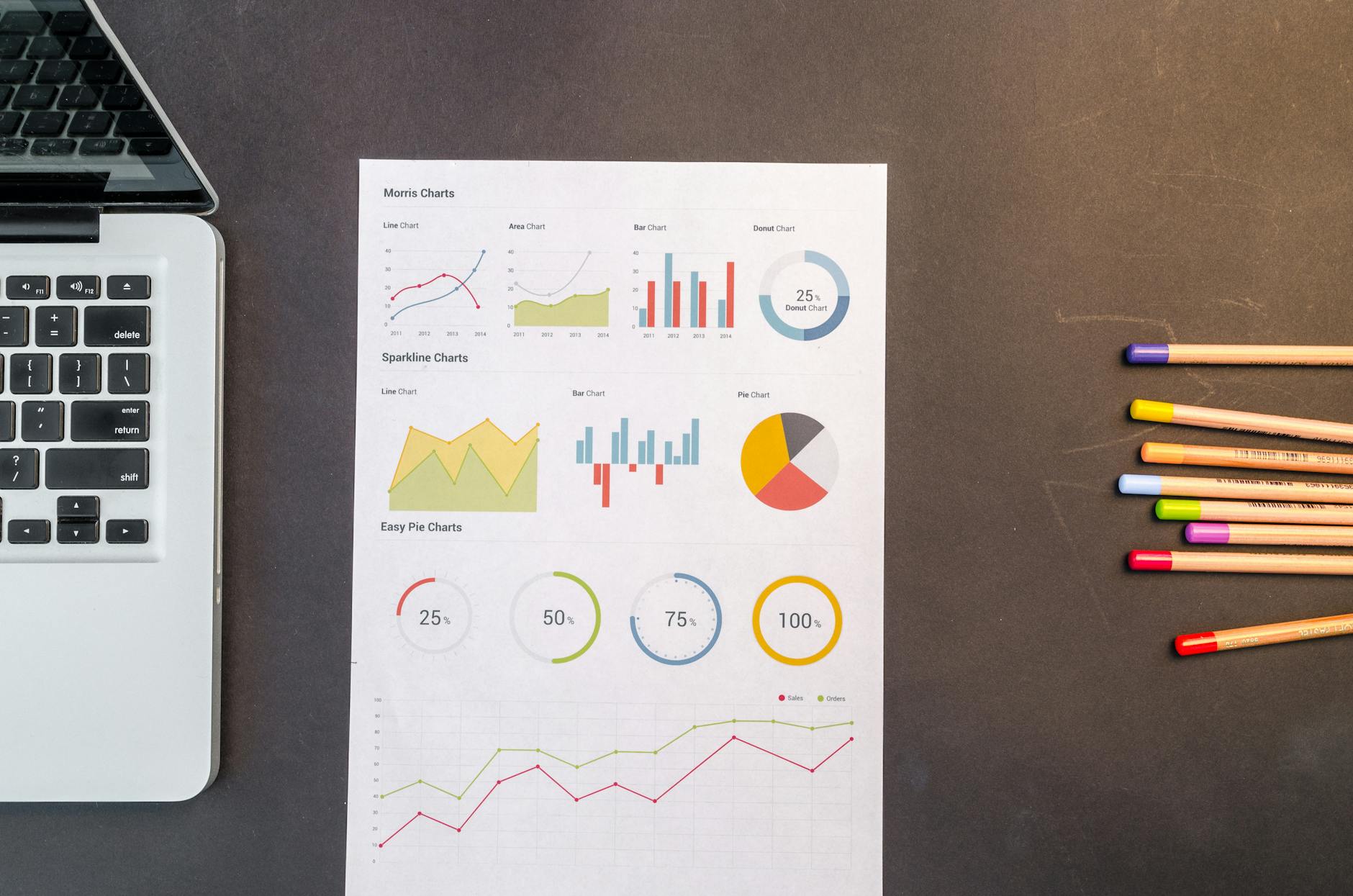
The top SEO automation tools to crush your competition in 2026 are full-workflow platforms like SearchBlueprint, research suites like Semrush and Ahrefs, execution agents like Search Atlas OTTO, and technical crawlers like Screaming Frog and Botify. The right pick depends on what your team can't do manually, not on which dashboard has the most features.
The stakes are real. Siteimprove reports that enterprise SEO platforms are on track to hit $58.3 billion by 2035, growing 17.68% a year, because manual SEO simply doesn't scale. Meanwhile, research published by MarketingProfs found marketers spend roughly 63% of their data-related time on tasks that could be partly or fully automated. Every week you run SEO by hand is a week a competitor with better systems pulls further ahead.
This guide compares the nine platforms worth your money in 2026, sorted by the job they actually do, so you can stop reading listicles and start shipping work.
Key Takeaways
- SEO automation splits into four jobs: research, content execution, technical fixes, and AI-search visibility. No single tool wins all four.
- Tools that do the work (draft, fix, publish, verify) beat tools that only recommend work. Recommendations pile up; published pages rank.
- Vendors and analysts report meaningful gains, Siteimprove cites teams cutting labor costs by 35% and seeing 23% more organic impressions in 90 days after automating workflows.
- AI answer engines now matter: per TechRadar, more than a third (37%) of active AI users start searches in AI tools instead of Google. Your stack should track that visibility.
- Never automate strategy, final editorial judgment, or brand voice. Google's spam policies explicitly target scaled, low-value content.
What SEO Automation Actually Does (and Why Manual Loses)
SEO automation software executes repetitive, data-heavy search tasks, keyword research, rank tracking, technical audits, content drafting, internal linking, and publishing, without a human doing each step by hand. The best platforms connect those steps, so an insight in one place becomes a published fix somewhere else, automatically.
The real cost of doing it by hand
Manual SEO fails on handoffs, not effort. You export keywords from one tool, brief a writer in a doc, edit in a third app, chase approval over email, then paste into your CMS. Each handoff adds delay and drops context. Siteimprove's analysis opens with a familiar picture: teams paying $2,000 a month across five disconnected tools while competitors with integrated systems outrank them anyway.
The upside of fixing this is documented, at least by the vendors selling the fix. Siteimprove cites enterprise teams that:
- Cut labor costs by 35% through automated workflows
- Improved performance with 23% more organic impressions in 90 days
- Joined the 15.6% of teams saving 10+ hours weekly by automating SEO tasks
- Saved 1–5 hours weekly on content creation and keyword research alone
Treat those as vendor-reported figures, not guarantees. But the direction is consistent across every source: teams that automate execution publish more, catch problems earlier, and spend their human hours on judgment instead of copy-paste.
What automation should never touch
Automation handles volume. It does not handle strategy, positioning, or the editorial call on whether a page genuinely helps a reader. If you're unsure where that line sits for your business, this breakdown of what to automate and what to keep human draws it task by task.
How to Evaluate SEO Automation Software in 2026

Before comparing vendors, agree on your filter. Four questions separate tools that ship growth from tools that generate to-do lists.
Does it execute, or just recommend?
This is the biggest filter. A tool that surfaces 200 issues is useful. A tool that fixes 150 of them and queues the rest for your approval is leverage. Ask directly: will it write the article, add internal links, publish to my CMS, and verify the change went live?
Does it cover AI search, not just Google?
With 37% of active AI users starting searches in ChatGPT, Perplexity, or Gemini (per TechRadar), rankings alone no longer measure visibility. Look for citation tracking across AI engines and content structured to be quoted, not just crawled.
Does it shrink your stack?
The hidden cost of SEO isn't software spend, it's coordination. Every extra tool means more exports, tabs, and delay. If you're weighing whether to consolidate or keep stitching point solutions together, this guide to free tools versus paid platforms covers where each genuinely earns its cost.
Can a non-expert run it?
Most business owners don't want to become technical SEOs. The best automated platforms are opinionated enough to work without a power user driving them daily. If a tool needs a full-time operator, price that person into the cost.
The Top SEO Automation Tools at a Glance

Here's the field, compared on the dimensions that actually change your output.
| Tool | Best For | Core Strength | Main Limitation | Price Signal |
|---|---|---|---|---|
| SearchBlueprint | Business owners and lean agencies who want SEO done, not managed | End-to-end: strategy, drafting (36 checks per draft), publishing with verification, weekly rank tracking per market | Not a deep backlink-research database | Small-business friendly; free tools available |
| Semrush | In-house teams doing broad research | Widest coverage: keywords, audits, PPC, competitor data | You still execute everything manually | Mid-tier SaaS pricing |
| Ahrefs | SEOs focused on backlinks and content gaps | Industry-leading link intelligence | No publishing pipeline or CMS workflow | Mid-tier SaaS pricing |
| Search Atlas (OTTO) | Teams wanting autonomous on-site fixes | AI agent applies title, meta, and alt-text changes directly; 5.2B keyword database | Reviewers note complex add-on pricing | Mid-market pricing for enterprise-style features |
| Surfer SEO | Editorial teams with writers in place | Best-in-class content scoring against live SERPs | Narrow scope; humans still write and publish | Mid-tier SaaS pricing |
| SE Ranking | Budget-conscious teams needing full coverage | Vendor cites 15,000 keywords tracked daily, 7.2B keyword database, at a fraction of enterprise cost | AI-search tracking is a paid add-on | Roughly a third of comparable enterprise platforms |
| Screaming Frog | Technical audits on any budget | Deepest desktop crawl customization | Auditing only, no content or tracking | Free tier; low annual license |
| Botify | Enterprises with complex architectures | Vendor claims a million pages crawled in ~3 hours, 10–40x faster than rivals | Overkill and overpriced for small sites | Enterprise pricing |
| AirOps | Content teams chasing AI citations at scale | Connects AI-visibility data to bulk refresh workflows | Assumes established processes and 100+ pages | Free solo plan; scoped Pro pricing |
Now the detail, what each one does well, what it doesn't, and who should buy it.
Full Reviews: The Best SEO Automation Platforms for 2026
1. SearchBlueprint, best for owners and agencies who want SEO to run itself
Most tools on this list hand you analysis and leave the work to you. SearchBlueprint sits in the smaller category of platforms built to finish the job: it builds a keyword strategy from your actual market, drafts articles that pass 36 automated checks per draft, wires in internal links drawn from a crawl of your own site, publishes directly to your CMS, and then verifies the page actually went live at the URL, a step most autopublishing tools skip and most users only discover is missing when a "published" post silently failed.
Three details make it stand out for lean teams:
- Weekly rank tracking, per market, so a bakery in one city and an e-commerce store selling nationally aren't measured with the same blunt instrument.
- Generative engine optimization measured live, it tracks whether AI assistants actually cite your pages, not just where Google ranks them.
- Proof of its own method: the team ran the platform on its own site and documented a 347% traffic increase from dogfooding, which is more transparency than most vendors offer.
It also publishes wherever your site already lives, the platform supports Shopify, WordPress, Webflow and other major CMSs with the same publish-and-verify loop.
Best for: business owners without an SEO hire, and agencies that want fulfillment automated. Skip if: you need a deep backlink database, pair it with Ahrefs instead.
2. Semrush, best for broad research and competitive intelligence
Semrush remains the widest traditional suite: keyword research, site audits, backlink analysis, PPC overlap, and competitor monitoring in one login. Reviewers on G2 consistently rate it among the strongest all-round platforms.
The catch is workflow. Semrush tells you what the opportunity is; it doesn't write, publish, or fix anything for you. Small teams often buy it, feel productive running reports, and ship nothing. If your bottleneck is knowledge, buy it. If your bottleneck is execution, and for most small businesses it is, pair it with an execution platform or you've bought a very expensive dashboard.
Best for: experienced in-house teams with writers and developers ready to act on the data.
3. Ahrefs, best for backlink and content-gap research
Ahrefs owns the backlink-intelligence category. Its crawl data powers the sharpest competitor gap analysis available: see exactly which keywords rivals rank for that you don't, and which sites link to them but not you.
Like Semrush, it's a research tool, not an automation engine. There's no CMS integration and no publishing pipeline. Notably, execution-focused platforms increasingly integrate with Ahrefs rather than trying to replace it, a sign of where the category has landed: research suites feed the data, workflow platforms do the work.
Best for: SEO specialists and agencies whose strategy runs on link and gap data.
4. Search Atlas, best for autonomous on-site fixes
Search Atlas's OTTO agent is the most aggressive take on automation in this list: it doesn't recommend changes, it executes them directly on your site, title tags, meta descriptions, image alt text, without the usual ticket-and-wait cycle with developers. The vendor cites a 5.2-billion-keyword database and daily ranking updates, so when Google's algorithm shifts, you know the same day.
Two cautions. First, autonomous changes to a live site demand trust; review OTTO's queue before letting it run unattended. Second, reviewers across multiple comparison guides flag its add-on pricing as hard to budget for. Get total cost in writing before committing.
Best for: teams that need AI-driven execution on technical and on-page fixes, not another recommendations report.
5. Surfer SEO, best for optimizing individual articles
Surfer is a content optimization tool first: it scores your draft against the pages currently ranking, then suggests terms, structure, and coverage to close the gap. For editorial teams with human writers in place, it's a genuinely useful co-pilot.
It won't solve the bigger problem of producing content consistently, someone still has to write, edit, and publish. That's the right trade-off for teams who believe (correctly, in many niches) that human writing wins. Siteimprove cites survey data showing 67% of marketers report better content quality using AI, but crucially, the winners use AI for research and analysis, then let humans write. For a practical framework on that split, see this comparison of AI writers versus human writers for SEO.
Best for: editorial teams that want optimization guidance, not workflow automation.
6. SE Ranking, best value for a full toolkit
SE Ranking's pitch since 2013 has been enterprise power without enterprise pricing, and the vendor's numbers back the "power" half: 15,000 keywords tracked daily, 20 competitors monitored per project, access to 7.2 billion keywords and 2.2 billion domain profiles, capabilities the company says match platforms costing three times as much. It has grown to support over 1.5 million SEO professionals.
Standouts include rank tracking with JavaScript rendering, full API access for custom workflows, and Looker Studio connectivity for automated dashboards. The main gripe from reviewers: AI-search visibility tracking is a paid add-on rather than core.
Best for: growing companies that need broad capability on a constrained budget.
7. Screaming Frog, best technical auditor at any price
Screaming Frog's desktop crawler remains the default technical audit tool for working SEOs. Scheduled crawls catch broken links, missing metadata, redirect chains, and indexing problems before they cost rankings. The free tier handles small sites; the paid license is one of the cheapest line items in any SEO budget.
It does exactly one job. No content tools, no rank tracking, no publishing. That focus is why it belongs in nearly every stack, and if budget is tight, it pairs well with the rest of this roundup of 25 free SEO tools that genuinely work.
Best for: anyone who touches technical SEO. There's no serious argument against owning it.
8. Botify, best for enterprise technical SEO
Botify goes where desktop crawlers can't. The vendor claims it processes a million pages in about three hours, 10 to 40 times faster than competitors, and its URL-first approach catches everything: mobile variants, AMP versions, alternate-language pages, forgotten landing pages from 2020. Its unified platform connects crawl data, log files, keywords, and analytics to expose exactly where crawl budget leaks and why Google isn't indexing your highest-value pages. It can also implement changes without waiting on dev-team bottlenecks.
The trade-off is cost and complexity. If your site is under a few thousand pages, Botify is a freight train for a grocery run.
Best for: enterprises with sprawling, JavaScript-heavy architectures across multiple markets.
9. AirOps, best for AI-search visibility at content-team scale
AirOps attacks the newest problem: whether AI engines cite you. It tracks brand visibility across ChatGPT, Google AI Mode, Perplexity, AI Overviews, and Gemini, flags prompts where competitors get cited and you don't, then feeds those findings into bulk content workflows with human review checkpoints.
The vendor's case studies are striking: Carta reports a 7x increase in AI search citations with a 75% citation rate on newly created pages; Webflow increased refresh velocity 5x and grew AI-sourced signups from 2% to nearly 10% in under a year; Docebo cut production costs 50% while increasing AI discovery sessions by 25%. Vendor-reported, yes, but consistent with the broader shift toward AI-answer visibility as a KPI.
Best for: content teams managing 100+ pages with established processes. Skip if: you're early-stage, you need a strategy before you need scale, and this guide to building an SEO strategy from scratch is the better starting point.
A note on BrightEdge and Conductor
The two names everyone drops in enterprise RFPs are aging unevenly. BrightEdge brings serious data muscle, but Siteimprove's analysis puts its enterprise features at $14,000+ per year for capabilities newer platforms include as standard. Conductor bet on usability and, per the same analysis, scored 4.4 out of 5 in the 2025 Forrester Wave against BrightEdge's 2.2. Neither handles technical SEO automation or multi-market content optimization natively. Choose them for procurement comfort, not innovation.
What Not to Automate (Google Is Watching)
Automation amplifies whatever you feed it, including mistakes. Three areas should stay human.
Content quality judgment
Google's spam policies explicitly target scaled content abuse: producing many pages primarily to manipulate rankings rather than help users, regardless of whether a human or AI wrote them. The full policy is laid out in Google Search Essentials. The practical rule: automate drafting and formatting, but keep a human accountable for whether each page deserves to exist. Platforms with built-in quality gates, draft checks, review queues, brand controls, exist precisely because unsupervised generation is a liability.
Strategy and prioritization
No tool knows your margins, your capacity, or which customers you actually want. Automation should execute a strategy a human set, never invent one unsupervised.
Reporting interpretation
Automated reports are excellent at collecting data and terrible at explaining what it means for your business. If a dashboard leaves you nodding without understanding, this plain-English guide to reading an SEO report without technical skills will make every tool on this list more useful. And if you're the one producing reports for clients or stakeholders, there's a standard worth following, here's what a professional SEO report should include in 2026.
Which SEO Automation Tool Fits Your Situation?
The wrong tool for your stage wastes more than money, it wastes the months you spend learning it. Match the platform to your team, not to the loudest marketing.
| Your Situation | Buy This | Why | Budget Reality |
|---|---|---|---|
| Business owner, no SEO staff, needs results not dashboards | SearchBlueprint | Full pipeline from strategy to verified publishing; nothing to operate daily | Small-business pricing; free tools to start |
| Agency scaling fulfillment without hiring | SearchBlueprint + Screaming Frog | Automated content delivery plus deep technical audits per client | Far cheaper than a junior hire |
| In-house team with writers and devs | Semrush or Ahrefs + Surfer | You have execution capacity; buy the best data and optimization guidance | Mid-tier SaaS, stacks up fast across seats |
| Content team with 100+ pages chasing AI citations | AirOps | Turns AI-visibility gaps into bulk refresh workflows with review gates | Free solo plan; Pro is scoped per team |
| Tight budget, need full coverage | SE Ranking | Vendor-cited enterprise-grade capacity at roughly a third of enterprise cost | Lowest full-suite entry point here |
| Enterprise, millions of URLs, multiple markets | Botify or Siteimprove | Crawl scale, log-file analysis, compliance, and governance others can't touch | Enterprise pricing; Siteimprove clients report 50% less time on technical fixes |
Agencies deserve a special mention. The pattern among firms growing margin without headcount is consistent: automate fulfillment (content, audits, reporting) and keep humans on strategy and client relationships. These seven approaches to scaling an SEO agency without hiring more staff show how automation slots into each.
What This Actually Costs, and Returns
Sticker prices mislead in both directions. The disconnected five-tool stack Siteimprove describes runs $2,000 a month and still loses to integrated competitors. BrightEdge's enterprise tier starts north of $14,000 a year. Meanwhile, Screaming Frog's license costs less than a single agency deliverable, and several platforms, including the free tier of most tools here, cost nothing to trial.
The honest math has three lines:
- Software cost, the invoice.
- Operator cost, the human hours a tool demands. A "cheap" research suite that needs 15 hours a week of skilled labor is not cheap.
- Output value, pages published, fixes shipped, rankings won. RankSpot's analysis pegs full-workflow automation at 40+ hours a month saved for lean teams; Siteimprove's mid-range estimate of 1–5 hours weekly on research alone is the conservative floor.
Before committing to any paid platform, model your own numbers with a free SEO ROI calculator, plug in your traffic, conversion rate, and customer value, and see what a realistic ranking improvement is actually worth. And if you want to test-drive automation before spending anything, a suite of free SEO and AI-search tools, rank checker, on-page scorer, keyword suggestions, meta checker, covers the basics at zero cost.
FAQs
What is an SEO automation tool?
An SEO automation tool is software that executes repetitive search-optimization tasks, keyword research, rank tracking, technical audits, content drafting, internal linking, and publishing, without a human performing each step manually. The strongest platforms connect those tasks into one workflow, so an identified opportunity becomes a published, verified page instead of an item on a to-do list.
Can SEO be fully automated?
No, and vendors claiming otherwise are selling risk. Execution tasks (drafting, audits, tracking, publishing) automate well. Strategy, editorial judgment, and brand voice do not. The teams winning in 2026 automate roughly the bottom 80% of the work and concentrate human effort on the 20% that requires judgment.
Will Google penalize content produced by automation tools?
Google penalizes scaled content abuse, pages produced primarily to manipulate rankings rather than help people, regardless of whether AI or humans made them. Automated content that is accurate, useful, and reviewed by a human is treated like any other content. Use platforms with quality checks and human approval steps, and keep someone accountable for every page.
How much do SEO automation tools cost?
The range is enormous. Screaming Frog offers a free tier with a low annual license; mid-market suites like Semrush, Ahrefs, and SE Ranking sit at typical SaaS pricing; enterprise platforms like BrightEdge run $14,000+ per year, and Botify or Siteimprove cost more still. Full-workflow platforms aimed at small businesses generally land well below the enterprise tier. Budget for operator time too, a tool nobody has time to run returns nothing.
How many hours does SEO automation actually save?
Reported figures vary by scope. Siteimprove cites 15.6% of teams saving 10+ hours weekly across all SEO tasks, and 1–5 hours weekly on content and keyword research alone; RankSpot estimates 40+ hours a month for lean teams that automate the full research-to-publish pipeline. Your savings depend on how much of your current workflow the tool replaces versus merely informs.
See What Automated SEO Output Looks Like Before You Buy
The fastest way to judge any of the top SEO automation tools to crush your competition is to inspect real output, not a feature page, the drafts, the checks, the tracking, the deliverable a client would actually receive. Look through a sample automated SEO report from SearchBlueprint, and if it matches what your business needs, talk to the team about running it on your own site.
Resources / References
Sources
- Unlocking the Power of SEO Automation and Optimization ...
- Best SEO Automation Tools for Content Teams in 2026
- Top 6 SEO Automation Platforms & Tools in 2026
- What SEO tasks can realistically be automated in 2026? ...
- The 11 Best SEO Tools in 2026
Disclaimer: This article is general legal information, not legal advice, and does not create a solicitor-client relationship. The law changes and its application depends on your particular facts. Speak to a qualified lawyer in the relevant jurisdiction before acting — some rights and claims are subject to strict time limits.
About the author
SearchBlueprint researched, wrote and scored this article with the content pipeline our customers run on their own sites. The score in the byline is what our content engine gave this page before it published. Nothing here is reviewed by hand, which is the point: it is the product's output, published where anyone can check it.