Backlink Diversity Meaning: Why Google Rewards Variety
SearchBlueprint · · 9 min read · scored 94/100
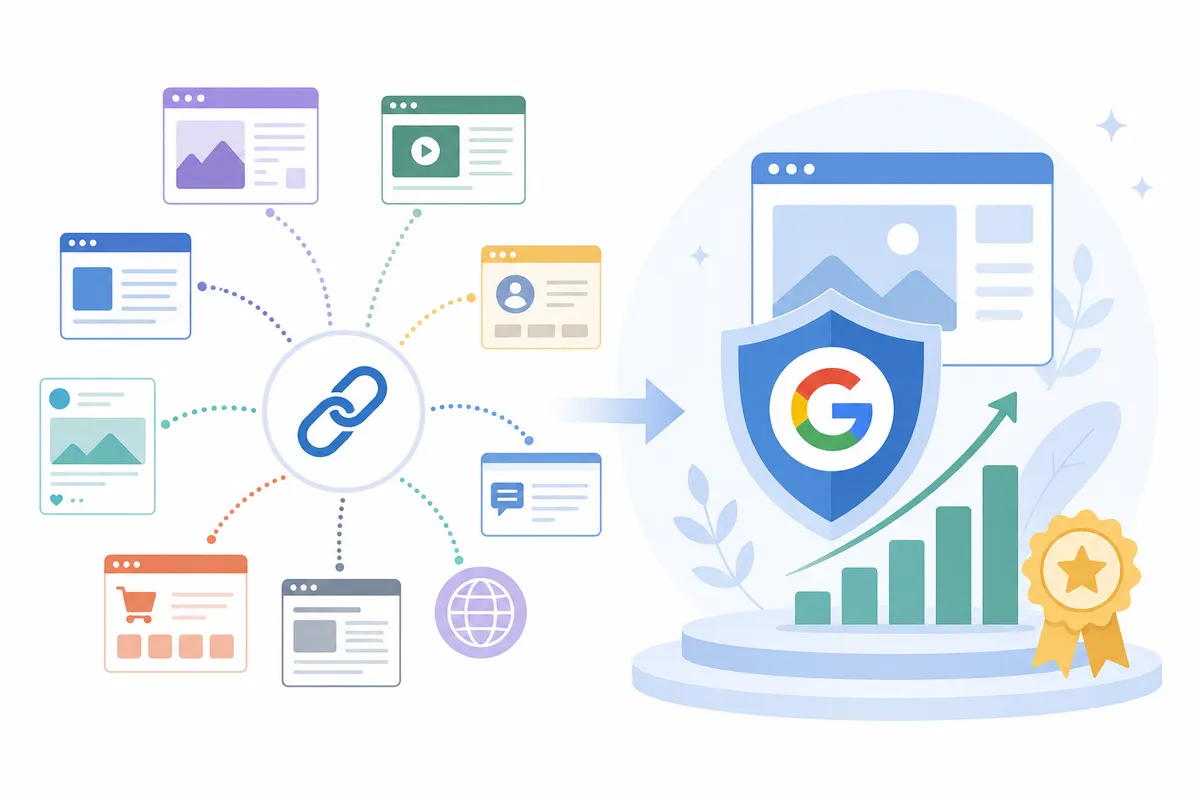
The backlink diversity meaning is the mix of domains, anchor text, source types, and link formats behind your inbound links, rather than one repeated pattern. Two hundred links from two hundred separate domains typically carry more ranking weight than two hundred links from just ten domains. That's because search engines read the shape of a link profile, not only its size.
What Is Backlink Diversity, Exactly?

The backlink diversity meaning comes down to how varied your inbound links are. It's measured across several dimensions at once: which domains link to you, what anchor text they use, what kind of site they are, and whether the link is dofollow or nofollow. A link profile with genuine diversity mixes editorial mentions, directory listings, forum references, and news citations, rather than relying on one acquisition channel repeated hundreds of times.
This matters because search engines do not evaluate links one at a time. They evaluate the whole profile as a pattern. If you are still building a foundation in this area, start with our guide to what link building is and which links actually help. It covers the basics before you tackle diversity specifically.
Why Backlink Diversity Improves Rankings and Reduces Risk

A diverse backlink profile does two jobs at once. It builds trust with search engines, and it lowers your exposure to penalties when algorithms change.
It Signals Organic Growth
When links arrive from many different domains, source types, and content formats, the pattern looks like something a real audience produced on its own. A blog post, a directory listing, a forum thread, and a news mention pointing to the same page is a shape that happens naturally. It happens when people find content useful. A hundred nearly identical guest-post links pointing to the same page with the same anchor text is a shape that happens when someone engineers it.
It Protects You When Algorithms Update
Uniform link profiles carry more risk. A profile weighted toward 80% exact-match anchors, or one built entirely from a single link type such as guest posts, stands out. This is the kind of pattern that has historically drawn closer scrutiny from Google's link-spam systems. Google's own Search Essentials guidelines name manipulative link schemes as behavior that can suppress a site's visibility in search results. That's one reason a varied, natural profile holds up better over time than a narrow one.
Backlink diversity also acts as a hedge against a single point of failure. If one source type falls out of favor after an update, a profile spread across several channels absorbs the hit instead of collapsing. Our piece on earning natural backlinks without tripping penalty filters goes deeper into what "natural" actually looks like in practice. One industry survey of link builders found that 93.8% say they prioritize link quality over quantity, which lines up with how search engines actually weigh a profile.
The Key Dimensions of a Diverse Backlink Profile
Backlink diversity breaks down into a handful of measurable dimensions. Each one sends a slightly different signal, and a healthy profile scores reasonably well across most of them rather than maxing out just one.
| Dimension | What It Looks Like | Why It Matters | Quick Self-Check |
|---|---|---|---|
| Domain diversity | Links from many separate, unique domains | The single strongest predictor of ranking strength among link factors | Count unique referring domains, not total links |
| Anchor text diversity | A mix of branded, generic, naked-URL, and partial-match anchors | Prevents patterns that read as over-optimized or manipulative | Exact-match anchors should be a small minority of the total |
| Source diversity | Blogs, directories, forums, news sites, and social platforms all represented | Signals your content reaches distinct audiences, not one bubble | List the last 20 referring sites by type |
| Link type diversity | A blend of dofollow and nofollow links | Mirrors how links accumulate organically; an all-dofollow profile looks built | Check your nofollow share in any backlink tool |
| Content format diversity | Links from articles, infographics, roundups, tools, and mentions | Shows your content is useful across different formats, not one channel | Note which content types earn the most links |
Domain and Source Diversity
Domain diversity is usually the dimension worth prioritizing first. A new referring domain you have never earned a link from adds more algorithmic weight than a second or third link from a domain already in your profile. Source diversity works alongside it. A link from a niche forum, a regional news outlet, and an industry blog together tell a broader story than three more links from three more blogs that look and function the same way.
Anchor Text and Link Type Diversity
Anchor text is the dimension most often mismanaged. A natural mix leans on branded anchors (your company name), generic phrases, naked URLs, and only occasionally an exact-match keyword phrase. Nofollow links matter too. A profile with zero nofollow links, even from high-traffic community sites, can look engineered rather than earned, since real-world linking almost always includes a mix of both.

Common Misconceptions About Backlink Diversity
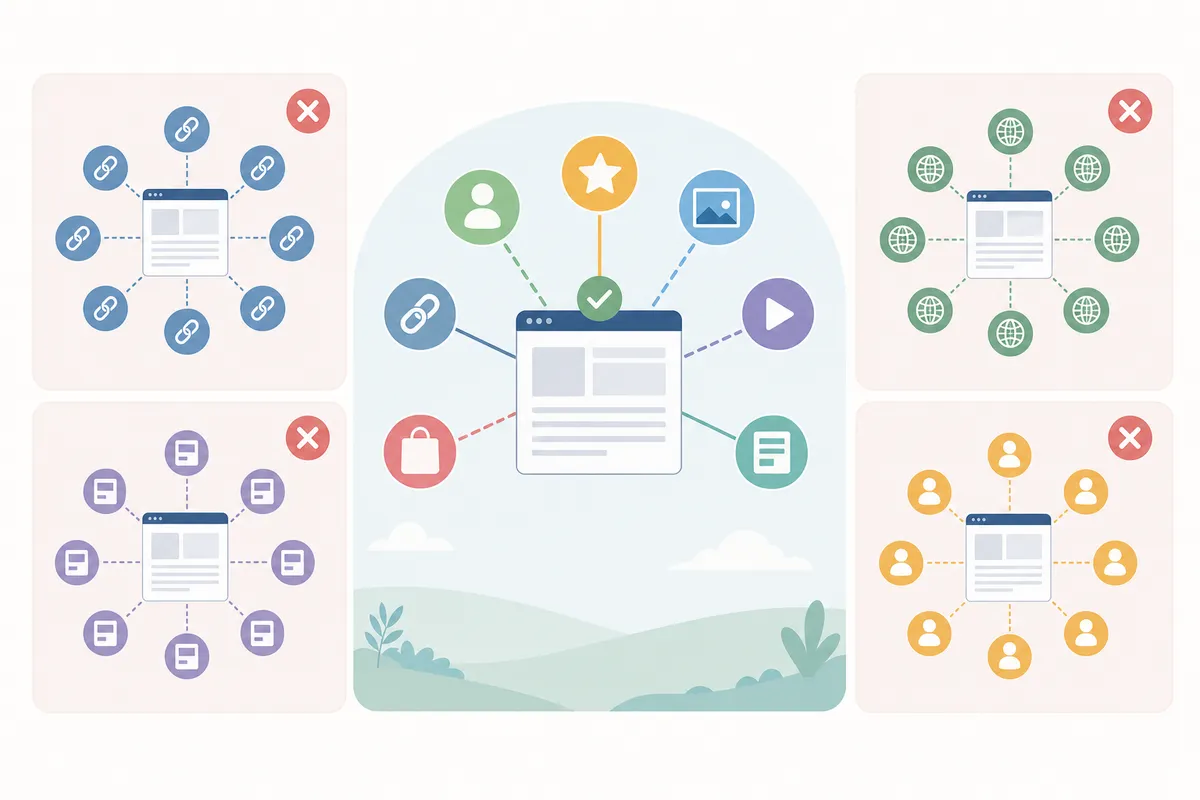
The most common mistake is assuming relevance requires every linking site to cover your exact niche. In practice, editorial relevance comes from the content surrounding the link, not the overall topic of the linking domain. A general business blog linking to your SaaS tool from within a paragraph about productivity software is relevant, even though that blog covers dozens of unrelated subjects.
Chasing narrow relevance too aggressively backfires. Restricting outreach to only mirror-image sites in your exact niche produces a low-diversity profile. That profile can look just as unnatural as a spammy one, only in the opposite direction. A few other habits quietly undermine diversity even when the intent is good:
- Buying link packages from a single vendor, which floods your profile with links from one IP range or domain cluster.
- Running only one acquisition channel, such as guest posts exclusively, which creates a recognizable and penalizable pattern.
- Reusing the same anchor text on every new placement, even a branded one.
- Building links only to the homepage instead of spreading them across relevant pages.
- Treating nofollow links as worthless and ignoring them entirely.
None of this means quality does not matter. Diversity and quality work together. The goal is a profile that looks like it grew organically, because the tactics behind it actually mirror how organic growth happens.
How to Build Backlink Diversity: A Practical Framework
Building genuine diversity takes a deliberate mix of acquisition channels running at the same time, not one campaign followed by another.
- Audit your current profile first. Map your existing referring domains, anchor text split, and source types before adding anything new, so you know which dimension is thinnest.
- Prioritize new domains over repeat links. One link from a domain that has never linked to you is worth more than several more links from a domain already in your profile.
- Track anchor text deliberately. Keep a simple log of branded, generic, and keyword-based anchors, and keep exact-match anchors to a small share of the total mix.
- Spread links across at least five source types. Editorial placements, directories, forums, digital PR mentions, and resource pages each carry a different signal.
- Let some links land on pages other than your homepage. Product pages, guides, and tools all deserve their share of inbound links.
- Keep the pace steady. Consistent monthly growth reads as natural; sudden spikes read as manufactured, even when the sources themselves are varied.
| Channel | Typical Format | Diversity Dimension It Adds | Effort |
|---|---|---|---|
| Guest posts and editorial outreach | Article with a contextual link | Anchor text and content format | Medium to high |
| Directory and citation listings | Business or resource listing | Domain and source type | Low |
| Digital PR and news mentions | Press coverage or expert quote | Source authority and format | High |
| Forums and community sites | Discussion thread or profile link | Link type (often nofollow) | Low to medium |
| Resource pages and roundups | Curated list mention | Domain diversity | Medium |
For a fuller walkthrough of outreach tactics and how to sequence them, see our guide to building backlinks for strong SEO results. The same variety principle shows up with extra force in competitive software markets. Our post on backlink diversity in SaaS SEO breaks down why variety tends to outrank raw volume once every competitor is chasing the same handful of review sites.
DIY or Bring In Help?
Auditing your own anchor text mix and spotting an obvious gap, such as zero nofollow links or an anchor profile that is 40% exact-match, is straightforward. Most site owners can do it with a free backlink tool and an afternoon. Where it gets harder is execution: running five or six acquisition channels at once, at a steady pace, over months. The challenge is not letting one channel quietly take over because it is easiest.
That ongoing balancing act is where an SEO team or a diagnostic audit earns its keep. This is especially true if your profile has already drawn a manual action or you suspect a past campaign leaned too hard on one link type. A second set of eyes on the actual data tends to catch patterns you cannot see from inside your own campaign.
FAQs
What does backlink diversity actually mean?
Backlink diversity means your inbound links come from a varied mix of domains, anchor text, source types, and link formats rather than one repeated pattern. It is measured across the whole profile, not link by link.
Is backlink diversity more important than backlink quantity?
Yes, in most cases. A site with links from 200 distinct domains typically outperforms a site with the same total link count concentrated on 10 domains. That's because search engines weigh unique referring domains heavily.
What percentage of my anchor text should be exact-match?
Many SEO practitioners recommend keeping exact-match anchors under roughly 5% of your total anchor distribution, with the rest split across branded, generic, and naked-URL anchors.
Do nofollow links help with backlink diversity?
Yes. Nofollow links from high-traffic sites add to a natural-looking profile and can still drive referral traffic. Even so, they do not pass the same ranking signal as dofollow links. A profile with zero nofollow links can look engineered.
How do I know if my backlink profile lacks diversity?
Pull your backlink data and check three things: how many unique domains link to you versus total links, what share of anchors are exact-match, and whether more than one source type (blogs, directories, forums, news) is represented. A skew toward one answer in any category signals a gap.
See Where Your Own Link Profile Stands
Most site owners have never actually mapped their anchor text split or counted unique referring domains against total links. That's why the biggest gaps in backlink diversity usually go unnoticed until an update exposes them. The backlink diversity meaning only matters once you check your own profile against it, so pull your current backlink data this week and compare it to the dimensions above. If you want a clearer picture of where your whole SEO profile stands, not just backlinks, talk to the team and get a sample SEO report to see what a full audit would surface for your site.
Resources / References
Sources
About the author
SearchBlueprint researched, wrote and scored this article with the content pipeline our customers run on their own sites. The score in the byline is what our content engine gave this page before it published. Nothing here is reviewed by hand, which is the point: it is the product's output, published where anyone can check it.