Daily SEO Articles for Marketers: Build a Habit That Sticks
SearchBlueprint · · 7 min read · scored 92/100

Daily SEO articles for marketers work best as a short, consistent habit rather than an occasional binge. Ten to fifteen minutes each morning across two or three trusted sources catches algorithm notes, SERP feature shifts, and format changes while they are still actionable, instead of weeks after competitors have already adjusted.
Why Daily SEO Articles Beat Occasional Deep Dives
Search marketing moves in small, frequent shifts rather than one big yearly overhaul. Google posts dated updates on its own Search Central Blog throughout the year, covering everything from spam policy changes to new structured data support. Miss a month of that feed and you are not just behind on news. You are applying advice a newer post has already corrected.
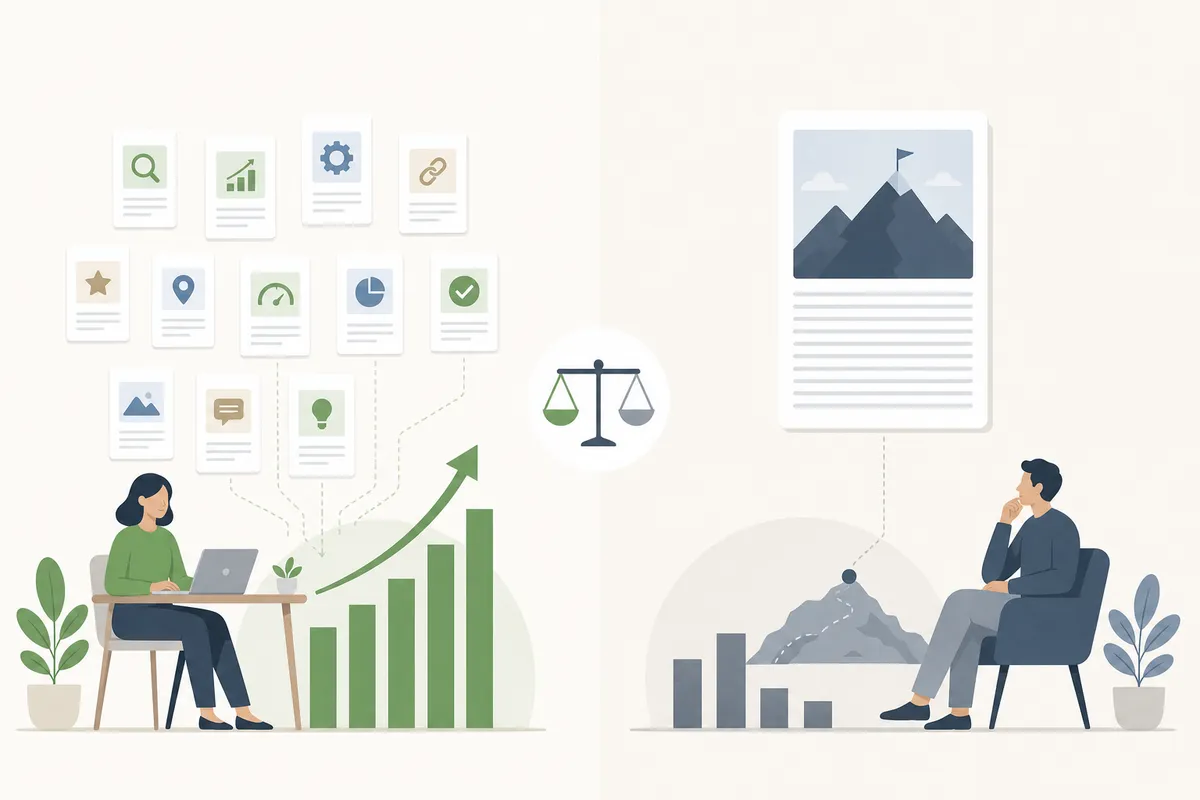
A daily habit of reading SEO content spreads that same information across small sessions instead of one exhausting catch-up read. It matters for two reasons.
Small shifts compound. A SERP feature that starts appearing on ten queries this week often spreads to hundreds by next month, and marketers who spot it early can test against it before it becomes the norm everyone else is scrambling to address.
Daily reading also builds pattern recognition. After a few months of consistent SEO articles, you start telling genuine signal apart from noise from a single ranking fluctuation. That judgment comes from repetition, not from one deep-dive guide. When a shift changes what a query actually means, it is worth revisiting with a proper keyword research process rather than just noting it and moving on.
Where Marketers Find Daily SEO Articles
Not every source publishing daily is worth your ten minutes. It helps to know the three broad categories before you build a reading list, because each one serves a different purpose.
Official channels
Google Search Central and the Search Central Blog publish the closest thing to primary sources: documentation changes, policy updates, and dated announcements straight from the team that runs the ranking systems. Bing Webmaster Guidelines serves the same role for the second engine. These move slower than practitioner blogs but carry the most weight, because they describe what actually changed rather than what a writer thinks changed.
Independent practitioner blogs and newsletters
Individual SEOs and small teams often spot pattern shifts before anyone else, because they are watching live rank data across many client sites. These sources are faster but more variable in quality. Some back every claim with screenshots and test data; others repeat a rumor from social media without checking it.
Aggregators and community threads
Forums and link-roundup sites collect the day's SEO articles in one place, which saves scanning time but adds a filtering step of its own. Treat these as a discovery layer, not a final source. Follow the link back to the original post before you trust a claim enough to act on it.
| Source type | Best for | Typical update pace | Watch for |
|---|---|---|---|
| Official documentation (Google, Bing) | Confirmed policy and technical changes | Weekly to monthly | Dense language, easy to skim past the real change |
| Practitioner blogs and newsletters | Early pattern spotting, real test data | Daily to weekly | Claims made before enough data confirms them |
| Aggregators and forums | Fast discovery of what is trending today | Daily | Repeated speculation with no original source |

What Shows Up in the Feed Most Days

Once you scan daily SEO articles for a few weeks, the topics start sorting themselves into a handful of repeating formats.
- Algorithm and policy notes. Short posts flagging a confirmed update, a spam policy change, or a new set of structured data guidelines.
- SERP feature spotting. Screenshots of a new AI Overview placement, a shifted People Also Ask box, or a featured snippet format nobody had seen before.
- Tactical how-to pieces. Practical guides on a single task, such as writing meta descriptions that earn clicks.
- Case studies and data pulls. A site owner sharing what happened to traffic after a specific change, usually with before-and-after numbers.
- Tool and platform news. New features shipping in Search Console, third-party rank trackers, or CMS plugins that touch SEO.
The tactical pieces are usually the most immediately useful, because they translate a broader shift into one thing you can go do today. A well-written meta description guide, for instance, turns an abstract "click-through rate matters" observation into a checklist you can run against your own pages this afternoon.
How to Judge Whether a Daily Source Is Worth Your Time
Not every article that lands in your feed deserves the same attention. A few checks separate the sources worth keeping from the ones worth dropping.
Start with the byline. Is this written by someone who names their own site, their own test data, or their own client work, or is it an unattributed post repeating a claim you have already seen elsewhere? Original reporting is worth more than a summary of someone else's original reporting.
Next, check whether the piece cites something checkable: a Google Search Central post, a dated screenshot, a specific query. Vague language like "many experts believe" with no link behind it is a sign the writer is guessing.
Finally, check the date and whether it has aged well. SEO advice from two years ago can be flatly wrong today. A source worth following corrects itself in public rather than leaving outdated guidance live with no note.
| Signal | What it looks like | Red flag |
|---|---|---|
| Attribution | Named author with a track record or a linked case study | Anonymous post, no named source |
| Evidence | Screenshots, data, or a link to official documentation | Only opinion, no supporting link |
| Recency | Dated, and updated when guidance changes | No date, or clearly stale advice presented as current |
This is also where content quality matters more than headline volume. A source that publishes one well-checked piece a week and gets it right beats one that posts five thin summaries a day. The same logic applies to your own content: content quality matters more than word count, so more output is not automatically better rankings.
Turning Daily Reading Into Weekly Action
Reading daily SEO articles for marketers only pays off if something changes because of it. Without a habit for acting on what you read, ten minutes a day becomes ten minutes of information with no outcome attached.
A simple system beats an ambitious one. Keep a running note of anything you read that applies to your own site. At the end of the week, pick one item and act on it: rewrite a batch of meta descriptions, research a keyword cluster you had missed, or update a page a new SERP feature has made less visible.
If the week's reading points to a content gap, that is the moment to follow a structured process for how to create SEO content that ranks rather than guessing. It turns a vague idea from a newsletter into a published page with a real chance of ranking.
Treat your reading list the way a reporter treats a beat. The goal is not to read everything. It is to notice the one or two items a week worth a real response.
FAQs
How much time should marketers spend on SEO reading each day?
Ten to fifteen minutes across two or three trusted sources is enough for most marketers. The goal is consistency, not volume. A longer weekly session to follow up on the week's most important items works well alongside it.
Is it worth reading SEO news every day, or only when something breaks?
Daily reading catches small shifts while they are still easy to act on. Waiting until something breaks means you are reacting to a problem that has often been visible in the data for weeks already.
What is the difference between official SEO sources and independent commentary?
Official sources, such as Google Search Central, describe what actually changed. Independent blogs and newsletters often spot the pattern first, based on live data, but their claims deserve more scrutiny before you act on them.
How do you know if an SEO article is outdated?
Check the publish date and look for a correction note if the guidance has since changed. Advice with no date, or advice that contradicts current Google Search Essentials guidance, should be treated as unreliable.
Can daily SEO reading replace a proper content strategy?
No. Daily articles are an input, not a plan. They are most useful when you route what you learn into an existing content calendar and keyword strategy rather than reacting to each post individually.
Start Today's Reading List
Pick two sources, set a ten-minute block on your calendar tomorrow morning, and commit to one week before judging whether the habit sticks. Daily SEO articles for marketers are only worth the time if they lead somewhere: talk to the team behind a sample SEO report and see what a full analysis of your own site turns up.
Resources / References
About the author
SearchBlueprint researched, wrote and scored this article with the content pipeline our customers run on their own sites. The score in the byline is what our content engine gave this page before it published. Nothing here is reviewed by hand, which is the point: it is the product's output, published where anyone can check it.