How AI Transforms Content Personalization for SEO Gains
SearchBlueprint · · 7 min read · scored 90/100

How AI transforms content personalization for SEO gains starts with matching. AI adapts page content, links, and messaging to what each visitor is searching for. It then feeds the resulting engagement signals back into your optimization. The payoff: content that fits real search intent, not one generic version for everyone.
How AI Transforms Content Personalization for SEO Gains
Traditional personalization relied on hand-built rules: show this banner to mobile users, that offer to returning visitors. AI-driven personalization replaces fixed rules with models that learn from behavior, then adjust content in real time. That shift matters for SEO. It lets one page serve several distinct search intents, so you never need a separate page for each one.
The mechanism is straightforward even when the models behind it are not. A visitor lands on a page. The system reads signals like device, location, referral source, and on-page behavior. It then adjusts specific content blocks, such as a featured product, a recommended article, or a call-to-action. The page's core content and URL stay the same.
Matching Content to Search Intent in Real Time
Search intent is not uniform even for a single keyword. Someone searching "content personalization" might want a definition, a platform comparison, or an implementation guide. AI personalization can surface a different intro summary, a different set of recommended sections, or a different CTA to each visitor. It shows this on the same page. The content that greets them then matches what they came for. This works best on a page structure already built for search intent. That is why personalization pairs naturally with keyword-to-page mapping. Personalize a page already built for the right query, instead of trying to make one generic page cover every query.
Personalizing Internal Links and On-Page Recommendations
Internal linking is one of the best places to apply this. Instead of a static "related articles" block, an AI system can recommend the next page. It bases this on what similar visitors read next, what converted for that segment, or what gaps exist in the session. Search engines still crawl the same link graph. Real visitors get a path that is more likely to keep them reading. That is one of the clearer behavioral signals a personalization program can influence.
Turning Engagement Signals Into Content Decisions
The gains compound when engagement data flows back into content strategy, not just into the personalization layer itself. If a segment consistently skips a section or abandons after a specific paragraph, that is a content problem. It's worth fixing for everyone, not only for that segment. This is close to what adaptive content optimization describes. It means using real behavior data to keep revising a page, rather than publishing it once and leaving it alone.

Where AI Content Personalization Delivers SEO Gains
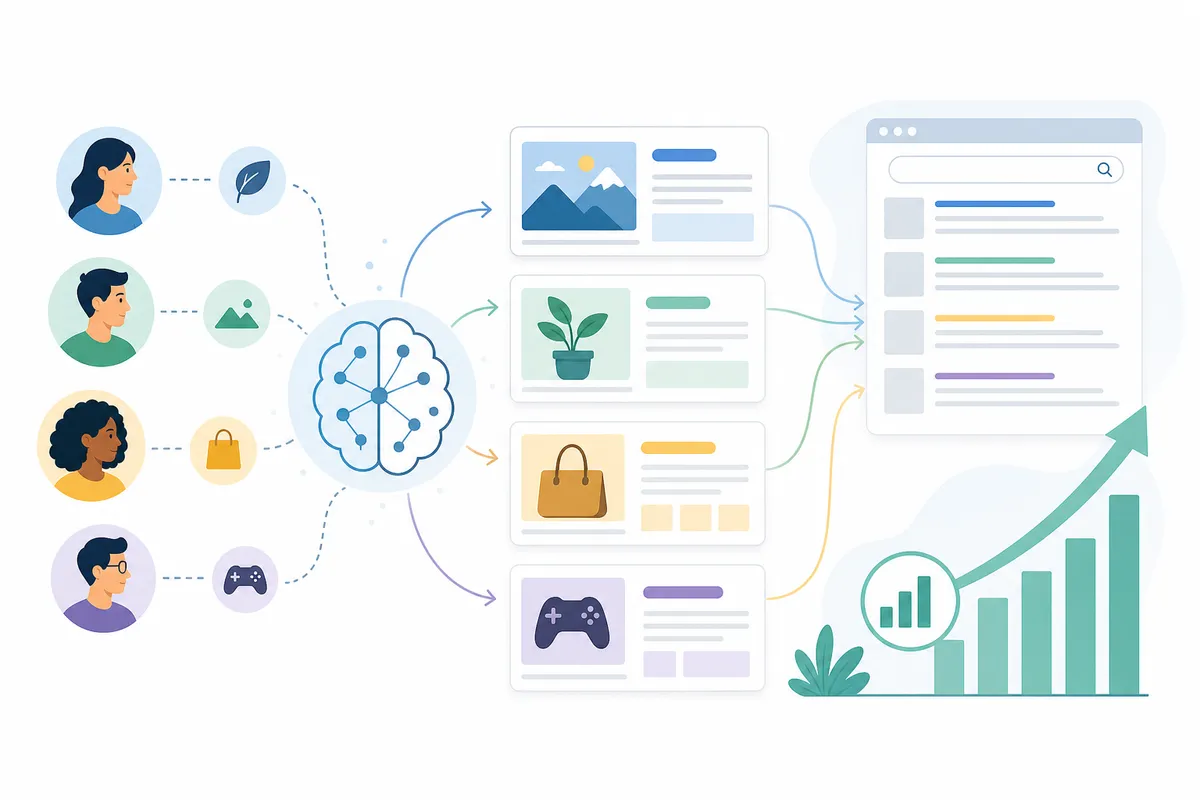
The gains rarely show up as a ranking jump you can point to directly. They show up as improvements to the signals search engines already weigh. That means dwell time, or how long people stay, along with whether they click a second page and whether they return. The table below compares three common approaches and what each one actually costs to run.
| Approach | What Changes for the Visitor | Maintenance Effort | SEO Risk If Done Wrong |
|---|---|---|---|
| Static content for everyone | Nothing adapts; same page, same order, same CTA for all visitors | Low, one page to update | Low risk, but engagement signals stay flat |
| Rule-based segments (device, location, referral source) | Layout, CTA, or featured content shifts based on simple, fixed rules | Moderate, rules need periodic review as traffic mix changes | Moderate, if segments serve near-duplicate full pages instead of swapping components |
| AI-driven dynamic personalization | Content blocks, recommendations, and messaging adapt to real-time visitor patterns | Higher, needs ongoing monitoring and data governance | Higher without safeguards; lower once canonical URLs and structured data are handled correctly |
Trust and loyalty follow from the same mechanism. This lines up with broader research on personalization, which links strong personalization to faster growth. A visitor who consistently finds content relevant to their situation is more likely to come back directly next time. That return visit is itself a healthy signal. The same visitor is also more likely to link to or mention your content elsewhere. That compounding effect is a bigger part of a broader AI-driven SEO program than any single personalization tactic on its own.
Can Smaller Sites Personalize Content Without an Enterprise Platform?
You do not need an enterprise personalization suite to start. Most content management systems now support conditional content blocks based on referral source, device type, or geography. That alone covers a meaningful share of what AI personalization does for smaller catalogs. Dynamic FAQ ordering, segment-aware recommended reading, and CTA variants by traffic source are all examples. A mid-size team can set these up with existing tools.
A dedicated AI platform earns its cost through scale and speed. Think large product catalogs or real-time behavioral scoring across thousands of sessions a day. It also covers personalization that must react within the same visit, rather than the next one. If your site has a few hundred pages and a handful of clear visitor segments, rule-based personalization is a good fit. It gets you most of the SEO benefit at a fraction of the setup cost. Start there, watch what actually moves engagement, then decide whether the more automated approach is worth the investment.

Privacy, the Filter Bubble, and Duplicate-Content Risks to Manage
Personalization has two honest downsides worth naming before you build it. The first is privacy. Any system that adapts content based on behavior is using visitor data. That data collection needs disclosure, handled the way your privacy policy and local regulations require. The second is the filter bubble effect. Here, a visitor only ever sees content that reinforces what they already clicked. Over time, this can narrow what they discover on your site. In the worst case, it hides content they genuinely needed.
The technical risk is duplicate content. Say personalization is implemented by generating separate full pages per segment, rather than swapping components on one canonical page. You can end up with several near-identical URLs competing against each other in search results. Google's own search essentials guidance is clear that content should serve people first. Duplicate or manipulative variations of the same page work against that goal, not for it. The safer pattern keeps one URL, one canonical tag, and lets the personalization layer sit inside the page rather than duplicating it. Not sure your current pages are clean enough to personalize safely? It is worth checking whether your content is already AI search ready before adding another layer on top.
When to Bring in Outside Help
Rule-based personalization is a reasonable DIY project for a team that already understands its traffic segments and has a competent developer. Full AI-driven personalization is different. Anything touching real-time behavioral scoring, canonical URL handling, or structured data at scale is where most teams benefit from outside expertise. Getting the canonicalization and crawl-budget side wrong turns a personalization win into a duplicate-content problem. It is far easier to catch before launch than to untangle afterward.
FAQs
What is AI-driven content personalization in SEO?
It is the practice of using AI models to adapt content, such as recommendations, CTAs, or featured sections. The adaptation responds to visitor signals like device, referral source, or behavior. The underlying page and URL stay the same for search engines.
Does personalized content hurt SEO through duplicate content?
Only when it is built wrong. Personalization that swaps components inside one canonical page is safe. Personalization that generates a separate full page per segment can create near-duplicate URLs that compete against each other in search results.
How is AI content personalization different from A/B testing?
A/B testing shows different versions to random visitors to find one winner. Personalization shows different content to different visitors on purpose. It is based on who they are or how they are behaving, with no single "winning" version for everyone.
What data do you need to personalize content for SEO?
At minimum, referral source, device type, and on-page behavior such as scroll depth or clicks. More advanced setups add returning-visitor status, geography, and past conversion behavior, always collected and disclosed in line with your privacy policy.
Can small sites use AI personalization, or is it only for enterprise sites?
Small and mid-size sites can start with rule-based personalization using their existing CMS, which covers most of the SEO benefit. A full AI platform becomes worthwhile once you have large catalogs or need real-time adjustments within a single visit.
Check What Your Content Is Ready to Personalize
Personalization only pays off when the pages underneath it already target clear search intent and sit on sound technical fundamentals. This is how AI transforms content personalization for SEO gains. It means a foundation worth personalizing, not a patch for pages nobody built around what people search for. Talk to the team and review a sample SEO report to see which pages are ready and which need work first.
Resources / References
About the author
SearchBlueprint researched, wrote and scored this article with the content pipeline our customers run on their own sites. The score in the byline is what our content engine gave this page before it published. Nothing here is reviewed by hand, which is the point: it is the product's output, published where anyone can check it.