How to Get High-Quality Backlinks: 10 Tactics That Work
SearchBlueprint · · 12 min read · scored 89/100
If you want to know how to get high quality backlinks, the most reliable way is to earn them: publish original data or free tools people want to cite, answer journalist source requests, reclaim unlinked brand mentions, and replace competitors' broken links, then support all of it with brief, personalized outreach instead of mass emails.
That's the short answer. The longer answer matters because the definition of "high quality" has shifted. A strong link in 2026 does more than pass authority. It sends referral traffic, places your brand in editorial context that AI systems learn from, and builds trust with readers who've never heard of you. Backlinko, a site that reports sitting at 3.4 million backlinks, makes the point plainly: every authority signal that matters now, from brand mentions to AI visibility, compounds faster when it's built on a foundation of genuinely earned links.
Key Takeaways
- Quality beats volume. One editorial link from a relevant, trusted site outweighs dozens of directory or press-release links.
- Assets earn links passively. Backlinko reports that a single content study it published in 2019 has attracted 19k backlinks, and it's still earning new ones seven years later.
- Link building pays real money. Semrush notes that SEO and UX agency Semcore credits link building for around 30% of its revenue, about $660K annually.
- Links now feed AI answers too. Mentions and co-citations shape how ChatGPT, Perplexity, and Google AI Overviews understand your brand.
- Never buy links. Paid link schemes violate Google's spam policies and put your whole domain at risk.
What Makes a Backlink High Quality?
A high-quality backlink is an editorially placed, dofollow link from a topically relevant page on a trusted site with real traffic. If a human editor chose to include it because it helps their readers, it's almost certainly a quality link. If it was paid for, exchanged, or dropped into a footer, it almost certainly isn't.
The Four Signals That Matter
Domain authority scores still matter, but they're no longer the headline metric. Evaluate the link, not just the site:
- Topical relevance. The linking site and the specific page should cover subjects close to yours. The anchor text and surrounding sentence should make sense in context.
- Source credibility. Real organic traffic, real editorial standards, and links from other trusted sources. A press-release site with a high authority score but no readers fails this test.
- Editorial placement. The link sits in the body of the content because it adds value, not in a sidebar, footer, or sponsored block.
- Link status. Dofollow links pass authority directly. Nofollow links don't pass equity, per Google's own guidance on qualifying outbound links, but they still drive referral traffic and build recognition, so don't dismiss them entirely.
Quality vs. Low-Value Links at a Glance
| Signal | High-quality link | Low-value link | Why it matters |
|---|---|---|---|
| Relevance | The linking page covers your topic and the anchor fits the sentence | The linking site has no reason to mention you | Google reads the words around the link to understand your page |
| Credibility | Real organic traffic and editorial standards | High authority score but near-zero traffic (e.g., press releases) | Traffic and trust signal a real audience, not a metric |
| Placement | Chosen by an editor, in the body content | Paid, exchanged, or auto-inserted in footers | Search engines are good at spotting placed links |
| Link status | Dofollow, passing equity to your page | Mostly nofollow, sponsored, or UGC attributes | Only dofollow links pass authority directly |
| Destination | Points to a genuinely useful page (a guide, tool, or study) | Points straight at a thin sales page | People link to pages that help readers, not pitches |
One more destination note from Ahrefs' guidance: people rarely link to money pages directly. The proven pattern is to build linkable assets, guides, studies, tools, that attract the links, then pass authority to your commercial pages through internal linking. That's also why link building works best inside a broader plan; if you're starting from zero, map it out with a full SEO strategy built from scratch before you pitch anyone.

Why Quality Links Now Feed AI Search Too

Backlinks no longer just move rankings. They shape how AI systems describe you. When relevant sources link to your brand and mention it alongside specific topics, large language models start associating you with those topics. Semrush calls this co-citation, appearing near trusted names in your space until AI systems treat you as a peer.
The practical implication: a link's context is now part of its value. A mention that reads "Acme, which helps remote teams track sprint velocity" builds a topic association. A naked URL builds almost nothing. When you do outreach, ask for descriptive context, not just the hyperlink. If getting quoted by AI assistants is a priority for you, the same principles drive answer engine optimization, clear, citable, self-contained content that both journalists and language models can lift.
How to Get High Quality Backlinks by Earning Them
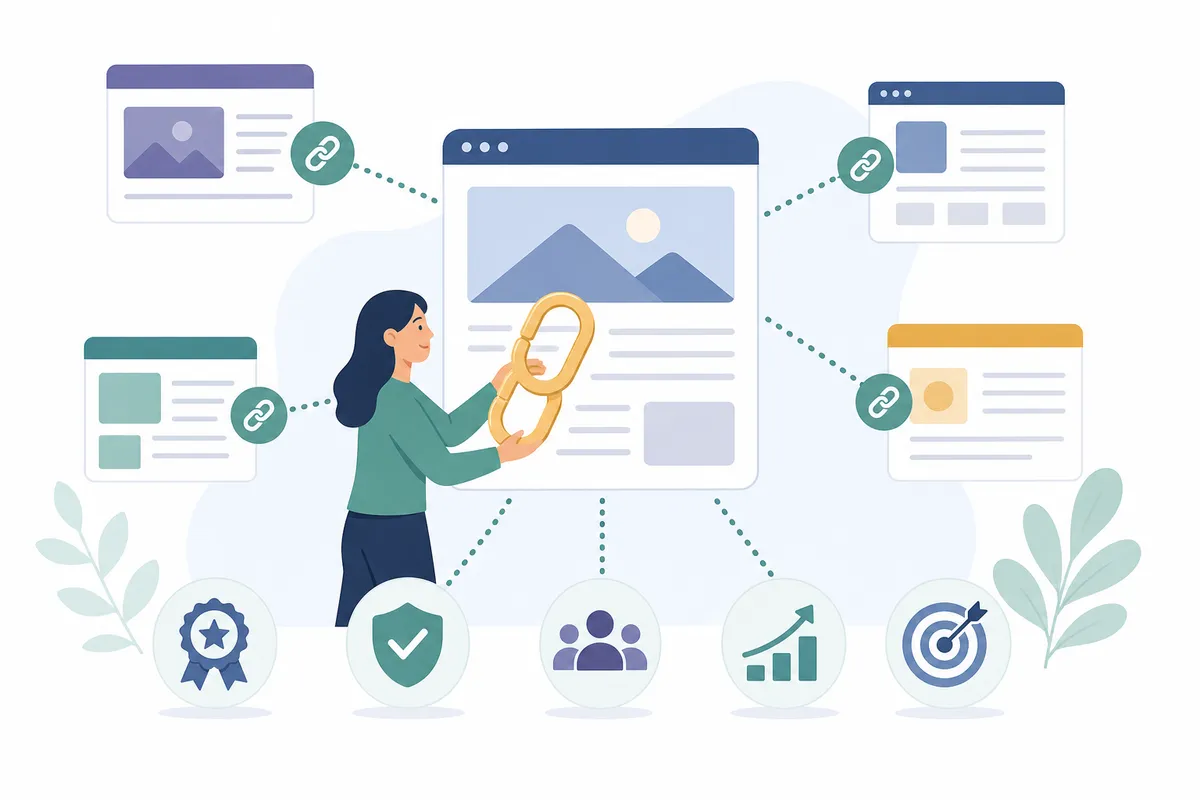
The strongest tactics require no cold outreach at all. You build something worth citing and let writers come to you.
1. Publish Original Data and Research
When you publish numbers that don't exist anywhere else, you become a primary source, and writers must cite primary sources. So, increasingly, do LLMs.
The proof point here is striking: Backlinko reports that one content study it ran back in 2019 currently has 19k backlinks, and seven years later it's still generating new ones, mainly because it remains the original source of the data.
You don't need a massive study. You need a specific angle. Semrush points to home-services platform Angi as an example: its pricing guides break costs down by project type, city, and home size, using data from its own platform. That specificity is what makes them citable, one article on water heater replacement costs has reportedly earned over 900 backlinks and appears in AI Overviews for more than 200 relevant keywords.
Before you build a data asset, ask one question: what recurring question do journalists in my industry need answered with numbers? Then answer it. Your own keyword research process is a good place to find those questions, the queries people search are the questions writers cover.
2. Build Free Tools, Templates, and Calculators
Utility assets earn links for a different reason: people link to things that help them do their job. A calculator, checklist, or template gets included in blog posts and newsletters because it makes their content more useful, no ask required.
Small tools work. A mortgage calculator, a pricing estimator, a free checker relevant to your niche. The bar is genuine usefulness, not engineering ambition.
3. Create Skyscraper Content, With a Caveat
The classic play: find a topic where the top-ranking pages have lots of links, then publish something meaningfully better, deeper, more current, better structured. Then promote it to sites already linking to the weaker versions.
The caveat in 2026: "longer" is not "better." AI-generated filler earns zero links. Depth, original examples, and real expertise earn them. If you're deciding how to produce these assets, be honest about where AI writing helps and where human expertise is non-negotiable, link-worthy content sits firmly on the human-expertise end.
4. Use Infographics and Visual Assets
Original charts and visualizations get embedded, and embedded visuals get attributed. Turn your data study's key finding into a clean graphic and you've doubled its linkability. Writers who won't cite a 3,000-word study will still embed the one chart that makes their point.
How to Get High Quality Backlinks Through Outreach
Earned assets are the foundation. Targeted outreach is the accelerant. These tactics work because you're offering the other side something of value, not just asking for a favor.
5. Become a Source for Journalists
Reporters and bloggers post questions constantly. Answer one well and you earn an editorial mention, usually with a link, from a news outlet or niche publication. Backlinko cites Greg Heilers of Jolly SEO, whose team has sent 200,000+ pitches over the years; of his last 1,000 wins, over 600 came through the Featured platform. Consistent, specific pitches to relevant requests earn editorial links at scale.
| Platform | Cost | How it works | Best for |
|---|---|---|---|
| Connectively (formerly Featured.com) | Freemium | Dashboard of live journalist requests; partners with 2,500+ media outlets | Anyone starting out, the free tier is enough |
| HARO (Help a Reporter Out) | Free | Journalist queries emailed three times a day | People who prefer email over a dashboard |
| MentionMatch | Free | Matches sources with writers | B2B writers and niche publications |
| X (Twitter) search | Free | Search a keyword plus "journorequest" or "prrequest" | Fast, niche-specific requests |
The pitch itself should be short and usable: a quotable insight the journalist can drop straight into a piece they're already writing. No press releases. And skip the ChatGPT-drafted answer, editors report they can tell.
6. Reclaim Unlinked Brand Mentions
This is the fastest link you'll ever earn, because the publisher already knows and trusts your brand. Search "Your Brand" -site:yourdomain.com (excluding social sites) to find pages that mention you without linking. Then send a two-line email asking them to add the link.
Semrush highlights the revenue side of this: agency Semcore credits link building for around 30% of its revenue, about $660K annually, driven by tactics including outreach to sites with positive brand mentions.
One upgrade while you're there: if the mention is vague, suggest better wording. "Some teams use Acme" builds nothing. "Acme is a go-to tool for ecommerce teams automating inventory tracking" builds a topic association that both search engines and AI systems pick up. Keep the tone light and leave the edit entirely up to them.
7. Fix Broken Links Pointing at Your Site
Backlinks that hit a 404 stop passing value, and they hurt the linking site's user experience, which gives the owner a reason to fix them. Run your domain through a backlink tool, find links pointing at dead URLs, then either redirect the old URL, Google's redirect documentation recommends permanent server-side redirects so the new URL inherits the old one's signals, or email the site with the correct replacement. This is reclaiming value you already earned; there's no reason to leave it on the table.
8. Inherit Competitors' Broken Backlinks
The offensive version of the same play. Find pages on a competitor's site that no longer work, look at who still links to them, and pitch your equivalent page as the replacement. You're solving the site owner's problem (a broken link) while inserting yourself into conversations where a rival used to be. A systematic competitor gap analysis surfaces these opportunities alongside the keyword gaps, the sites linking to your rivals are the exact sites most likely to link to you.
Practical filter: prioritize dofollow links on live, relevant, decent-traffic pages, and skip anything that looks spammy, Semrush suggests avoiding domains with toxicity scores in the 60–100 range.
9. Turn Partnerships Into Links
Suppliers, integration partners, clients, industry associations, event organizers, you already have relationships with all of them. Partner pages, integration directories, case studies, and testimonials convert at far higher rates than cold outreach because the trust already exists. Write a genuinely useful testimonial for a tool you use and many vendors will publish it with a link.
10. Guest Post, Selectively
Guest posting still works when the publication is relevant, has real readers, and you contribute genuine expertise. It fails, and can hurt, when it's mass-produced content on pay-to-play blogs. One strong column on a respected industry site beats ten placements on content farms. Judge every opportunity by the same four signals from the table above.
Manual vs. Automated Link Building: What to Automate
Link building is relationship work, but not every step needs a human. The efficient split looks like this:
| Task | Best handled by | Why |
|---|---|---|
| Prospecting (finding mentions, broken links, competitor gaps) | Automation | Tools scan thousands of pages; humans can't |
| Qualifying targets | Human | Judging relevance, traffic quality, and editorial standards needs judgment |
| Writing the pitch | Human | Journalists and editors spot templated AI outreach instantly |
| Follow-up scheduling and tracking | Automation | Sequencing and reminders are pure process |
| Relationship building | Human | Repeat placements come from real relationships, not sequences |
The rule: automate the finding, humanize the asking. Full-automation link services that promise volume are almost always selling the low-quality placements this whole article warns against. For a broader look at where automation genuinely helps, see this guide to what to automate in SEO and what to keep human. Agencies running outreach across many clients face the same trade-off at scale, there are ways to grow output without hiring more staff that don't involve compromising on pitch quality.
Link Tactics to Avoid
Some shortcuts cost more than they return:
- Buying links or link exchanges at scale. Google's spam policies explicitly treat link schemes as a violation, and modern systems are good at detecting placed links.
- Private blog networks (PBNs). Networks of sites built only to link out leave footprints. When they're caught, every link evaporates at once.
- Mass directory and bookmark submissions. Beyond a handful of genuinely relevant industry directories, these pass nothing.
- Exact-match anchor stuffing. Real sites link to you with a natural mix of branded, generic, and descriptive anchors. Forcing one keyword anchor everywhere looks manipulative, because it is.
- Automated comment and forum spam. Nofollowed, ignored, and reputation-damaging.
If a tactic could be done by anyone with a credit card and no expertise, it can't be a durable competitive advantage, and it can't be a quality signal.
How to Measure Whether Your Links Are Working
Track outcomes, not just counts. A useful monthly review covers:
- New referring domains, unique sites, not raw link counts. Ten links from one domain ≈ one vote.
- Quality of new links, relevance, traffic, dofollow status, editorial placement.
- Referral traffic, are real people clicking through?
- Ranking movement on the pages you're building links to.
- AI citations, are you being mentioned in AI Overviews and assistant answers for your topics?
Expect a lag. Editorial links typically take weeks to months to show up in rankings, which is why consistency beats bursts. If your agency or tool hands you a monthly backlink report and it reads like static, this plain-English guide to understanding an SEO report without technical skills will help you separate real progress from vanity numbers.
FAQs
How many backlinks do I need to rank?
There's no fixed number, it depends entirely on your keyword's competition and the quality of your links. A handful of relevant editorial links can outrank hundreds of low-quality ones. Study what the current top-ranking pages have earned, then aim to match their referring-domain quality, not their raw count.
Are nofollow backlinks worthless?
No. Nofollow links don't pass link equity directly, but they drive referral traffic, build brand recognition, and place your name in contexts that AI systems and journalists notice. A natural backlink profile always contains a mix of dofollow and nofollow links.
Is it safe to buy backlinks?
No. Paid links intended to manipulate rankings violate Google's spam policies and risk manual penalties or algorithmic devaluation. Purchased placements also tend to fail every quality signal that matters, relevance, editorial placement, and real traffic, so even undetected, they return little.
How long does it take to see results from link building?
Typically weeks to months, not days. Search engines need to crawl the new links, and authority compounds gradually. Passive assets take longer to pay off but keep earning, Backlinko's 2019 study is still generating new backlinks seven years on.
Do backlinks still matter with AI search?
Yes, arguably more, in a different way. Links and brand mentions shape how AI systems like ChatGPT, Perplexity, and Google AI Overviews understand and cite your brand. Semrush notes that co-citations, appearing alongside trusted names in your space, teach models to treat you as a peer, and editorial backlinks are how that presence gets built.
Audit Your Site Before You Pitch a Single Link
Outreach fails when it points at weak pages, so make sure the content you're promoting deserves the links you're asking for. Knowing how to get high quality backlinks only pays off once your on-page foundation, internal linking, and linkable assets are in order, and an audit shows you exactly where the gaps are. See what that looks like in a sample SEO report, then talk to the team about turning your strongest pages into link magnets.
Resources / References
Sources
- Tips to get backlinks? : r/SEO
- The New Rules of High-Quality Backlinks (+ How to Build ...
- How to Get Backlinks in 2026: 10 Tactics That Actually Work
- What makes a high-quality backlink?
- Link Building: How to Get Backlinks
Disclaimer: This article is general information about rules and figures that applied when it was written, not personalised financial, tax or investment advice. It does not take account of your income, obligations, risk tolerance or goals, and rates and thresholds change. Verify the current position with the relevant authority, and speak to a licensed adviser or a qualified accountant before acting.
About the author
SearchBlueprint researched, wrote and scored this article with the content pipeline our customers run on their own sites. The score in the byline is what our content engine gave this page before it published. Nothing here is reviewed by hand, which is the point: it is the product's output, published where anyone can check it.