How to Leverage Influencers for Organic Growth That Lasts
SearchBlueprint · · 10 min read · scored 92/100
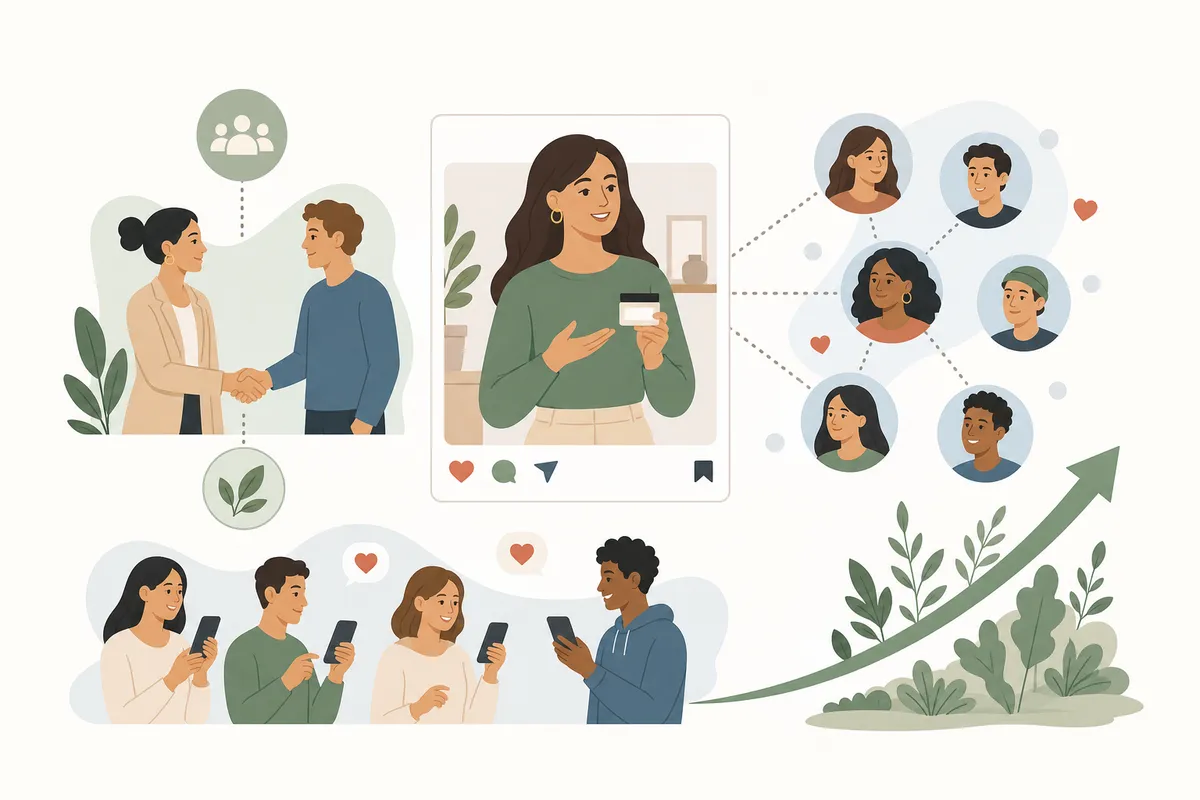
To leverage influencers for organic growth, treat creators as a trust and content engine rather than an ad slot. Choose partners whose audience matches yours. Build long-term collaborations that produce tutorials, reviews, and mentions. Then channel that attention into branded search, backlinks, and AI-answer visibility you keep long after any single campaign ends.
Most guides stop at reach: pick an influencer, pay for a post, count the impressions. This one covers the part that compounds. The follower count fades in a week. The tutorial that ranks on YouTube, the spike in people searching your brand name, and the mention an AI assistant quotes back to a buyer do not.
Key Takeaways
- Trust is the real asset. Forbes contributors note consumers are significantly more likely to act on an influencer's recommendation than on a brand ad. That is why creator content keeps working after the post date.
- Match the tier to the job: nano creators (1,000 to 10,000 followers) for community trust, micro (10,000 to 100,000) for niche authority, macro and mega for broad awareness.
- The organic payoff shows up in branded search volume, backlinks, user-generated content, and citations in AI answers, not in impressions.
- Long-term partnerships beat one-off posts. Every paid relationship needs a clear disclosure such as #ad under FTC guidance.
Why influencers drive organic growth, not just impressions
Influencers drive organic growth because they transfer trust. A creator has already done the slow work of earning an audience's attention. When they recommend you, some of that credibility moves to your brand. Deepak Bansal, a digital marketer who cites over 19 years in the field, wrote for the Forbes Business Council in December 2024. Bansal puts it plainly: influencers humanize a brand and create an emotional connection traditional advertising struggles to reach.
That trust produces second-order effects a paid impression never does. People who see a creator use your product search your brand name later. They leave comments, film their own reactions, and write reviews. Some of them run blogs and newsletters that link to you. Each of those signals feeds your organic presence. None of them stops when the campaign budget does.
There is also a content-quality argument. Influencer strategist Sarah Adam covers this in a widely shared LinkedIn breakdown of creator partnerships. Adam notes that if you are focused on lead generation, an audience consuming 100% branded content gets bored fast because it is not relatable. Creators speak to your ideal customer in that customer's own register. That is exactly the kind of material search engines and AI assistants prefer to surface.

Choose the right influencer tier before you choose a name
The biggest early mistake is picking a famous name instead of a fitting one. Influencers sort into four tiers by follower count. Each tier does a different job.
Match the tier to the objective
| Tier | Follower range | What it does best | The trade-off |
|---|---|---|---|
| Mega-influencers | 1 million+ | Mass awareness fast, ideal for major launch moments | Expensive, and audiences are broad rather than targeted |
| Macro-influencers | 100,000 to 1 million | Brand storytelling to a large but still engaged base | Fees climb, and niche fit needs careful vetting |
| Micro-influencers | 10,000 to 100,000 | High-trust recommendations inside a specific community | Small reach per post, so you usually need several partners |
| Nano-influencers | 1,000 to 10,000 | Highly personal, deeply trusted connections, cost-effective for small brands | Coordinating many small partners takes real management time |
For organic growth specifically, the middle and bottom of that table usually win. A micro-influencer with 10,000 to 100,000 followers in your exact niche sends fewer people. But the people who arrive already trust the recommendation, engage with the content, and search for you by name. Bansal's Forbes piece makes the same call: prioritize relevance and engagement over sheer follower count. It also suggests mixing tiers rather than betting everything on one big name.
Vet engagement before you sign anything
Before any outreach, define what you want: awareness, traffic, leads, or sales. Then build a picture of your target audience. Check that a candidate's followers actually match it on age, interests, and location. Discovery tools such as BuzzSumo, Traackr, and Upfluence help you find creators aligned with your niche. Platforms like SocialBlade and Heepsy help you sanity-check engagement rates and audience authenticity before money changes hands.
An account with 200,000 followers and a comment section full of bots will do less for you than a nano creator whose every post starts a genuine conversation. Engagement rate, not follower count, is the number that predicts whether attention converts into searches, links, and sales.

Ways to leverage influencers beyond sponsored posts
A single sponsored post is the shallowest version of this channel. Sarah Adam's LinkedIn breakdown lists ten ways brands can work with creators beyond sponsorship. They range from education and events to community building, and even offering equity so a creator becomes a genuine extension of the growth team. The formats below are the ones that produce assets you keep.
| Collaboration format | What the creator makes | The asset you keep | Where organic growth shows up |
|---|---|---|---|
| Tutorials and workshops | How-to videos, webinars, walkthroughs | Evergreen educational content that outlives the campaign | YouTube search, long-tail queries, embeds on your own pages |
| Thought leadership | Opinion posts and videos on LinkedIn and YouTube | Credible third-party voices attached to your topic | AI assistant answers, branded search interest |
| Ambassador programs | Ongoing mentions across channels over months | Repeated exposure to one warm audience | Branded search volume, direct traffic |
| Community building | Meetups, forums, member discussions | An owned audience plus steady user-generated content | Returning visitors, reviews, UGC that mentions you |
| Event collaborations | Talks, live coverage, recap content, registration drives | Coverage and links from people who attended | Referral links, brand mentions, follow-up searches |
Education and tutorials
Producing good product tutorials in-house is slow. The results often feel corporate. Outsourcing education to creators in your niche gets you videos that are faster to make and more engaging to watch. The format extends naturally to webinars and workshops. A well-made tutorial keeps answering searches for years.
Thought leadership, ambassadors, and community
Creators know how to talk to your ideal customer better than your brand account does. So let a few of them carry your point of view across channels on an ongoing basis. Ambassadors who mention you routinely, rather than once, are what move branded search. Adam also suggests letting a small group of influencers build your community for you, hosting meetups and keeping discussion alive. Building one from scratch takes a brand years.
Consultancy and honest product feedback
Influencers watch your market and your competitors all day. Bringing them in as consultants, and asking for blunt feedback on the product, often returns more value than the content itself. This is also where authenticity starts: a creator who helped shape the product promotes it credibly.

Turn influencer attention into organic search growth
This is the step most brands skip. It is where the compounding happens. Creator collaborations also sit comfortably alongside the other traffic plays that work in a site's first 30 days. They generate signals a brand-new domain cannot generate for itself.
Branded search and backlinks
Be honest about the mechanics: links in social posts and video descriptions are usually nofollow. They rarely pass authority directly. The organic value arrives sideways. Viewers who trust the recommendation search your brand name. Growing branded search is a strong signal to Google that people want you specifically. Meanwhile, the attention creators generate gets picked up by bloggers, newsletters, and industry publications. Those pickups are real backlinks. One good creator campaign often earns more natural links than months of cold outreach.
Visibility in AI answers
Adam's LinkedIn post makes an observation worth acting on: large language models love YouTube and LinkedIn. That means you can brief creators to make content aligned with the exact questions your buyers ask AI assistants, in the formats those systems draw on most. When ChatGPT, Perplexity, or Google's AI Overviews assemble an answer about your category, third-party creator content mentioning your brand is a credible source for them to cite. Few competitors are briefing for this yet. That makes it one of the cheapest visibility gaps left.
Repurpose creator content on your own site
Every collaboration should leave residue on your domain. Embed the tutorial video on the relevant product page. Quote the review, with permission, on your landing pages. Mine the comment sections for the questions people actually ask, and turn them into FAQ entries. If your pages are not converting the attention creators send, the problem is usually on your side of the fence. It is worth working through the fixable reasons a website gets no traffic before you spend another dollar on partnerships.
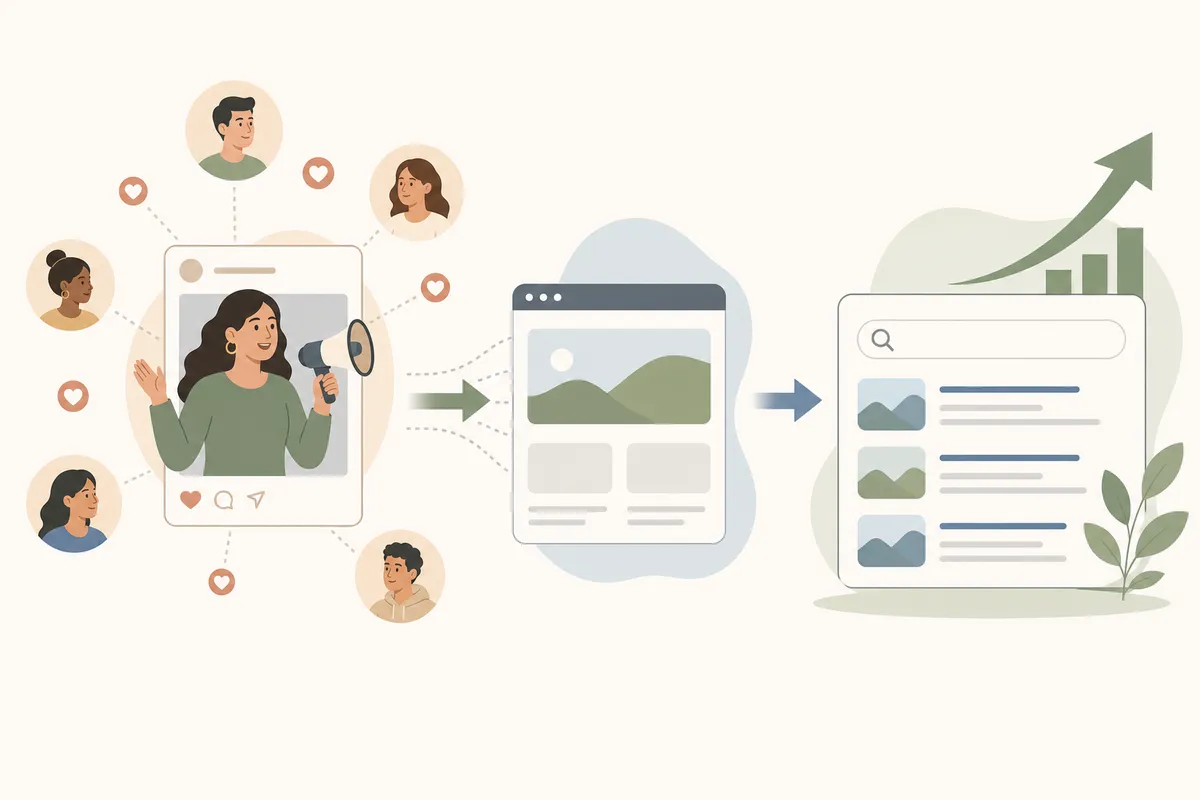
Keep it authentic and keep it disclosed
Audiences spot inauthenticity fast. A partnership that reads as a paid script damages both parties. The fix is structural, not cosmetic. Work with creators who would plausibly use your product anyway, give them a clear brief on messaging, and then leave the execution alone. Bansal's advice on this is specific: provide guidance, but avoid over-restrictive content briefs. Creators earned their audience with their own style, not yours.
Long-term relationships beat one-off posts for the same reason. A March 2025 analysis from Lindenwood University's communications blog identifies extended partnerships as a defining trend. An influencer who integrates a brand into daily life over months produces endorsements that feel genuine and messaging that stays consistent. One mention is an ad. Twenty mentions across a year is a relationship the audience believes.
Disclosure is not optional. Under FTC guidance for social media influencers, paid partnerships must be disclosed clearly, for example with #ad or #sponsored. Place the label where viewers will actually see it, ideally at the start of the content rather than buried below the fold. Clear disclosure does not suppress results. Hidden sponsorships that surface later do.
Measure organic growth, not vanity reach
Campaign dashboards measure the post. You also need to measure what the post left behind.
Start with the direct layer: engagement rate, reach, click-through rate, and conversions, tracked through tools like Google Analytics, Meta's pixel, and each platform's native insights. Unique promo codes, tracking links, and campaign hashtags tie specific creators to specific outcomes. That tells you who to renew.
Then watch the organic layer over the following weeks:
- Branded search volume: are more people searching your name than before the collaboration?
- Direct traffic: are people typing your URL after seeing you in a video?
- New referring domains: did blogs or publications pick the story up and link?
- Rankings on covered topics: are the pages related to the creator's content moving?
- UGC and reviews: are customers now producing mentions you never paid for?
Attribution here is honestly fuzzy. A viewer might watch a tutorial, search your brand a week later, and convert from what analytics calls organic search. That is not a measurement failure. It is the channel working as designed. Judge influencer partnerships on the trend lines they bend, not only on last-click conversions. Expect the organic effects to build over weeks rather than days. For more on reading those trend lines, the guides on the SearchBlueprint blog cover branded search, rankings, and traffic diagnostics in depth.
FAQs
What is the difference between influencer marketing and leveraging influencers for organic growth?
Influencer marketing usually means paying for posts and measuring reach. Leveraging influencers for organic growth means designing partnerships so the attention converts into durable assets: branded search demand, backlinks from coverage, evergreen tutorial content, user-generated content, and mentions AI assistants can cite. Same channel, longer horizon.
How many followers should an influencer have?
It depends on the job. Nano creators (1,000 to 10,000 followers) offer the most personal trust and are cost-effective for small brands. Micro-influencers (10,000 to 100,000) build strong authority within specific communities. Macro (100,000 to 1 million) and mega (1 million+) buy reach. For organic growth, engaged niche audiences usually outperform big generic ones.
How do I find the right influencers without a big budget?
Search tools like BuzzSumo, Traackr, and Upfluence surface creators in your niche. Platforms like SocialBlade and Heepsy help you verify engagement and audience authenticity before committing. Starting with a handful of nano and micro creators keeps costs low while you learn which audiences respond.
Do influencer posts help SEO directly?
Mostly indirectly. Social links are typically nofollow, so they pass little direct authority. The SEO value comes from branded search growth, real backlinks earned when publications cover the collaboration, creator content ranking on YouTube for your topics, and content you repurpose onto your own pages.
What disclosure rules apply to influencer partnerships?
Under the FTC's Endorsement Guides, influencers must disclose paid or sponsored relationships clearly, using labels like #ad or #sponsored, or a verbal mention in video. The disclosure should sit where audiences will see it, ideally at the beginning of the content. As the brand, make disclosure a contractual requirement rather than leaving it to chance.
Fix your site before the first outreach email
Influencer traffic converts only as well as the site it lands on. So audit your own pages before you leverage influencers for organic growth at any real scale. Look through a sample SEO report to see exactly what a full audit checks. Then talk to the team about running one on your domain. Close the technical and content gaps first, and every creator mention you earn afterward compounds instead of leaking.
Resources / References
- Forbes Business Council in December 2024
- nofollow
- Google's AI Overviews
- FTC guidance for social media influencers
- FTC's Endorsement Guides
Sources
About the author
SearchBlueprint researched, wrote and scored this article with the content pipeline our customers run on their own sites. The score in the byline is what our content engine gave this page before it published. Nothing here is reviewed by hand, which is the point: it is the product's output, published where anyone can check it.