Natural Backlinks: How to Earn Them and Avoid Link Penalties
SearchBlueprint · · 9 min read · scored 92/100

Natural backlinks are links another site gives you without being asked, paid or traded. An editor, blogger or journalist links to your page because it helps their readers. You earn them by publishing something worth citing and getting it in front of the right people. Placing links yourself doesn't count.
That difference decides whether a link helps you or hurts you. Links are still one of the signals that move rankings for competitive searches. But Google rewards the links that look earned, and it discounts or penalizes the ones that look built. This guide is for site owners and marketers who want more of the first kind.
What counts as a natural backlink
Strictly speaking, a natural link is one you had no hand in. Timothy Carter wrote about this for SEO.co on April 1, 2024. He describes it as a link from a neutral third party who decided your page was worth sending readers to. By that standard, any link you place yourself is unnatural, even a well-written one on a relevant site.
Carter also notes that Google uses machine learning and natural language processing to judge how a link was acquired. It can't read your intent, so it reads the evidence around the link.
Honest outreach sits somewhere in the middle. You might email a site that already mentioned you, or show a curator a guide that fits their resource page. Neither is the same as paying for a post, because the editor still decides. The line Google draws in its spam policies for Google Search covers money, swaps and automation. Buying or selling links for ranking, excessive link exchanges and automated link programs all count as link spam.
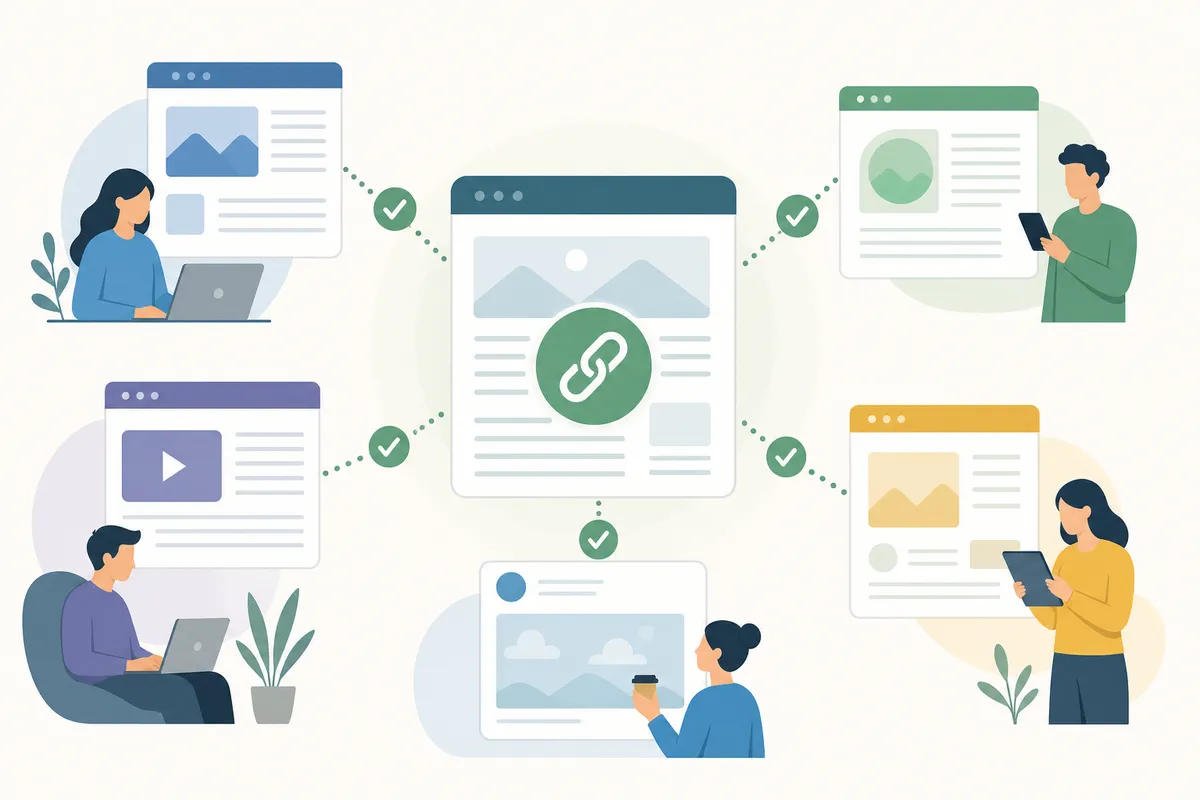
Natural vs. unnatural backlinks compared
Here is where the common link types fall.
| Link type | How you get it | Natural? | Risk to your site | What to do |
|---|---|---|---|---|
| Editorial citation in an article | A writer chooses to cite your page | Yes | None | Publish more pages worth citing |
| Resource page listing | A curator adds your guide or tool, sometimes after a pitch | Usually | Low | Pitch only assets that help that page's readers |
| Link added to a brand mention | You ask a site that already named you to link the mention | Mostly | Low | Send one short, polite request |
| Guest post with a keyword anchor | You write the post mainly to get the link | No | Medium | Use a branded anchor or accept a nofollow link |
| Paid or sponsored placement | You pay a site to publish the link | No | High unless marked rel="sponsored" |
Mark it sponsored, or skip it |
| Link exchange | Two sites agree to link to each other for rankings | No | High at scale | Avoid swaps made for rankings |
| Bulk directory submission | You submit your site to many general directories | No | Medium | List only in niche directories your customers use |
| Forum or blog comment link | You post a link in a thread yourself | No, Google classes it as user-generated | Low value, low risk | Post only when the link answers the question |
The risk column follows a simple rule. The more control you had over a link, the less it counts, and the more it can cost you.
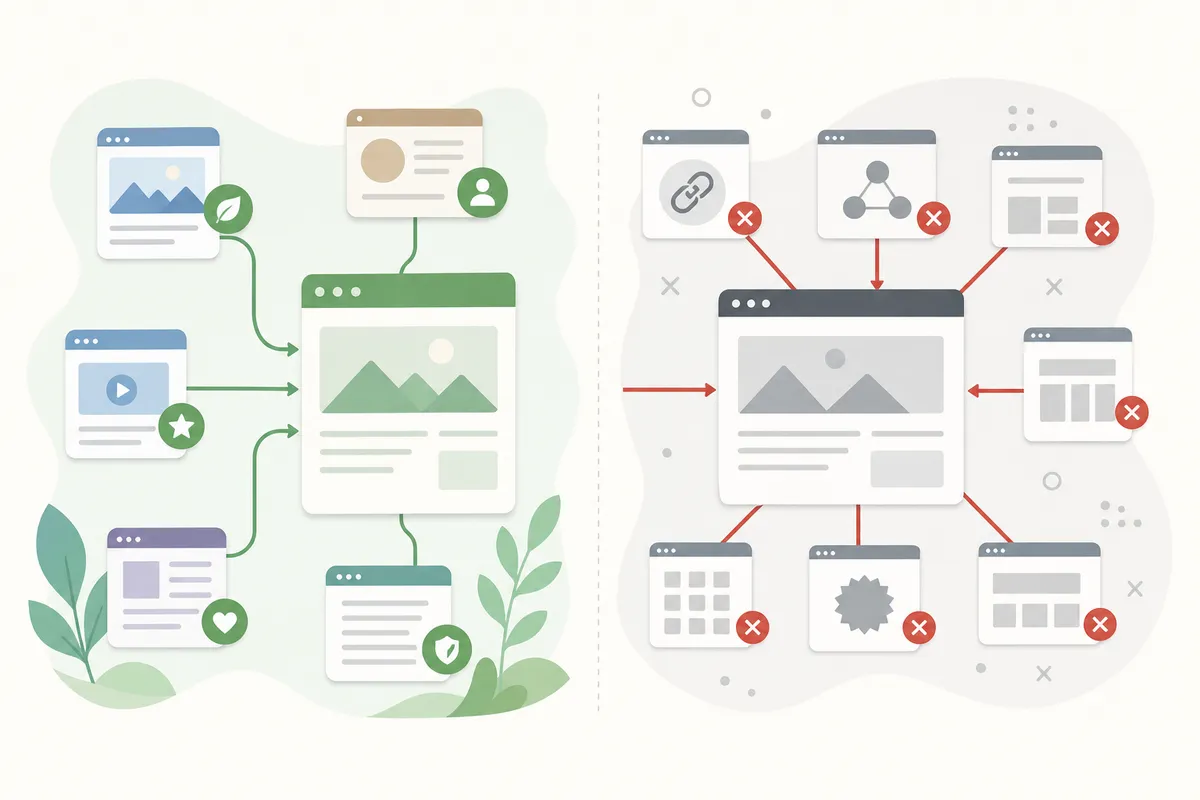
How Google tells natural links from placed ones
Most of the signals Carter lists match advice that has held up for more than a decade. Melanie Nathan published six tips for Search Engine Journal on January 21, 2010. Some of the tools she mentions have changed, but her tips still describe what an earned profile looks like.
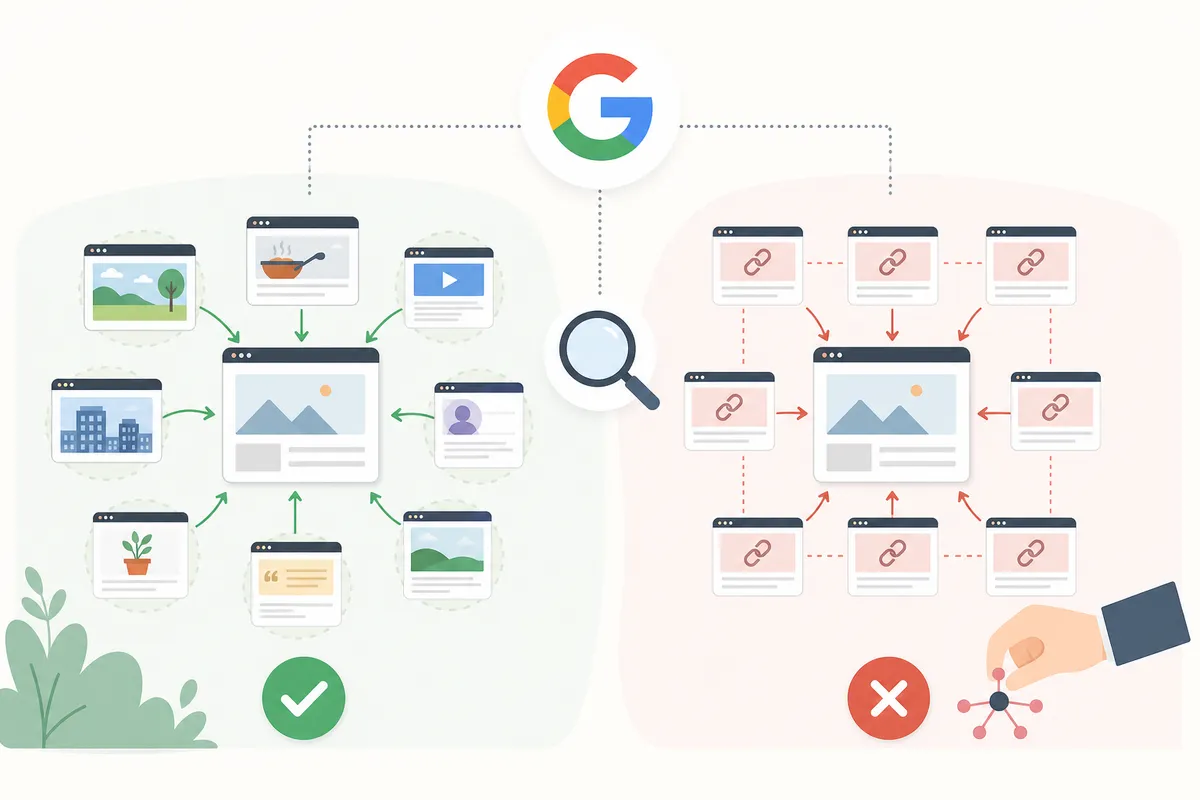
Anchor text
When people link to you on their own, they use whatever words fit their sentence. That might be your brand, a bare URL or just "this guide." Carter notes that when most of your anchors repeat one money keyword, Google judges those links unnatural. Nathan's example still works. Say you target "online college degrees." An earned profile would also show "college degrees online," plain URLs and image links.
Where links come from
Links from sites in your own field look expected, and links from unrelated industries look odd. Carter also warns that when all your links come from two or three sources, it suggests spam or a mutual link scheme. A wide spread of relevant sites is the healthy pattern, which is why variety in linking domains tends to beat raw link volume.
Which pages they point to
Earned links land wherever the useful content lives, such as a guide, a tool or a study. If nearly every link points at your homepage, someone probably chose the target. Nathan recommended earning links to important inner pages for this reason.
Context and pace
A link inside a sentence that explains why it helps reads as a real recommendation. A lone link posted as the only comment on a blog post doesn't. Pace matters too. Nathan's last tip was to keep link growth slow and steady, unless a major outlet had just covered you. A sudden spike with no news behind it is easy to spot.
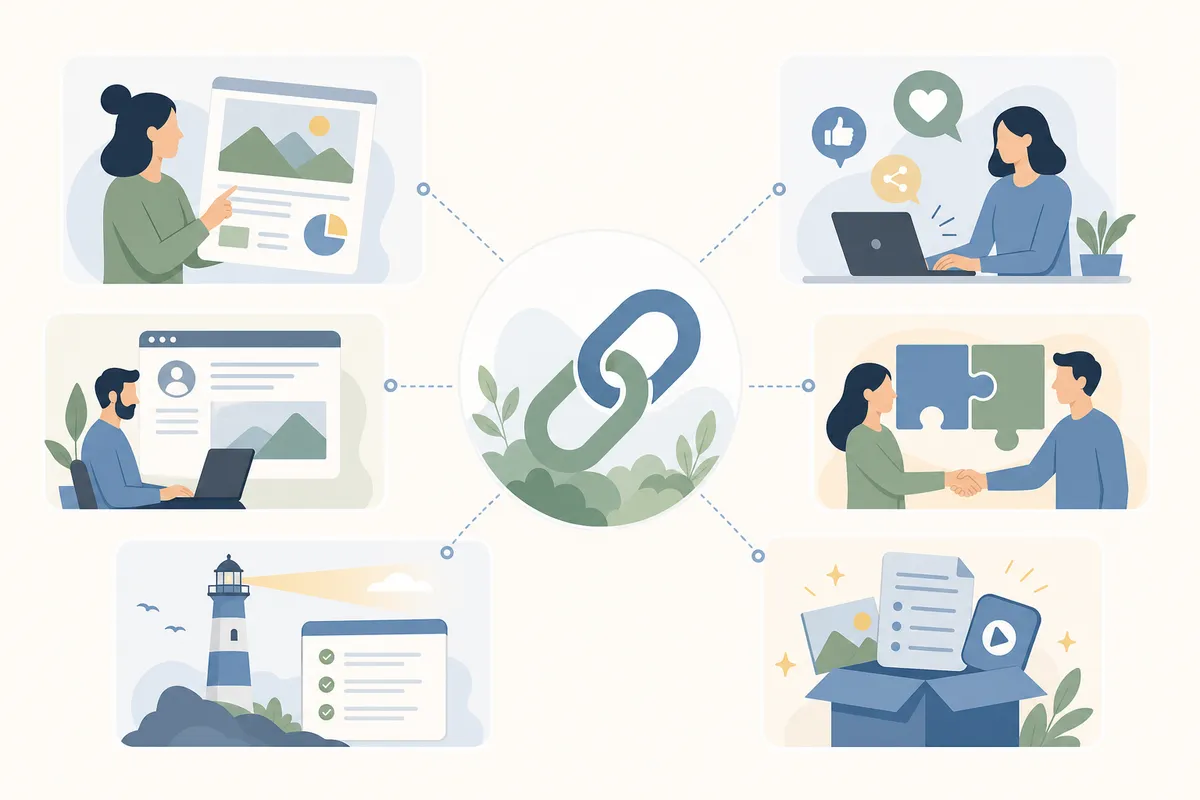
Six ways to earn natural backlinks
Every method that works gives another writer a reason to link that has nothing to do with helping you.
1. Publish something people need to cite
Writers link to sources for their claims, so be the source. Original data, a clear definition, a benchmark or a process nobody else has written down all count. A short survey of your customers, or numbers you already track, can earn more citations than a stack of opinion posts.
2. Build a free tool or template
Make a calculator, checker or template that answers one question well. Roundups, forums and resource pages keep linking to tools like that long after you publish them.
3. Claim your unlinked mentions
Search for your brand and product names. When a site mentions you without a link, send a short note asking them to add one. The link helps their readers too, so many editors say yes.
4. Study who links to your competitors
Carter suggests using a backlink tool such as Moz or Ahrefs to see where your competitors' links come from. A site that links to three businesses like yours, but not to you, may welcome a better resource. Have that resource ready before you reach out.
5. Answer questions where your audience asks them
Forums and Q&A threads reward specific, helpful answers. Links there are usually marked nofollow or user-generated, so their main value is the people who click. Some of those readers run blogs, and that is where earned links come from.
6. Become a quotable expert
Journalists and bloggers need expert comment. Reply to requests in your field with a quote they can use as written. A link often comes with the credit.
The risks: paid "natural links" and penalties
When a service sells natural links
Search this topic and link marketplaces show up. One of them, Natural Links, lists 50,000+ publisher sites across 150+ locations and languages. It also promises to replace a link that disappears for up to 36 months, with a refund only when it can't. Whatever the product is called, a link bought through a marketplace is a paid link under Google's rules. Google asks sites to mark paid links with rel="sponsored" or rel="nofollow" so they pass no ranking credit. Its guide to qualifying outbound links explains how.
What a link penalty looks like
Carter describes two kinds of penalty, manual and algorithmic. A manual action shows up in the Manual actions report in Google Search Console, with a description of the issue. An algorithmic hit is quieter. The links stop helping and your rankings slide, with no message at all.
Can you do it yourself?
Mostly, yes. Earning natural backlinks is content work and relationship work, and you know your field better than any outsider does. Bring in help when:
- You have bought links or joined link swaps before and don't know what still points at your site.
- Search Console shows a manual action for unnatural links.
- Your rankings fell and you can't tell whether links are the cause.
How to check whether your link profile looks natural
You don't need a paid tool for a first pass. The Links report in Google Search Console shows your top linking sites, top linked pages and top linking text. Then work through five questions:
- Anchor text. Is one keyword phrase doing most of the work? Earned profiles lean on brand names, URLs and plain phrases.
- Linking sites. Are most of them relevant to your field? How many did you pay, swap with or own?
- Linked pages. Do links reach your guides and tools, or does almost everything point at the homepage?
- Timing. If you track links in Moz or Ahrefs, look for jumps that no news explains.
- Placement. Open ten links at random. Does each one sit inside a sentence that gives a reason to click?
FAQs
Are natural backlinks better than guest post links?
Yes, for both safety and staying power. A natural backlink reflects a real editorial choice, which is what Google wants a link to mean. A guest post written mainly to get a keyword-rich link is unnatural, and Google can discount or penalize it.
How long does it take to earn links naturally?
It depends on your field, your content and how actively you promote it. Earned links usually build slowly and keep coming. Placed links arrive fast and stop when the spending stops.
Do nofollow links count as natural backlinks?
Yes, a link can be both. The attribute controls how Google treats the link, not whether someone chose to give it. Google reads nofollow, sponsored and ugc as hints, and a nofollow link can still send you readers.
Can you buy natural backlinks?
No. A bought link is a paid link by definition, however it is marketed. If you do pay for a placement, it should carry rel="sponsored" so it passes no ranking credit.
How many backlinks do you need to rank?
There is no fixed number. Look at the pages ranking for your target term and count how many relevant sites link to them. The gap between their profile and yours is your real target.
Talk to the team about your link profile
Open the Links report in Google Search Console this week and mark every linking site as earned, placed or unsure. If the placed column is longer than you expected, talk to the team before you build another link. A weak profile gets fixed with more natural backlinks, and more placements won't do it. Browse a sample SearchBlueprint SEO report to see how we lay out an audit before you get in touch.
Resources / References
Sources
About the author
SearchBlueprint researched, wrote and scored this article with the content pipeline our customers run on their own sites. The score in the byline is what our content engine gave this page before it published. Nothing here is reviewed by hand, which is the point: it is the product's output, published where anyone can check it.