SEO for Salons: Turn Local Searches Into Booked Chairs
SearchBlueprint · · 11 min read · scored 92/100

SEO for salons comes down to three jobs: a complete Google Business Profile fed with weekly photos and reviews, one page on your website for every service you sell, and content that answers the questions clients type before they book. Do those three consistently and you earn the map results that fill chairs.
The prize is the box of three businesses Google shows above the regular results for searches like "balayage near me." That box is the Map Pack, and winning it is most of what salon SEO means in practice. Salon S.O.S., a salon SEO tool, cites research showing that 76% of people who search for something nearby on their phone visit a business within a day. The salon they visit is usually one of those three.
Why salon SEO beats renting attention
Paid ads and social posts stop working the moment you stop feeding them. Rankings keep sending clients while you sleep, which is why search still carries most of the traffic that matters. Salon S.O.S. cites figures putting 53.3% of all website traffic from organic search, with SEO driving 1,000% more traffic than social media. Those numbers describe an average business, and the case for a salon is stronger, because almost every client is local and someone searching "keratin treatment cost" has usually half-decided to book already.
The same source lists $497.16 as the average American small business's monthly spend on SEO services, and reports that 55% of small businesses skip local search optimization entirely. Read those two together: half your competitors are paying for marketing while ignoring the channel that compounds. Salons are not a special case here. Gyms fight the identical Map Pack battle, and the playbook for turning searches into paying members transfers to a salon almost line for line.
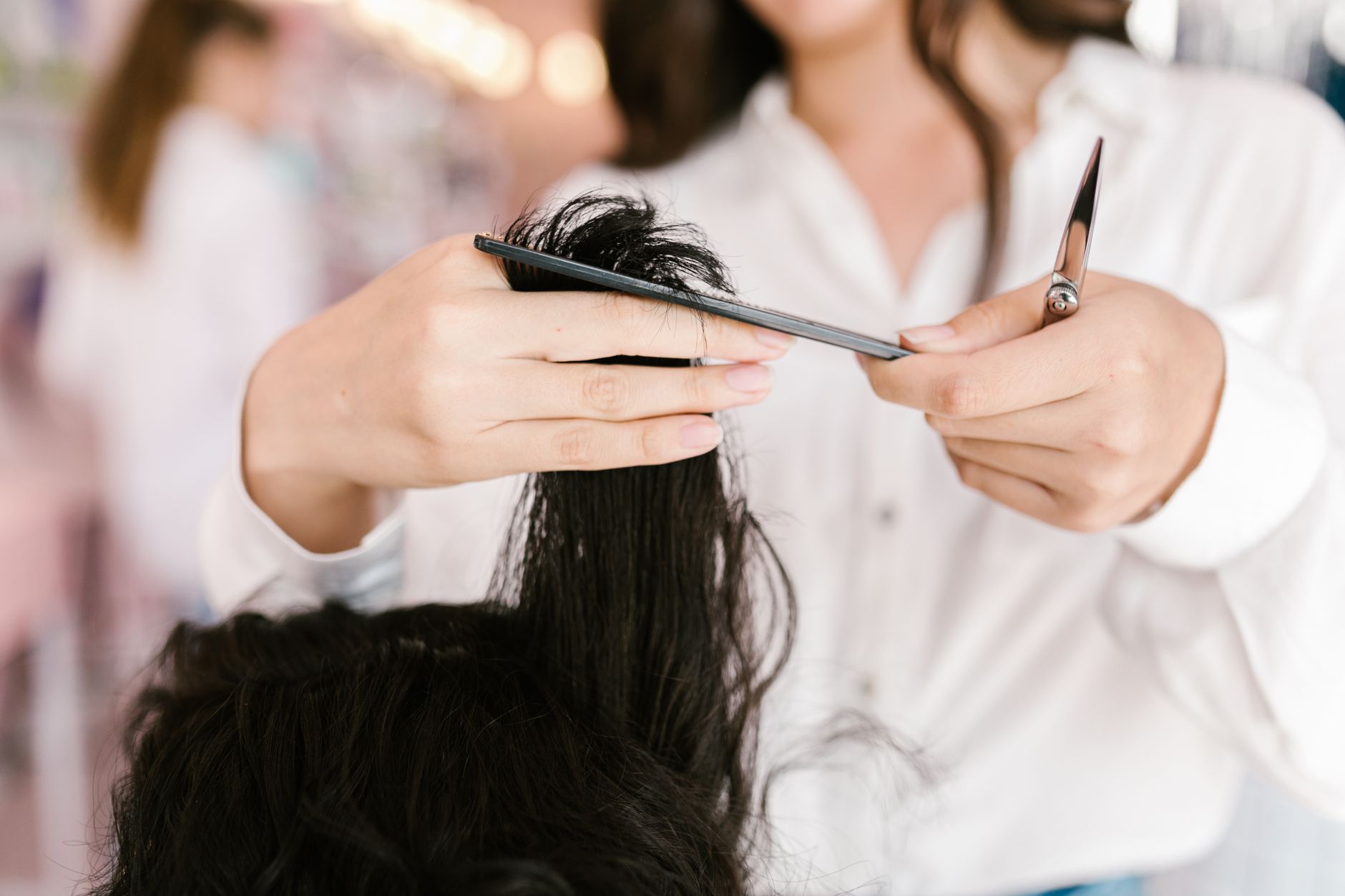
Your Google Business Profile does most of the ranking work
For local searches, Google builds the Map Pack from Business Profiles, not from websites. Salon SEO starts here, and the profile is free.
Claim it and fill in every field
Claim the profile at business.google.com if you have not already. Then complete everything: business name exactly as it appears on your signage, address, phone, hours, website, and services. Set your primary category to Hair Salon or Beauty Salon, then add a secondary category for each service that has one, such as Barber Shop, Hair Extensions Service, or Bridal Hair. Google matches categories to searches, so a missing category is a search you sit out.
Feed it photos every week
Google tracks how active a profile is. Upload interior shots, team photos, before-and-afters, and your storefront on a schedule, weekly if you can manage it. A profile with fresh photos from this month reads as an open, busy business. One with nothing since 2024 raises a question Google answers by ranking someone else.
Build a review engine, not a one-off request
The count and steadiness of your Google reviews feed your local ranking directly. Treat asking as a routine: train the front desk to ask at checkout, send a follow-up text with a direct review link after each appointment, and reply to every review, good and bad. Hundreds of future clients will read how you handled criticism, and most will care more about your reply than the complaint.

One page per service you sell
A single "Services" page with a price list gives Google one shot at ranking for everything, which in practice means ranking for nothing. Build a page each for balayage, color correction, keratin treatments, extensions, bridal hair, and whatever else fills your book. Each page needs a title tag naming the service and the city ("Balayage in Pasadena | Salon Name"), a plain description of what the appointment involves and how long it takes, honest price framing, before-and-after photos, and a booking button that works on a phone.
Bridal work deserves a dedicated page more than anything else you sell, because couples research it months out and compare hard. They shop for hair the way they shop for planners, and the way wedding planners book couples straight from Google is the model to copy: proof first, then the offer, then one obvious next step.
If you run more than one location, each location also gets its own page, with that location's address, team, photos, and hours. Two locations sharing one page split their relevance and rank as neither.

The keywords clients type before they book

Keyword choice decides which pages you build, so it comes before any writing. Salon searches sort into intent tiers, and each tier deserves a different page:
| Search intent | Example searches | Page that should answer it | What to lead with |
|---|---|---|---|
| Ready to book | "balayage near me", "hair salon open now" | Google Business Profile plus a service page | Booking button, hours, price framing |
| Comparing salons | "best hair salon in Plano", "keratin treatment cost" | Service page with proof | Reviews, before-and-after photos, what is included |
| Problem aware | "why did my color turn brassy" | Blog post | An honest diagnosis, then the service that fixes it |
| Researching | "balayage vs highlights" | Blog post | A straight comparison that ends at the right page |
Modifiers matter as much as services. Salon Guru, an agency working with more than 220 salons and clinics, builds keyword lists around "best," "top," "award-winning," and even "vegan salon," because real searchers qualify their searches that way. Getting this list right is the highest-return hour in the whole project, which is the argument for treating keyword research as the step that pays for everything after it.
Citations and links: the quiet local SEO signals
NAP stands for name, address, phone. Google cross-checks yours across Yelp, Facebook, Apple Maps, Bing Places, and the rest of the directory web, and inconsistencies read as unreliability. Pick one exact format and enforce it everywhere, down to "Suite 4" versus "#4."
Links from other local sites vouch for you. A mention on a bridal blog, a partnership with the boutique next door, a spot on the local paper's best-of list: each is a vote Google can count. Your own internal links count too, and almost nobody uses them well. Salon S.O.S. cites a figure that 89% of small businesses fail to use internal links effectively, which makes them one of the cheapest wins on this list. Every blog post you publish should link to the service page it feeds.
Technical salon SEO in one afternoon
Most of the technical list is a one-time fix, and none of it needs a developer on retainer.
Speed, phones, and the lock icon
Your site should load in under about three seconds and work cleanly on a phone, since that is where clients are: the figures Salon S.O.S. cites put 52.2% of worldwide website traffic on mobile. Compress your photos, because salon sites drown in oversized gallery images, and make sure the booking button sits within reach of a thumb. HTTPS is the minimum; if the address bar says "not secure," fix that today.
Schema markup, the label Google reads
Schema markup is code that labels your business details so machines can read them without guessing. Schema.org defines a HairSalon type with properties for address, opening hours, and price range, and Google Search Central documents which structured data can earn richer listings in results. Most site builders, Wix and Squarespace included, add basic markup automatically, so check what already exists before adding more.
Finish the afternoon by submitting your sitemap in Google Search Console. It is free, and it is also where Google tells you about problems it finds.
A blog that answers pre-booking questions
Every problem-aware search in the table above is a post your competitors have probably not written. "How long does balayage last." "Can a salon fix box dye." "What to ask at a bridal hair trial." Each post is a new page that can rank, and each one hands its reader to the service page that solves the problem. This is the part of SEO for salons most owners skip, which is exactly why it works.
Write from the chair. You already know what clients ask mid-appointment, and those questions are the content calendar. Steadiness matters more than volume, and you do not have to draft every post by hand: the practical split between AI-drafted and human-written content is letting AI produce the explainer while you add the opinions, corrections, and photos only your salon has.
Study the salons above you
The three businesses in your Map Pack earned those spots through visible, copyable choices: their categories, their review pace, their service pages, their photos. Read them like an inspection report. Which services have dedicated pages? How many reviews did they add last month? What do their page titles promise? Working through a five-step competitive analysis workflow turns "they outrank us" into a list of gaps you can close one at a time.
AI search already recommends salons
Clients now ask ChatGPT and Perplexity for a good balayage specialist nearby, and Google's AI Overviews answer questions the ten blue links used to. Salon Guru reports that potential clients increasingly discover salons and clinics through these tools. There is no separate trick for this. AI assistants recommend businesses with clear service descriptions, strong review profiles, structured data, and content that answers questions in plain sentences, which is the same work salon SEO already demands. A page that states things plainly, like "a full balayage takes three to four hours," gets quoted. A vague one gets skipped.
What results look like, and when
Salon SEO pays on a delay, and anyone promising page one in a fortnight is selling something else. Profile work moves fastest: category, photo, and review improvements can show inside weeks. Website rankings take longer. Nick Mirabella, a salon business coach, puts meaningful movement at three to six months of consistent work, and Salon S.O.S. tells its own users the most common timeframe for results is within six months.
Agency case numbers run on the same clock. Salon Guru reports a Warrington salon holding 180 phrases at number 1 on Google five months after its site launched, and a Scottish barbershop that launched in May 2025 reaching 30 number-1 phrases three months later. Vendor-reported wins are the ceiling rather than the average, but the shape holds: early wins on single services, then compounding.
Check progress quarterly rather than daily. Salon Guru sends its clients a rank report every three months, which is about the cadence at which rankings say anything useful. Watch three numbers: calls and direction requests from your profile, bookings that arrive from organic traffic, and how many of your services rank on page one. The compounding curve holds across local niches too; the same patience wins loans for mortgage brokers on decision cycles far longer than a haircut.
Do it yourself or hire it out
Most owners can run the core of this themselves. The honest split:
| Job | Can you DIY it? | What it takes | When to hand it off |
|---|---|---|---|
| Google Business Profile | Yes | An hour to complete, then weekly photos and review replies | Multiple locations with nobody owning the routine |
| Service pages | Mostly | One written page per service, title tags with your city | Your site builder fights you, or the writing stalls for months |
| Reviews | Yes | A checkout script and a follow-up text | Never. Nobody outside the salon can ask for you |
| Technical fixes | Partly | An afternoon for speed, HTTPS, and Search Console | Reports name problems you cannot act on |
| Content and links | Split | One useful post at a steady pace | You want volume without giving up your evenings |
On cost, the market gives you two anchors: entry-level salon SEO tools are listed around $88 a month or $900 a year, while Salon S.O.S. cites $497.16 a month as the average American small business's spend on SEO services. Doing it yourself swaps that bill for your own hours, so budget a few of them each week and protect them like a client appointment, because SEO abandoned at month two returns nothing.
FAQs
How long does SEO for salons take to work?
Google Business Profile improvements can move rankings within weeks. Website rankings typically take three to six months of consistent work, and results compound after that. Anyone guaranteeing page one in 30 days is guessing or lying.
Why isn't my salon showing up on Google?
The usual causes, in order: an unclaimed or half-empty Google Business Profile, wrong or missing categories, no service pages targeting what people actually search, inconsistent name-address-phone listings across directories, and a slow or insecure website. Work through them in that order, since each fix feeds the next one.
Do Google reviews really affect salon rankings?
Yes. Review count, steadiness, and your replies all feed local rankings, and reviews usually decide the comparison when someone weighs the three Map Pack results against each other. A weekly trickle beats a one-time push.
What are the best keywords for a salon?
Service plus city ("balayage in Austin"), "near me" phrases, and qualified searches like "best hair salon in Austin" or "keratin treatment cost." Build one page per service keyword rather than pointing every term at the homepage.
Does AI search change what I should do?
No, it raises the payoff for the same work. ChatGPT, Perplexity, and Google's AI Overviews recommend salons based on reviews, structured data, and clear service descriptions, so a page written plainly enough to quote wins both channels at once.
Get a baseline before you touch anything
Fixing SEO for salons in the wrong order wastes months you are already committed to waiting, and a proper audit sets the order for you. Look through a sample SEO report to see exactly what gets measured, then talk to the team about running one on your salon. You will know where your first hour should go by the second page.
Resources / References
Sources
About the author
SearchBlueprint researched, wrote and scored this article with the content pipeline our customers run on their own sites. The score in the byline is what our content engine gave this page before it published. Nothing here is reviewed by hand, which is the point: it is the product's output, published where anyone can check it.