SEO Machine Learning: What Actually Moves Your Rankings
By Toy Wen Da, Co-Founder · Updated · 9 min read · scored 98/100
SEO machine learning is the set of models Google and SEO tools use to rank pages, score content, and group keywords by intent, rather than fixed rules. It moves your rankings when you match the signals these models actually weigh, topical relevance, user satisfaction, and technical clarity. It does nothing when you chase vague "AI optimization" with no measurable target.

What SEO Machine Learning Actually Means
"SEO machine learning" covers two different things, and conflating them causes most of the confusion.
The first is Google's own use of machine learning inside its search algorithm. The second is the machine learning built into SEO tools, content scoring, keyword clustering, intent detection, that you use to plan and write content.
Both matter, but they work in opposite directions. Google's models decide what ranks. Your tools try to predict what Google's models will reward, based on patterns in current top results.
Why the Distinction Matters for Your Strategy
Treat tool output as a hypothesis, not a rule. A content score of 85 out of 100 in an NLP editor tells you your draft resembles current top-ranking pages. It does not tell you Google will rank it.
Machine learning SEO tools are pattern-matchers trained on today's search results. When those results shift, the patterns shift too.

How Google's Search Algorithm Uses Machine Learning
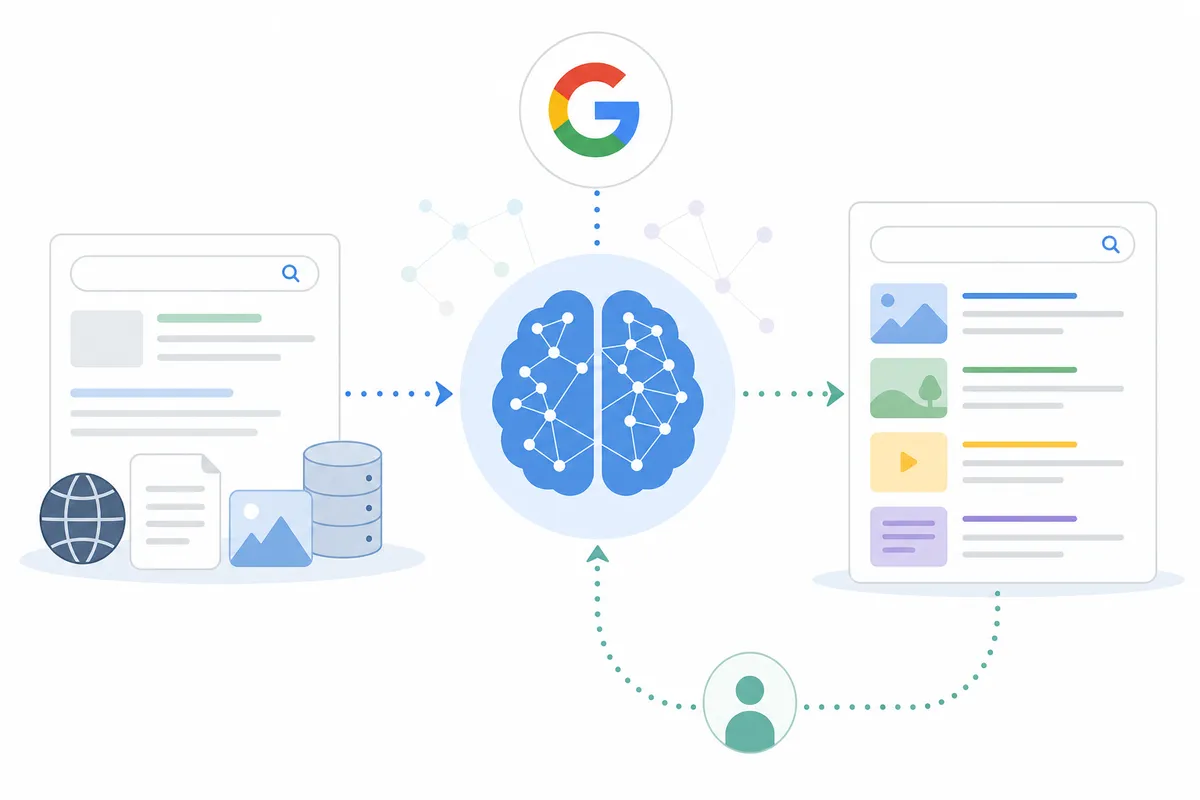
Google has confirmed, through its own Search Central documentation, that it uses machine learning and AI systems as part of how it ranks and understands content. The company has rolled out several named systems over the past decade, each targeting a different weakness in earlier, rule-based ranking.
| System | Introduced | What It Does | What Changed for Publishers |
|---|---|---|---|
| RankBrain | 2015 | Interprets ambiguous or never-seen-before queries | Pages had to match concepts, not just exact phrases |
| Neural Matching | 2018 | Links queries to pages using related concepts and synonyms | Pages began ranking for phrasings they never literally used |
| BERT | 2019 | Reads word context in both directions across a sentence | Natural, conversational phrasing started outperforming keyword-stuffed copy |
| MUM | 2021 | A multitask model handling multiple languages and content formats | Complex, multi-part questions get answered from fewer, richer pages |
BERT is the one most SEO content tools built their modern NLP engines around. Once Google could read a sentence's full context instead of matching isolated keywords, exact-match keyword density stopped being a reliable ranking lever. That shift is also why many SEO teams started leaning on AI-powered keyword discovery tools that cluster by topic and intent instead of tracking isolated phrases.
The practical takeaway: Google's machine learning models reward pages that cover a topic the way a subject-matter expert would, in language a person would actually use.
Natural Language Processing and Content Scoring
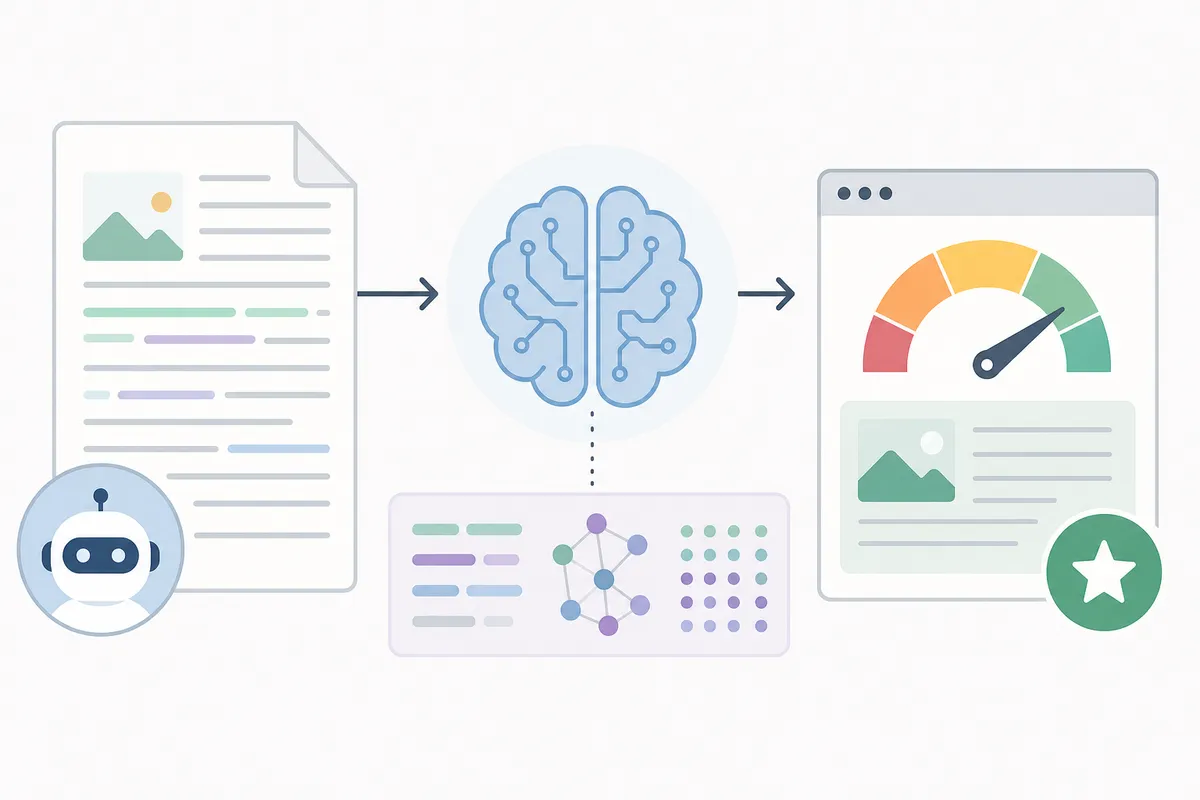
Most "SEO machine learning" tools you'll encounter are really NLP-based content editors. They work the same basic way.
- The tool pulls the current top-ranking pages for your target keyword.
- It extracts terms, entities, and phrases those pages share.
- It scores your draft against that pattern as you write.
- It flags missing terms and suggests additions.
This genuinely helps you cover a topic more completely. It catches gaps a writer working from memory alone would miss.
Where NLP Scoring Falls Short
The score is descriptive, not predictive. It tells you what ranks today, not what will rank after your draft ships, and it can't judge whether your content is actually accurate or useful.
A page can hit a high content score and still underperform if it lacks real expertise, has thin examples, or repeats what competitors already say without adding anything new. For deeper content work, pairing NLP scoring with AI content optimization that also checks structure, internal links, and freshness tends to move rankings further than keyword density alone.
Sentiment also plays a smaller but real role in how some of these models weigh phrasing, particularly on review and comparison content, a topic covered in more depth in this breakdown of sentiment analysis in SEO.
Machine Learning Keyword Research and Intent Clustering
Before machine learning entered keyword research, SEOs built keyword lists by hand in spreadsheets. It was slow, and lists went stale fast.
Clustering models solve a different problem: grouping hundreds of keywords by what the searcher actually wants, not just by shared words. You enter a root term, and the model returns clusters built around distinct search intents.
The Four Intent Types Machine Learning Models Detect
| Intent Type | What the Searcher Wants | Example Query | Page Type That Tends to Rank |
|---|---|---|---|
| Informational | To learn something | "how does neural matching work" | Blog post, guide |
| Commercial investigation | To compare options before buying | "best rank tracking tool" | Comparison or feature page |
| Transactional | Ready to buy or sign up | "seo software pricing" | Pricing or product page |
| Local | A nearby business or service | "seo agency near me" | Location page, local listing |
Get the seed keyword's intent wrong, and the whole cluster drifts. A root term with strong transactional intent will surface mostly comparison and pricing queries, not blog topics, which is why intent classification sits at the center of modern keyword research workflows, not an afterthought.

This is also where machine learning earns its keep for content planning. Instead of guessing which blog topics support a commercial page, a cluster shows you the informational searches that sit upstream of it, the exact gap a content calendar should fill.
AI Content Generation: What It Can and Can't Do

Some tools market the ability to draft long articles in minutes using an outline builder paired with generative text. The pitch: select a few AI-written paragraphs, assemble a draft, and publish.
This is technically possible. It is not the same as publishing something that holds up.
Can AI-Generated Content Rank in Google?
Yes. Google has stated, through its own Search Essentials guidance, that it ranks content based on quality signals, not on how it was produced. An AI draft can rank if it's accurate, well-structured, and genuinely answers the query.
The Speed-for-Quality Trade-Off
A draft assembled from auto-generated paragraphs in minutes usually reads as generic. It repeats common patterns across the top results instead of adding a new angle, example, or caveat.
That gap shows up in performance over time, even when the draft technically ranks at first. Case studies that track automation's actual impact on traffic, rather than anecdotes, are worth reviewing before you commit to a speed-first workflow, see this set of SEO case studies on automation outcomes for grounded, measured results instead of marketing claims.
The honest framing: AI drafting tools are fastest at structure and first drafts. They're weakest at original insight, specific numbers, and the caveats an experienced writer knows to include. Tools built to check a draft against dozens of criteria before publishing, SearchBlueprint's AI article writer, for example, runs 36 checks per draft, close part of that gap, but editorial review still matters.
Technical and Structured Data Signals Machine Learning Models Read

Content isn't the only input. Google's ranking systems also parse technical and structured signals, and machine learning plays a role in how reliably those signals get interpreted.
| Signal Category | Role of Machine Learning | What You Still Control |
|---|---|---|
| Content relevance | Matches meaning and embeddings, not just exact words | Topic depth, entity coverage, structure |
| User engagement | Learns from click and satisfaction patterns over time | Page speed, readability, matching intent |
| Technical structure | Parses markup to understand page type and content | Schema accuracy, clean crawlable HTML |
| Link context | Weighs topical relevance of links, not just count | Earning links from genuinely related sites |
Structured data deserves special mention here. Schema.org markup gives machine learning models an unambiguous signal about what a page is, a recipe, a product, an FAQ, reducing the model's need to infer it from unstructured text. That's a meaningful lever, and one most sites under-use; a full walkthrough is in this guide to structured data and AI search.
An AI-focused SEO audit will typically catch missing or malformed schema, broken internal links, and crawl issues that quietly suppress how well these models can read a site, gaps a manual spot-check often misses at scale.
Building a Practical SEO Machine Learning Workflow
You don't need to understand the math behind BERT to use SEO machine learning well. You need a workflow that applies it at the right steps and stops short at the ones that still need a human.
- Cluster keywords by intent first. Build your content plan around what searchers actually want, not a flat keyword list.
- Draft with NLP scoring as a floor, not a ceiling. Hit the recommended terms, then add what competitors missed.
- Fact-check and add specifics. Replace generic statements with real numbers, examples, and named caveats.
- Verify structured data before publishing. Confirm schema matches the actual page content.
- Track rankings and engagement after publishing. Machine learning models keep learning from how searchers respond, so your results will shift.
Knowing which of these steps to automate and which to keep under human review is its own decision. This breakdown of what to automate in SEO and what to keep is a useful reference when you're scaling a workflow across dozens of pages a month.

Common Mistakes Teams Make With Machine Learning SEO

Most failures come from treating a tool's output as a finish line.
- Chasing a content score instead of a result. A 100-point NLP score with no new information still won't outrank a page with real expertise.
- Skipping fact-checking on AI drafts. Generic or wrong claims undermine the trust signals Google's models are trained to detect.
- Ignoring intent mismatches. Writing an informational post for a commercial-intent keyword wastes the traffic you do earn.
- Leaving structured data unverified. Machine learning models can only use markup that's accurate and present.
- Treating SEO machine learning as "set and forget." Query patterns and top results shift, so clusters and briefs need rechecking every few months.
A broader look at where current AI SEO tools genuinely help, and where they still fall short, is covered in this 2026 assessment of AI SEO, worth reading before you commit a team's workflow entirely to one tool's output.
Machine Learning SEO FAQs
Does Google use machine learning for search rankings?
Yes. Google has publicly confirmed systems like RankBrain, Neural Matching, BERT, and MUM, all of which use machine learning to interpret queries and match them to relevant content, according to Google's own Search Central documentation.
Which search algorithm update made the most use of machine learning?
BERT, rolled out in 2019, is widely considered the biggest shift. It let Google read the context of a full sentence instead of matching isolated keywords, changing how content needed to be written to rank.
Can AI-written content actually rank in Google?
Yes, if it's accurate, well-structured, and answers the query fully. Google ranks based on content quality, not on the method used to produce it. Generic, unfact-checked AI drafts tend to underperform over time.
Will SEO be replaced by AI and machine learning?
No. Machine learning changes which signals matter and how fast you can research and draft, but someone still has to set strategy, verify facts, and judge what's genuinely useful to a reader.
What's the difference between SEO machine learning and general AI SEO?
Machine learning refers to the specific models doing pattern-matching and classification, like intent clustering or NLP scoring. "AI SEO" is a broader term that also includes generative drafting and automation layered on top of those models.
Put SEO Machine Learning to Work on Your Own Rankings
Pick one page this week where intent and content clearly mismatch, and rewrite it around what that keyword's searcher actually wants. Then check the technical and structured data signals sitting underneath it, since a strong draft on a poorly marked-up page still underperforms. SEO machine learning only pays off once you've closed both gaps. If you want a clear view of where your own site stands against these models, talk to the team and get a sample report built on your actual pages.
Resources / References
Sources
About the author
SearchBlueprint researched, wrote and scored this article with the content pipeline our customers run on their own sites. The score in the byline is what our content engine gave this page before it published. Nothing here is reviewed by hand, which is the point: it is the product's output, published where anyone can check it.