The Real Importance of Metadata for SEO (and the Mistake It Prevents)
SearchBlueprint · · 7 min read · scored 90/100

The real importance of metadata for SEO lies in what it tells search engines and readers before anyone opens your page. It signals what the page covers, whether it deserves a click, and whether it can be trusted as the answer. Get it wrong and a well-written page sits unread. Get it right and it earns clicks it would miss.
What Metadata Actually Does in SEO
Metadata is the information about your page that search engines and browsers read separately from your visible content. It includes the title tag, meta description, header tags, image alt text, canonical tags, robots directives, and schema markup. None of it is decoration. Each piece answers a different question a crawler or a searcher asks.
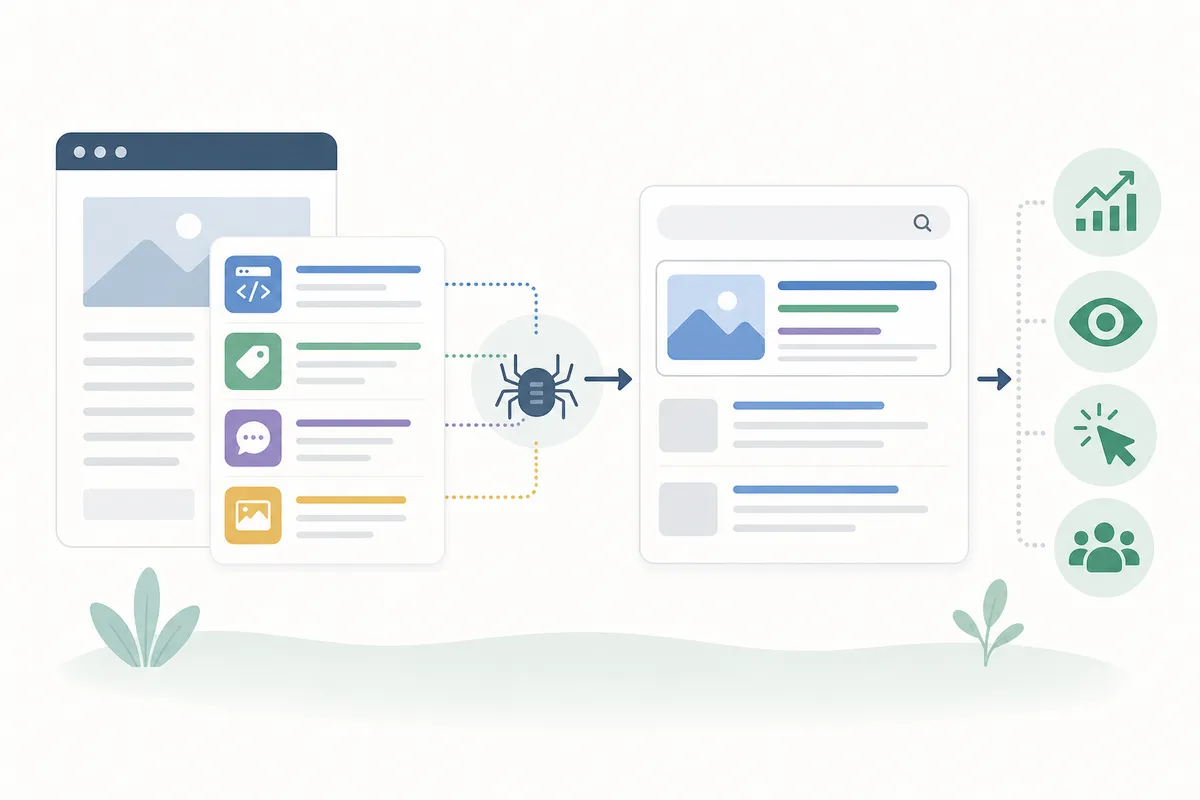
A crawler uses metadata to work out what a page is about, whether it duplicates another page, and whether to index it. A searcher uses the visible parts, mainly your title and description, to decide which blue link to click. Structured data goes further. It hands search engines a machine-readable version of your content. That is how you qualify for star ratings, FAQ snippets, and mentions in AI-generated summaries.
| Metadata Element | What It Tells Search Engines | Who Sees It | Direct SEO Role |
|---|---|---|---|
| Title tag | The page's main topic | Searchers, in the results snippet | Minor ranking signal, strong click driver |
| Meta description | A summary of the page's content | Searchers, below the title | No ranking effect, strong click driver |
| Header tags (H1, H2, H3) | The page's content structure | Readers and crawlers | Supports relevance and readability |
| Image alt text | What an image depicts | Screen readers and image search | Accessibility plus image search visibility |
| Schema markup | Structured facts about the content | Crawlers, powering rich results | Eligibility for rich results and AI citation |
| Canonical tag | Which URL is the master version | Crawlers only | Prevents duplicate content splitting rankings |
This guide on what Google reads in your metadata and what it quietly ignores goes deeper into which fields actually get used. It also flags which fields are safe to skip.
How Metadata Shapes What Google Can Even Understand
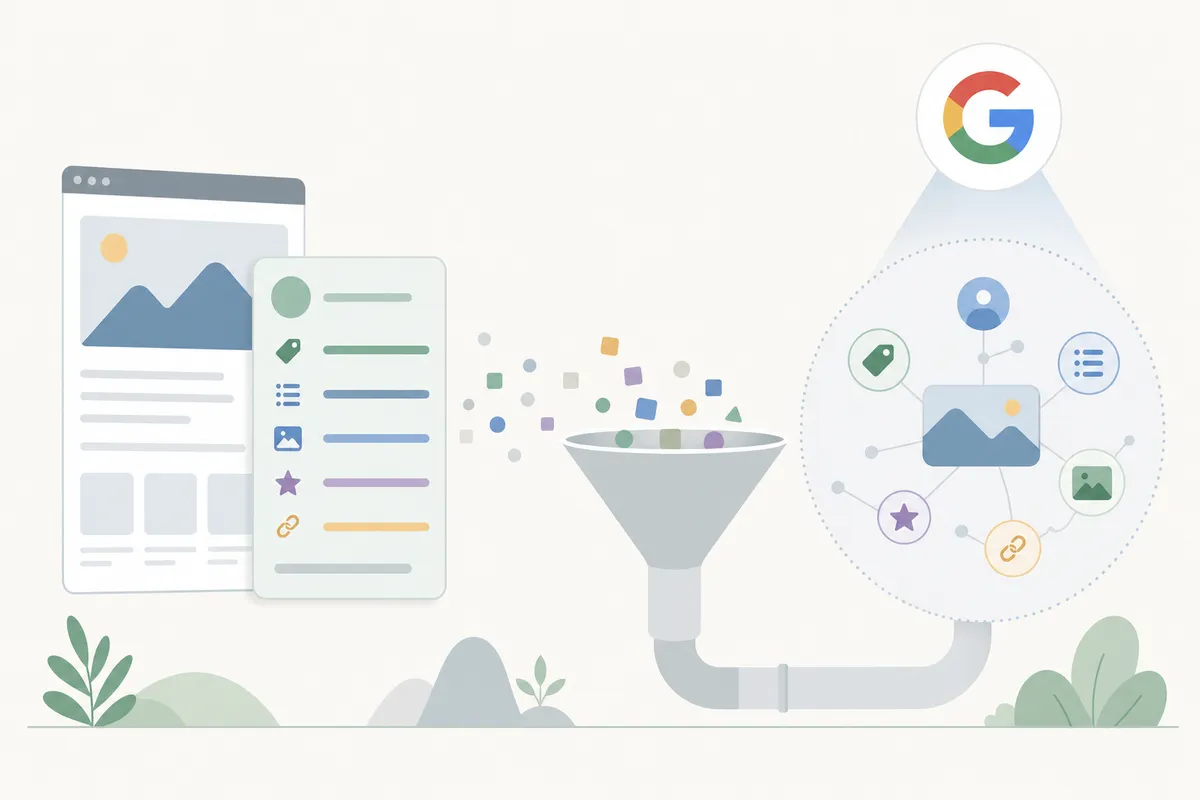
Before a page can rank, it has to be crawled, understood, and indexed correctly. This is where metadata does its quietest but most important work.
Crawling and indexing signals
Google Search Central's documentation on the robots meta tag confirms that it tells crawlers whether a page should be indexed at all. Google's guidance on canonicalization explains that canonical tags mark which version of a URL is worth ranking. This matters constantly on sites with filtered category pages or tracking parameters. Get either wrong and you can accidentally hide a page from search results, or split its ranking power across several near-duplicate URLs.
Ranking signals versus click signals
It helps to separate two things people lump together. According to Google Search Central, the title tag can act as a minor relevance signal. The meta description, however, generally does not influence rankings at all. What the description does influence is whether someone clicks once your page is already showing. A page ranking third with a compelling description can out-click a page ranking first with a bland or missing one.
The Real Importance of Metadata for SEO: Rankings, Clicks, and AI Answers
This is the part most guides underplay. The real importance of metadata for SEO is not that it moves you up the rankings on its own. It is that metadata decides how much of your ranking you actually get to use.
Why titles and descriptions drive click-through rate
Two pages can rank in the same position and get very different traffic, purely because one title makes a clearer promise. A title that names the specific outcome, the format, or the audience tends to outperform a vague one. You can preview how your title and description will look in results with a free SERP snippet preview tool before you publish. That beats guessing and checking weeks later.
Why schema feeds AI Overviews and answer engines
Structured data, defined by the shared vocabulary at Schema.org, lets a page qualify for rich results in regular search. That includes FAQ boxes, product ratings, and how-to steps. It plays the same role for AI answer engines. When your content is marked up clearly and answers a question directly, it becomes easier to quote. An AI Overview or a chat assistant can then attribute it correctly. Pages with no structured data and vague, unanswered headings are far less likely to get cited, even with good underlying content.

Common Metadata Mistakes That Quietly Cost Rankings
Most metadata problems are not exotic. They are small, repeated, and easy to miss without checking directly.
| Mistake | What It Costs You | Fastest Fix |
|---|---|---|
| Missing title tags | Google writes its own, often unclear title | Write a specific title for every page |
| Duplicate titles across pages | Pages compete with each other instead of ranking | Give each page a unique title |
| Missing meta descriptions | Lower click-through even when ranking is fine | Write a one-sentence summary per page |
| No alt text on images | Lost accessibility and image search visibility | Describe what each image shows |
| No structured data on FAQ or how-to content | Missed rich results and AI citations | Add the matching schema type |
Duplicate and missing titles are especially common on larger sites, where templated pages ship with the same default title. A quick way to catch these is a free on-page meta checker. It flags missing or duplicated tags across a page in seconds, no manual crawl needed.
Metadata Best Practices You Can Put in Place Today
A handful of habits cover most of what matters:
- Write a distinct title for every page that names the specific topic, not a generic template.
- Keep titles readable at a glance. Google often rewrites titles that run long, so lead with the important words first.
- Write meta descriptions as a genuine summary with a reason to click, not a keyword list.
- Use one clear H1 per page, then structure the rest with H2 and H3 headings that match how a reader would scan.
- Add alt text that describes the image, not the keyword you wish it ranked for, following W3C accessibility guidelines.
- Add schema markup for FAQ, how-to, product, or article content where it genuinely applies, never where it does not match the page.
- Set canonical tags on any page that has a near-duplicate, such as a filtered or sorted version of a category page.
The full breakdown of what meta tags do and why they matter covers the field-by-field detail behind each of these.
Can You Fix Your Own Metadata, or Do You Need a Pro?
Writing and fixing basic metadata, titles, descriptions, and alt text, is well within reach for most site owners. It takes attention to detail more than technical skill, and most content management systems have a field for each one already.
It gets harder with structured data across a large site, or canonical logic on complex e-commerce catalogs. Diagnosing why a specific page is not appearing correctly in search results is harder still. Those situations usually involve reading raw crawl data or resolving conflicting signals. A second, experienced pair of eyes tends to save more time than it costs.
FAQs
What is metadata in SEO?
Metadata in SEO is the information about a page that search engines and browsers read separately from the visible content. It includes the title tag, meta description, header tags, image alt text, canonical tags, and structured data.
Does the meta description affect search rankings?
No, the meta description does not directly affect where a page ranks. It affects click-through rate, since it is the summary text searchers read before deciding whether to click your result.
How long should a title tag be?
Title tags are typically kept concise, since search engines display them by pixel width rather than a fixed character count. Ones that run long tend to get truncated or rewritten.
What is structured data and do I need it?
Structured data is a standardized format, defined by Schema.org, describing content so search engines and AI systems can read it directly. It is not required. But it does make a page eligible for rich results and AI citations when the content genuinely fits a schema type.
Can duplicate metadata hurt my SEO?
Yes, duplicate titles or descriptions across multiple pages make it harder for search engines to tell the pages apart. That can dilute rankings and confuse searchers comparing your results.
See What Your Own Metadata Is Doing Right Now
Most sites are not missing content. They are losing clicks and visibility to metadata nobody has checked in months. That is the real importance of metadata for SEO: small fixes protect clicks a good page has already earned. A short review of your titles, descriptions, and schema usually turns up fixes you can make the same day. Look at a sample SEO report to see what that kind of review covers before committing to one.
Resources / References
About the author
SearchBlueprint researched, wrote and scored this article with the content pipeline our customers run on their own sites. The score in the byline is what our content engine gave this page before it published. Nothing here is reviewed by hand, which is the point: it is the product's output, published where anyone can check it.