The SEO Funnel: How to Turn Search Traffic Into Customers
By Toy Wen Da, Co-Founder · Updated · 10 min read · scored 94/100
If your site gets decent search traffic but few sales, you probably don't have a working SEO funnel. It's the path a visitor takes from a search query to becoming a customer, built from content mapped to each stage of that journey. Without one, traffic arrives, reads a page, and leaves with nowhere obvious to go next.
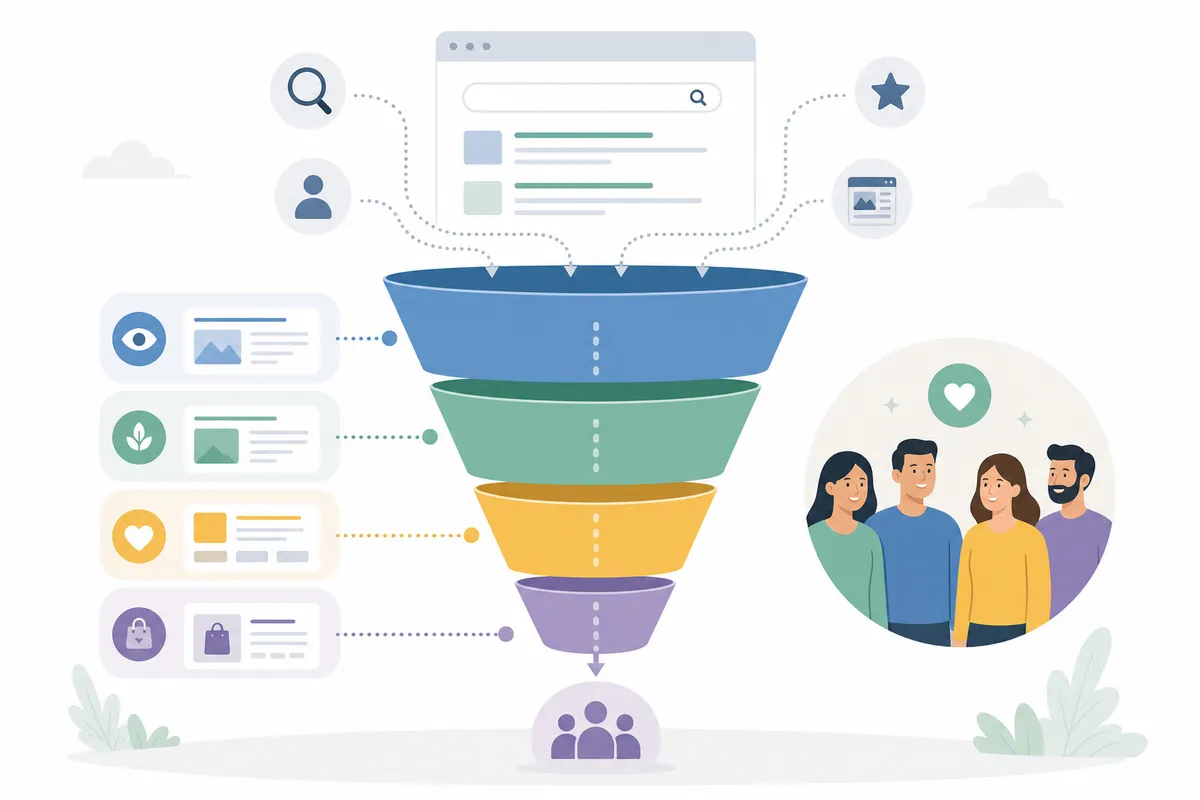
What is an SEO funnel?
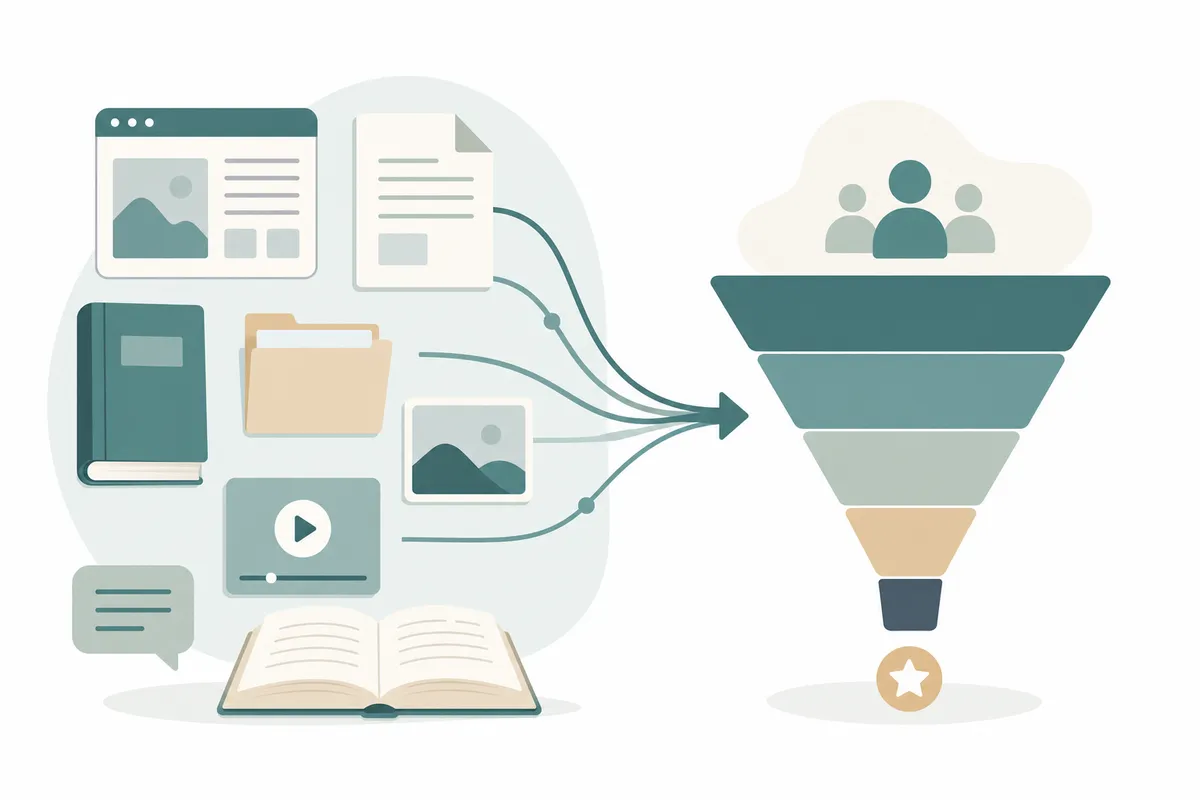
An SEO funnel is the sequence of search-driven touchpoints that carries a visitor from "I have a question" to "I'm a customer." Someone might land on a blog post that answers one question, click through to a guide, and then arrive at a pricing or service page ready to buy.
Visitors can join at any point. A broad question puts the reader at the top, a brand comparison puts them in the middle, and a search like "best [service] near me" can drop them straight at the bottom. The funnel has to work wherever a reader lands, because a page that ranks well but offers no next step wastes the ranking.
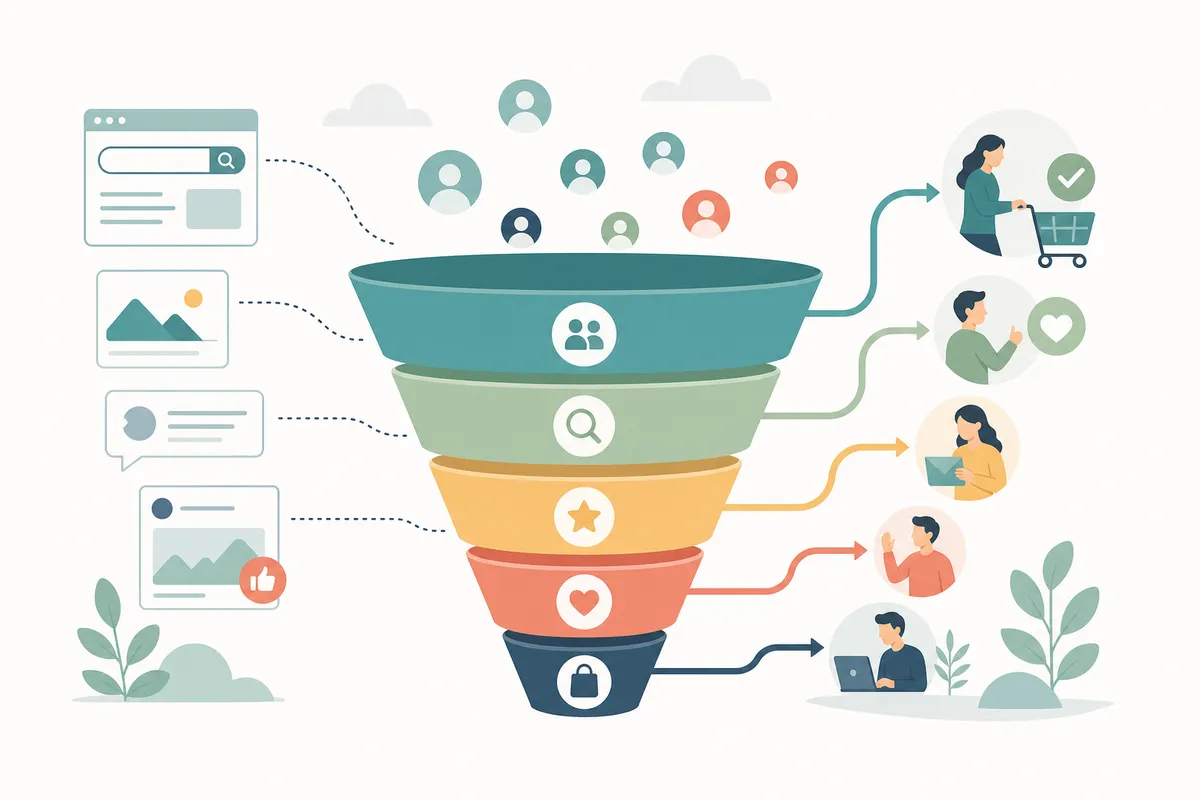
How an SEO funnel differs from a marketing funnel
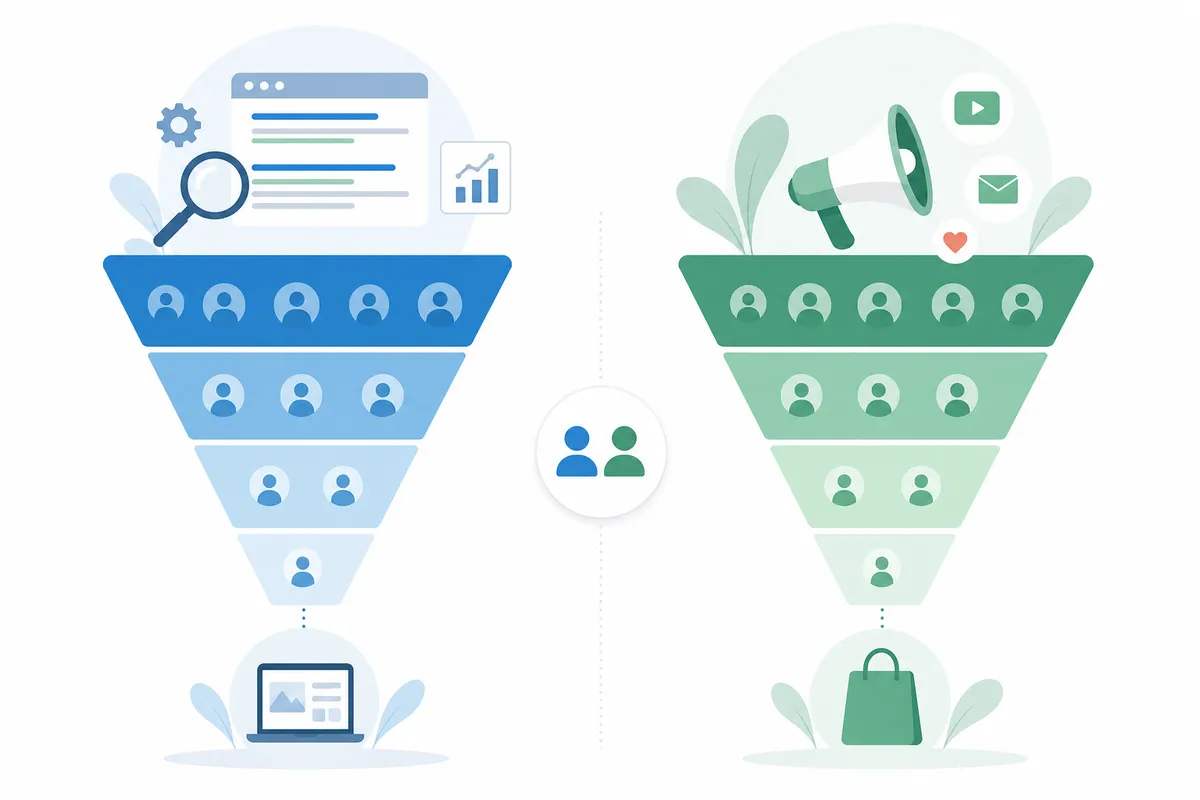
A marketing funnel tracks a buyer across every channel: ads, email, events, social and organic search. It doesn't care where the person first heard of you. An SEO funnel tracks only the path that starts with a search query, whether that happens on Google, Bing or inside an AI answer tool like ChatGPT or Perplexity.
The narrower focus changes what you optimize. A marketing funnel worries about ad spend and email open rates, while an SEO funnel worries about search intent, keyword difficulty and which page should rank for which query at which stage.
Marketing funnel vs. SEO funnel
| Aspect | Marketing Funnel | SEO Funnel |
|---|---|---|
| Entry channels | Ads, email, social, events, organic search | Search engines and AI answer tools only |
| Core unit | The campaign or channel | The search query and its intent |
| Primary lever | Spend, creative, targeting | Keyword research, content, on-page structure |
| Measurement tools | Ad platforms, CRM, email analytics | Search Console, analytics, rank tracking |
| Typical owner | Marketing/growth team | SEO or content team |
Both funnels share the same three underlying stages. Only the mechanics of getting there differ.
Why a search funnel matters for growth
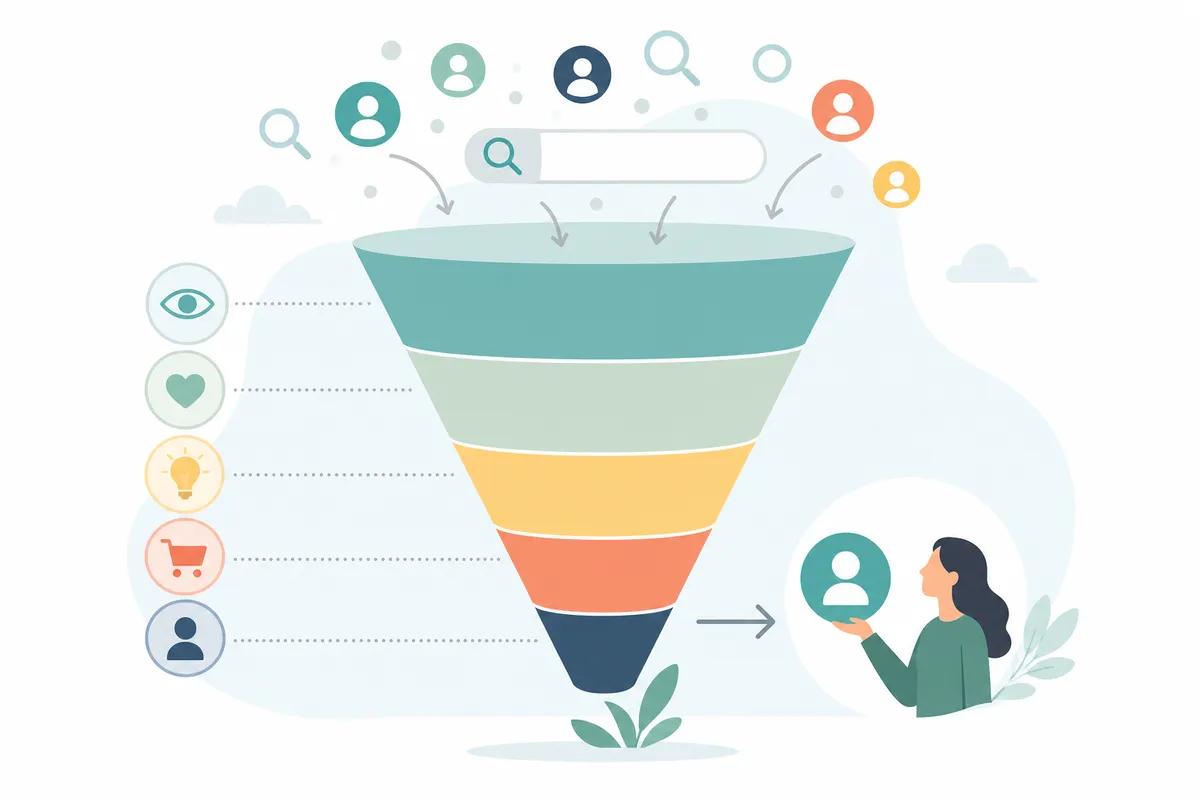
A search funnel turns anonymous search demand into revenue without relying on paid clicks for every visit. Top-of-funnel content earns trust, middle-of-funnel content builds a case for you, and bottom-of-funnel content removes the last excuse not to buy.
If you neglect the middle stages, you get lots of blog traffic and almost no sales calls. If you neglect the top, the pipeline stays thin because nobody discovers you early enough to consider you later. A working funnel keeps every stage fed.
How to build an SEO funnel
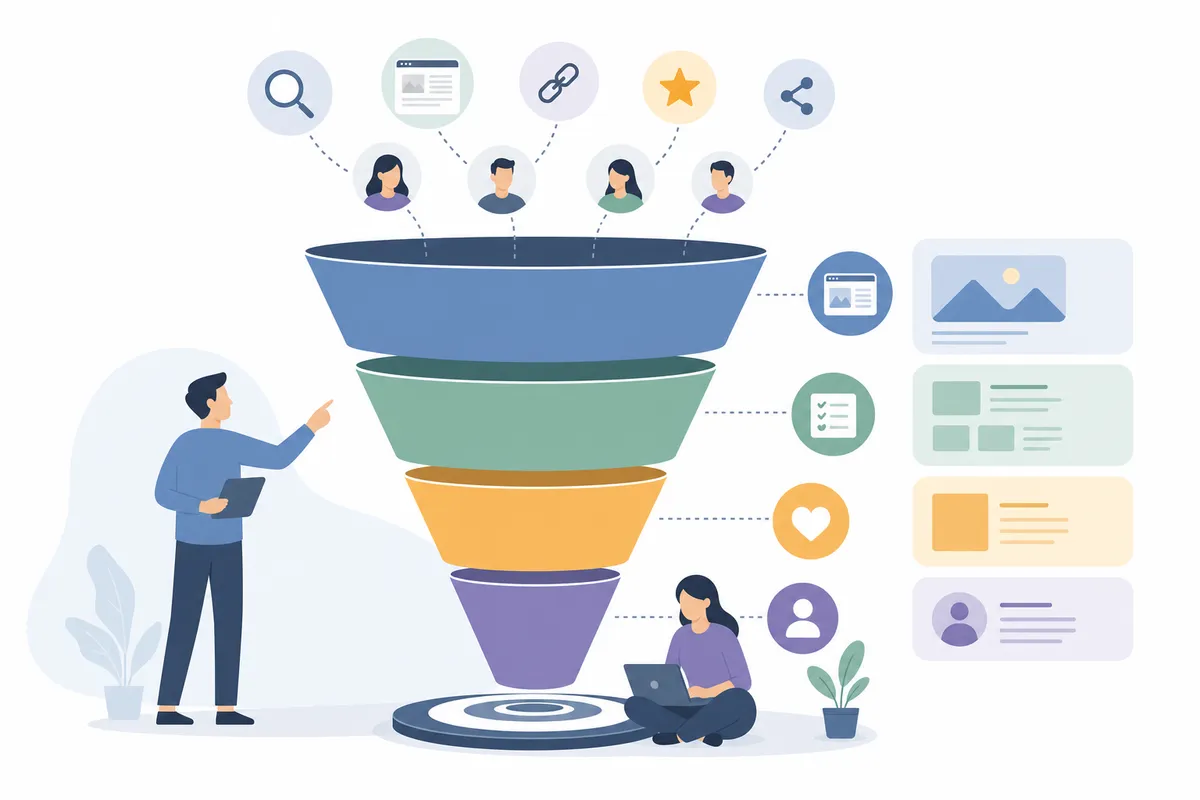
Start with what your buyers actually ask, not what you assume they ask.
Step 1: Map the buyer's questions
Pull questions from your sales team, your support tickets and forums like Reddit where your niche gets discussed. Write every question down, even the obvious ones. This stage is messy by design, and you sort it later.
Step 2: Do real keyword research
Turn the raw questions into search terms with actual volume and competition data behind them. A structured process saves weeks of guessing later, and this five-step approach to keyword research is a solid starting framework for sorting queries by intent and difficulty.
Step 3: Sort by funnel stage
Every keyword fits roughly one stage: awareness, consideration or decision. A query like "is kitesurfing hard for beginners" is awareness, "best kitesurfing school for beginners" is consideration, and "kitesurfing lessons near me" is decision. Tag each keyword before you write a word of content.
Step 4: Build a content plan with dates attached
A list of keywords without deadlines rarely gets written. Put your sorted keywords on a calendar so each piece has an owner and a publish date, and plan the first wave around a fixed window. A 90-day action plan gives you enough time to publish, measure and adjust before the quarter ends.
Step 5: Link the stages together
Content at each stage should link to the next one: a blog post to a guide, and a guide to a service or pricing page. Without those links, visitors finish reading and leave instead of moving forward.
Mapping content to each funnel stage
Each stage needs a different kind of content, written for a different level of buying intent.
Top of funnel (TOFU): awareness
At this stage readers are researching a problem rather than a brand, and they want straightforward answers. If you sell kitesurfing lessons, your TOFU content might answer "is kitesurfing hard for beginners" or "what do you need to start kitesurfing."
Keep it educational, with no pop-ups, pricing banners or aggressive calls to action. Readers who feel sold to this early tend to bounce. Long-tail, question-based keywords work best here because they match how people search while they're still exploring, and this breakdown of why long-tail keywords rank faster and convert better covers targeting these early-stage terms in more detail.
Middle of funnel (MOFU): consideration
Readers here know they want a solution and are comparing providers. Content should answer "how do I choose" and "what should I expect," and it should show what sets you apart from competitors without naming them unfairly.
Case studies, comparison pages and "how it works" guides belong here. Structured data pays off in this stage too: mark up comparison and review content with FAQ schema, as defined by Schema.org, so search engines and AI tools can parse your claims directly.
Bottom of funnel (BOFU): decision
Readers here are ready to act and are looking at prices and reviews for a reason not to delay. Content should include transparent pricing, simple booking or signup forms, and local terms if you operate in specific areas. "Kitesurfing lessons near me" is a BOFU query and belongs on a page built for booking.
Remove friction wherever you find it. Every extra form field, unclear price or broken link costs you conversions at the moment a reader was ready to buy.
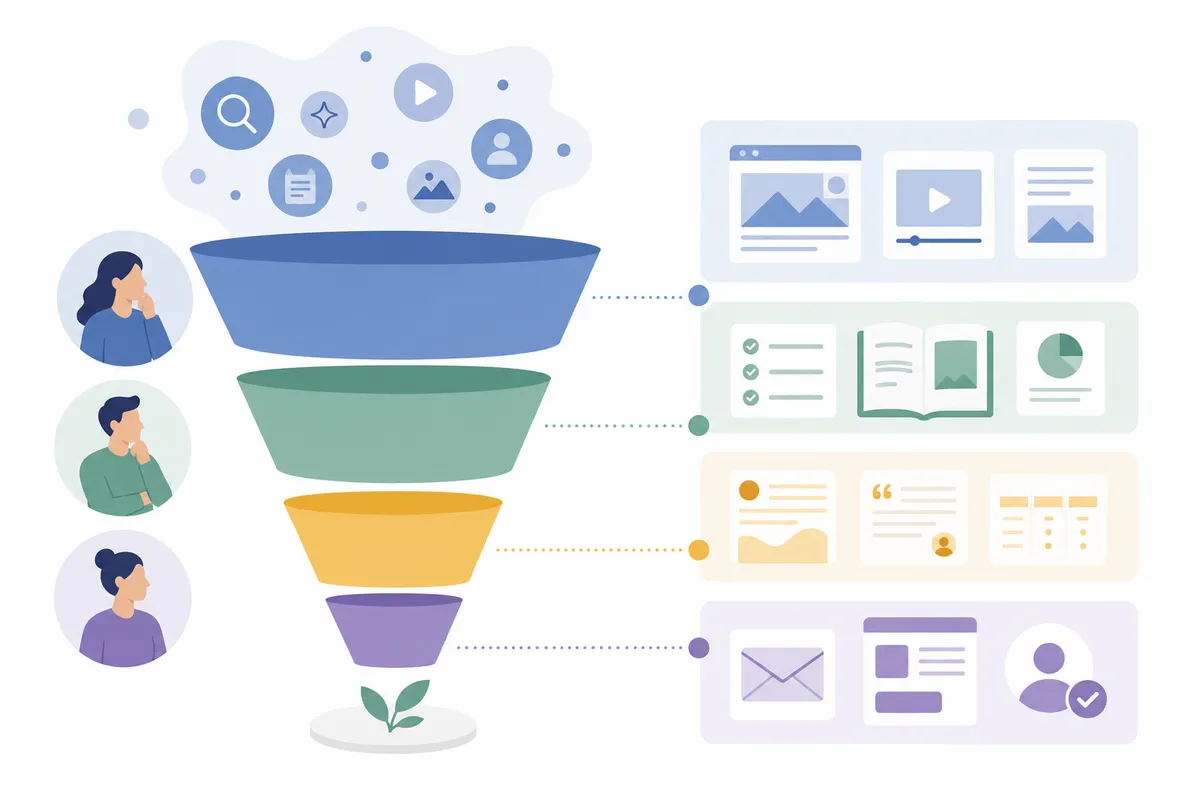
Post-purchase: the stage most funnels skip
Most SEO funnels stop at the sale, which is a mistake. Treat the funnel as a loop instead of a straight line. A reader who read your guide and attended a webinar but never booked isn't gone; they're a re-entry candidate.
Send that reader useful follow-up content such as new guides, product updates or seasonal tips, which can bring them back into the funnel at any stage. B2B software buyers especially re-enter multiple times before committing, and a SaaS-focused search strategy built around the buyer's actual research habits accounts for that looping behavior instead of assuming one visit equals one decision.
How to optimize your SEO funnel for conversions
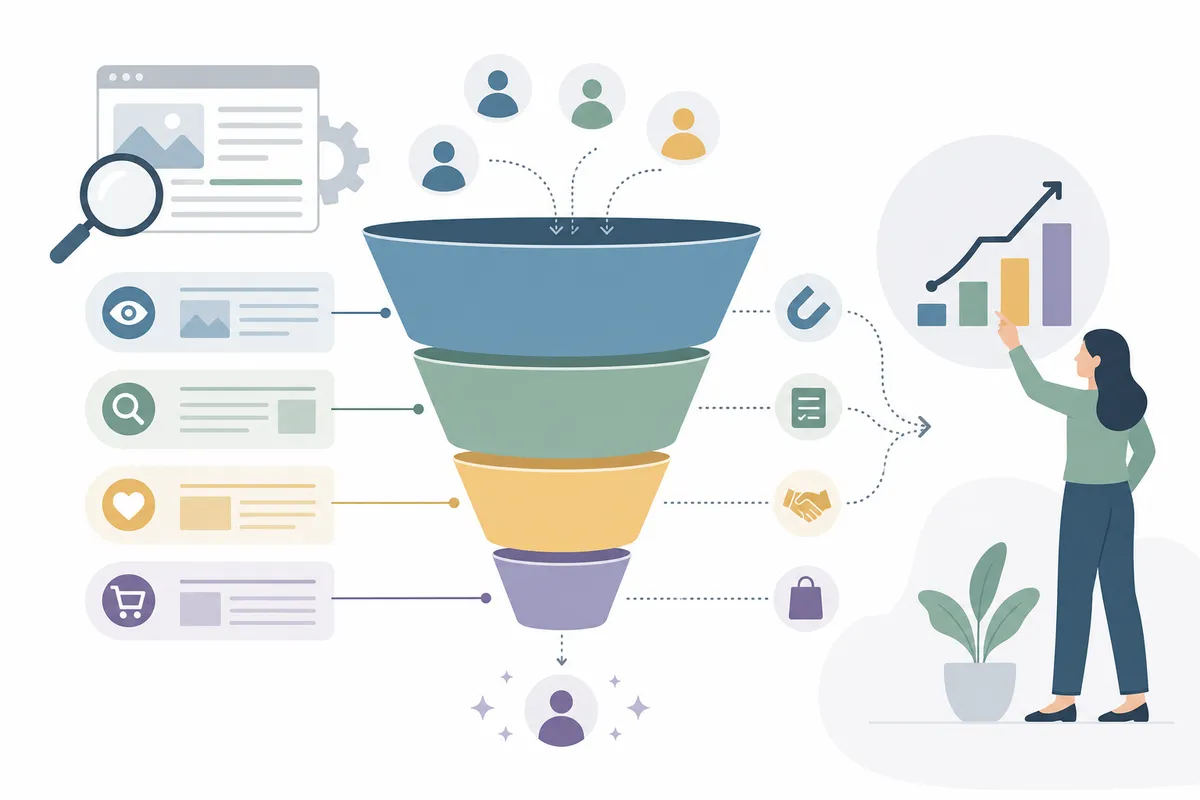
Optimizing the funnel means reducing friction between stages as well as adding content at the top.
Optimization techniques by funnel stage
| Technique | Best Stage | What It Fixes |
|---|---|---|
| Simplify forms (fewer fields) | BOFU | Drop-off at the point of conversion |
| Add testimonials or case studies | MOFU/BOFU | Lack of trust before a decision |
| A/B test headlines and CTAs | All stages | Weak click-through or engagement |
| Improve internal linking between stages | TOFU → MOFU → BOFU | Readers stalling with no next step |
| Offer a free trial or downloadable | MOFU | Hesitation before committing |
| Tighten page speed and mobile layout | BOFU | Abandonment right before checkout |
None of this works as a one-time fix, so base your tweaks on what readers actually do. A broader organic traffic growth workflow is useful here because it treats optimization as an ongoing cycle rather than a single project.
Internal linking deserves special attention because it connects the whole funnel. Without it, even great content at each stage sits isolated.
Measuring SEO funnel performance
Ranking well means nothing if readers never convert, yet many teams track rankings obsessively and ignore the funnel's actual output: paying customers.
TOFU measurement
At the top, track search visibility: impressions, clicks and average position for your target queries. Google Search Console gives you this data by page and by query. Pair it with engagement metrics from your analytics platform, such as time on page and bounce rate, to see whether readers are reading or just arriving and leaving.
MOFU measurement
In the middle, track scroll depth, return visits and email or newsletter sign-ups. These are soft signals that a reader is still considering you. A spike in MOFU traffic with no BOFU movement usually means your comparison content isn't making a strong enough case.
BOFU measurement
At the bottom, the metric that matters is conversion rate, the percentage of visitors who complete the action you want, whether that's a form fill, a call or a purchase. Knowing what counts as a healthy benchmark for your industry helps you judge whether the funnel is working, and this guide to SEO conversion rate benchmarks and calculation walks through how to calculate and interpret your own number.
Putting the stages together
No single metric tells the whole story. A page can rank #1 and still contribute nothing to revenue if it never sends readers further down the funnel. Review all three stages together each month and look for the largest drop-off between stages, because that's usually where your next fix belongs.
A concrete example: a kitesurfing school tracking its own funnel in Search Console might see 4,000 monthly impressions and 180 clicks on its TOFU guide to "is kitesurfing hard for beginners." Its analytics tool might show a 65% scroll depth and 40 newsletter sign-ups on the MOFU comparison page, and its booking software might show a 2.5% conversion rate on the BOFU booking page. If that BOFU number sits closer to 0.5%, the fix usually isn't more traffic but less friction: check form length, page speed and whether the price is visible before a reader has to ask for it.
Common mistakes that break an SEO funnel
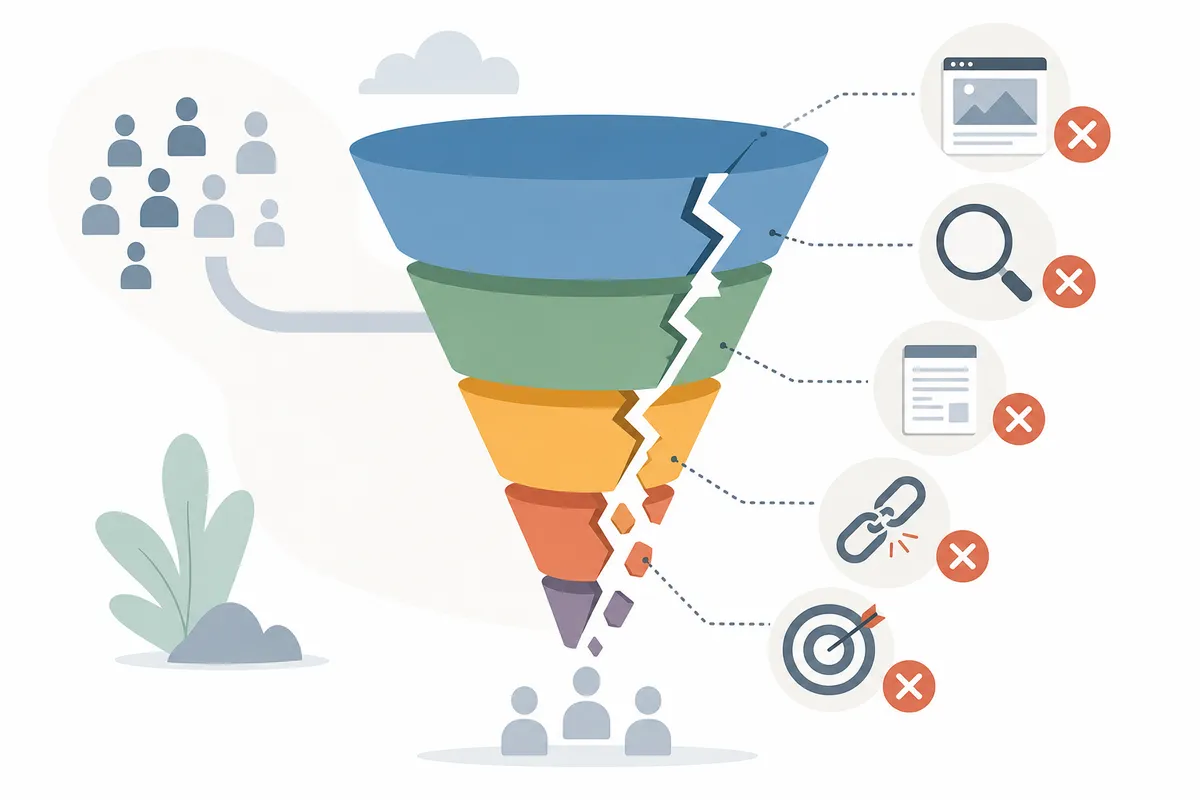
A few mistakes show up repeatedly in funnels that underperform:
- Treating every page as bottom-of-funnel. Sales pages that rank for broad informational queries confuse readers who aren't ready to buy yet, and they rarely outrank genuinely informational content anyway.
- No internal links between stages. Content sits in isolation instead of guiding a reader forward.
- Ignoring AI-driven discovery. A growing share of research now happens inside AI chat tools before a user runs a traditional search. According to Google Search Central, content written clearly and structured for direct extraction performs better across both traditional and AI-assisted search.
- Measuring rankings instead of revenue. High rankings with low conversion mean the content has a problem, whatever the ranking says.
- Assuming one visit equals one decision. Most buyers research across multiple sessions, so a funnel built for a single linear visit misses most of your actual traffic.
FAQs
What is an SEO funnel in simple terms?
It's the path a visitor takes from a search query to becoming a customer, built from content matched to each stage of that journey: awareness, consideration, decision, and often a follow-up stage after purchase.
How is an SEO funnel different from a sales funnel?
A sales funnel tracks buyers across every channel, including ads and email; this one only tracks the path that starts with a search query, whether on a search engine or inside an AI answer tool.
What content works best at the top of an SEO funnel?
Educational, question-based content works best at the top. Blog posts and guides that answer a reader's immediate question without pitching a product build the trust needed for later stages.
How often should I review my SEO funnel?
Review it monthly at minimum. Track search visibility, engagement and conversion rate together so you can spot where readers drop off between stages.
Can a small business realistically run a full SEO funnel?
Yes. A small business funnel needs fewer pages per stage: a handful of educational posts, one or two comparison or service pages and a clear contact or booking page. The structure matters more than the volume of content.
Build the funnel, then fix what's leaking
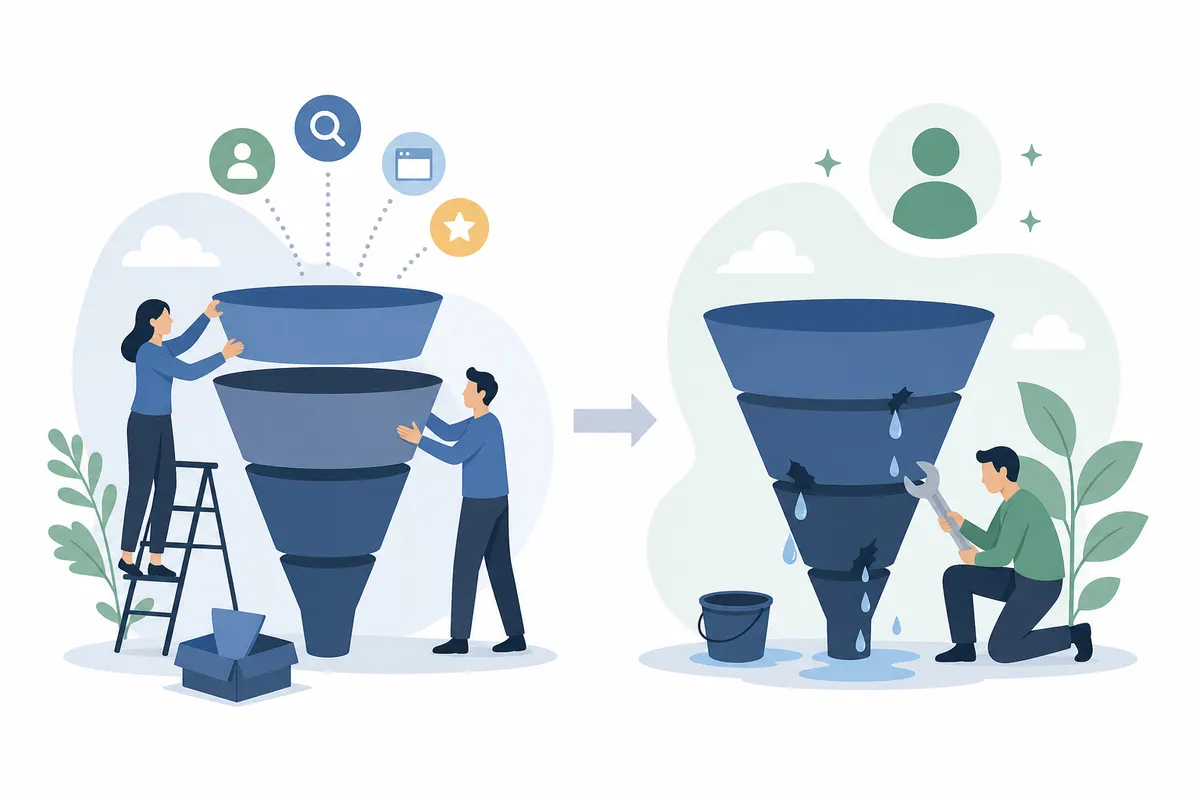
Most sites already have TOFU content and nothing else. Start by auditing what you have against the three stages above, then write the one or two pieces that close the biggest gap, usually something in the middle, where readers are comparing options but finding nothing that makes your case for you. If you want a clearer picture of where your current pages sit in the SEO funnel and which gaps are costing you conversions, talk to the team using this sample SEO report as a starting point.
Resources / References
Sources
About the author
SearchBlueprint researched, wrote and scored this article with the content pipeline our customers run on their own sites. The score in the byline is what our content engine gave this page before it published. Nothing here is reviewed by hand, which is the point: it is the product's output, published where anyone can check it.