The Types of B2B Backlinks That Drive Real SEO Results
SearchBlueprint · · 9 min read · scored 95/100

The types of B2B backlinks that drive real SEO results are earned editorial links: guest posts, digital PR placements, broken-link replacements, expert-commentary quotes, and links to tools or data other people want to cite. Directory listings and paid link packages rarely move rankings in 2026, no matter how many you buy.
What Counts as a B2B Backlink (and Why the Type Matters)
A B2B backlink is any link from another website pointing to a page on yours. That part is simple. What's not simple is that not all backlinks carry the same weight, and B2B link building has a different job than B2C link building does.
Most consumer campaigns chase awareness-stage content: listicles, gift guides, top-10 roundups. B2B backlinks work best when they point at bottom-funnel pages, the ones closest to a buying decision, because the audience reading trade publications and industry newsletters is already closer to a purchase than someone scrolling a lifestyle blog. That single difference changes which link types are worth your time.
Backlinks also aren't the whole game anymore. Content quality has become the single most important ranking factor, while backlinks, which once made up more than half of Google's ranking weight, have settled at roughly 13% as of Q1 2025. That doesn't make links optional. It means the wrong kind of link (mass directory submissions, low-relevance guest posts, paid packages) wastes budget that better-targeted content would have earned back on its own.

The Full Taxonomy of B2B Backlink Types
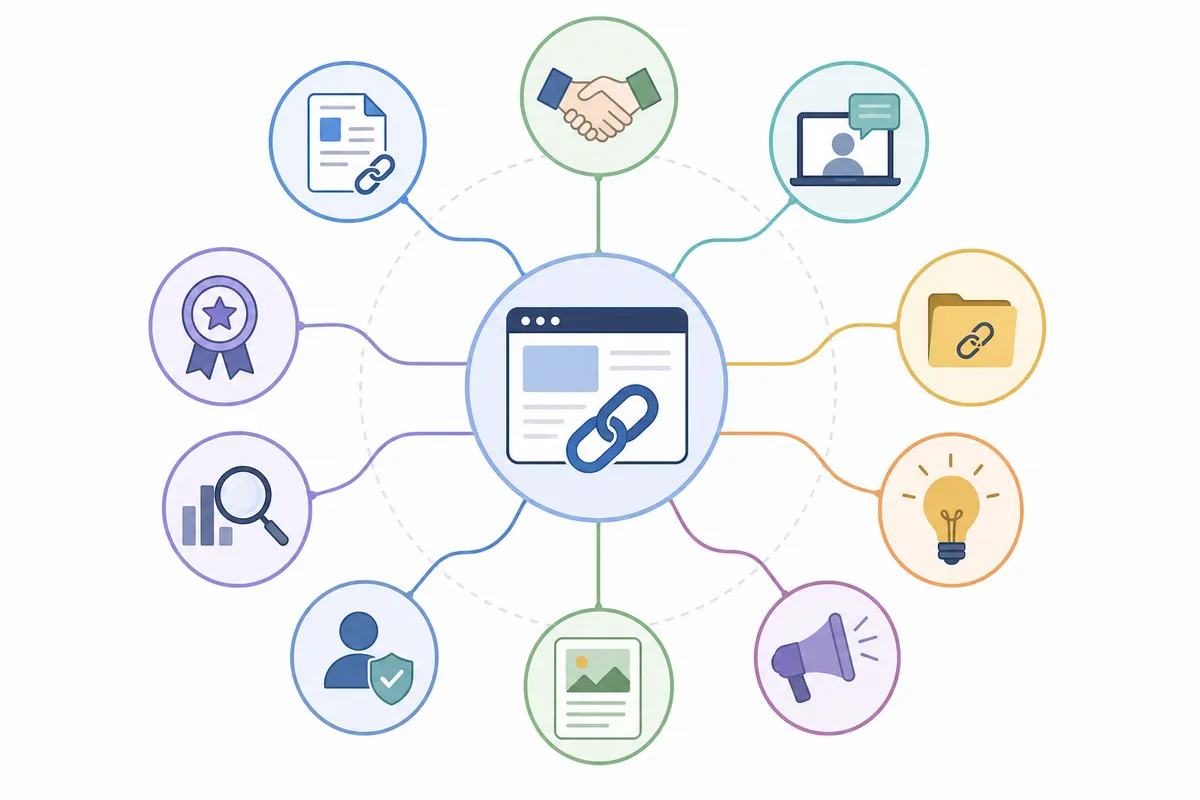
Every B2B backlink falls into one of two buckets: links you earn through outreach and content, or links you pick up passively through directories, profiles, and mentions. The first bucket does almost all the ranking work.
Links You Actively Earn
- Guest post links. You write original content for an industry publication and it links back to your page, usually in the body or the author bio.
- Broken link building links. You find dead links on relevant sites and pitch your own content as the replacement.
- Digital PR links. Journalists cite your original research, data, or expert commentary in their coverage.
- Expert commentary links. Platforms that connect sources with reporters (the space formerly known as HARO) route journalist queries you can answer with real expertise.
- Partner and co-marketing links. Joint content with an adjacent, non-competing business creates a link in both directions.
Links You Reclaim or Attract Passively
- Linkable asset links. A free calculator, benchmark report, or template attracts citations without you asking for them.
- Unlinked brand mention links. A publication already named your brand; you just ask them to hyperlink it.
- Niche directory links. Sites like Clutch or G2 give you a contextual citation, though the SEO lift is modest next to editorial coverage.
Links That No Longer Help (and Can Hurt)
Private blog networks, mass directory blasts, and forum spam produce close to zero traffic and carry real penalty risk. Toxic backlinks affect roughly 23% of all websites, and a spam score above 30% correlates with a measurable drop in organic visibility. If an offer sounds like "500 links for $99," treat it as a liability, not a shortcut. For a fuller breakdown of which outreach tactics actually convert, 9 tactics that earn real links walks through the mechanics behind each one.
Which Types of B2B Backlinks Actually Move Rankings
Two data points explain why link type matters more than link count. First, backlinks from relevant websites in your own niche are worth roughly 2.7 times more than links from unrelated sites, and 58% of SEO professionals now rank relevance as the top backlink quality factor, ahead of domain authority (23%), traffic (12%), and link placement (7%). Second, where the link sits changes its value too: editorial links placed inside the body of an article carry roughly 2.3 times more weight than the same link stuffed into a sidebar, footer, or nav menu.
Domain rating still correlates with rankings; 89% of top-ranking pages have at least one link from a DR 60+ domain, versus 34% of pages sitting past position 20. But a high-DR link from an irrelevant site still underperforms a moderate-DR link from a publication your actual buyers read. Run every prospective link through one filter before you pitch it: would a qualified buyer plausibly read this page? That single question does more to protect a B2B backlink budget than any domain-rating threshold.
There's also a newer reason relevance-first links matter: AI search. An analysis of roughly 129,000 domains found that referring domain count was the strongest signal tied to ChatGPT citations, and sites with more than 32,000 referring domains were 3.5 times more likely to be cited than sites with 200 or fewer. You don't need tens of thousands of links to benefit from that pattern. You need the compounding kind that keeps getting cited on its own, which is exactly what digital PR and linkable assets are built to produce. Backlink diversity in SaaS SEO covers why a spread of link types outperforms volume from a single channel.
How to Choose the Right Mix for Your Team

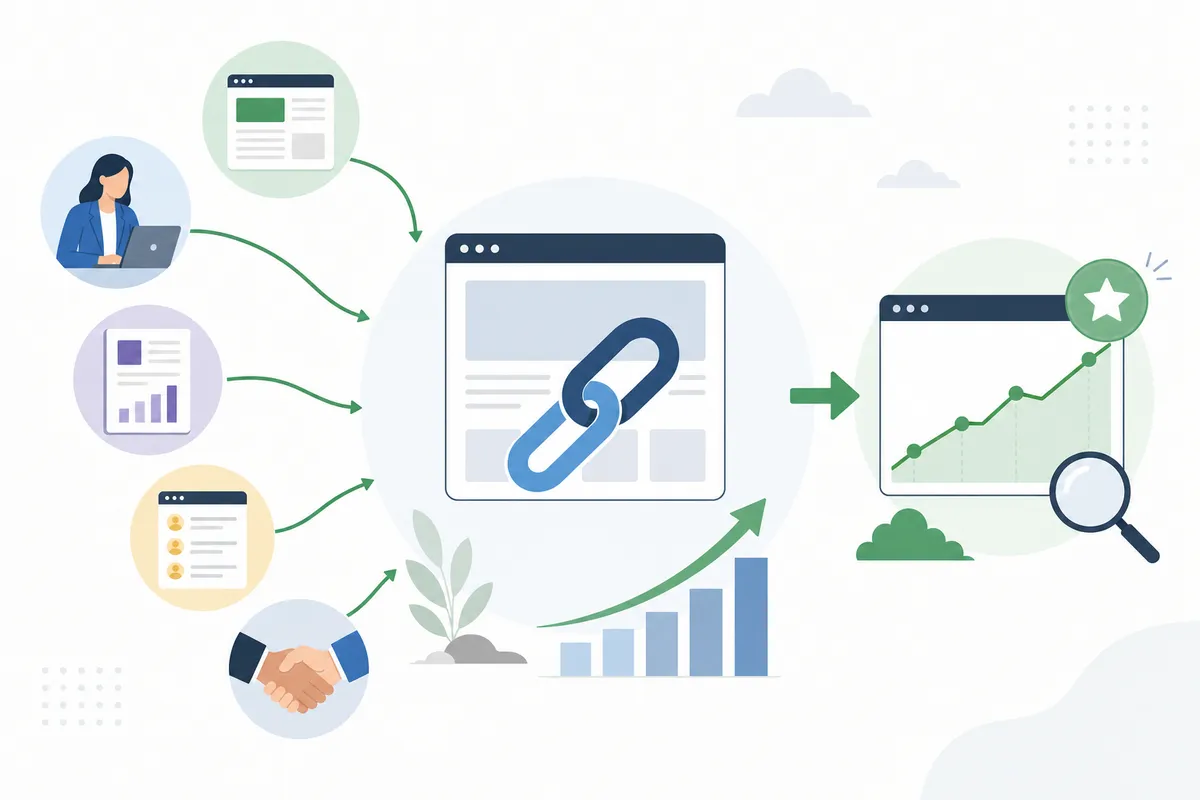
Not every tactic fits every team's resources. Match the approach to what you actually have: writers, outreach bandwidth, or research budget.
| Backlink Type | Reported Conversion Rate | Effort Required | Best Fit |
|---|---|---|---|
| Guest posting | ~40% acceptance | High (writing-heavy) | Teams with in-house content resources |
| Broken link building | ~28% conversion | Medium (outreach-focused) | Teams with an existing content library |
| Digital PR | 20-80 links per campaign, per reporting on typical B2B campaigns | Very high (research + pitching) | Brands with original data to publish |
| Expert commentary | Low per query, high per hit | Low to medium | Founders and subject-matter experts |
| Linkable assets | Passive after launch | High upfront, low ongoing | Long-term SEO investment |
| Unlinked mention reclamation | High response rate | Low | Any team, fast wins |
Guest posting rewards teams that can write consistently: at a roughly 40% acceptance rate, a steady outreach cadence produces predictable placements each month. Broken link building suits teams sitting on an existing content library, since a 28% conversion rate on outreach means you're repurposing assets you already built rather than writing from scratch. Digital PR asks for more upfront investment, original data plus a genuine press angle, but a single campaign can generate a wide spread of editorial links that keep accumulating citations for years. For a step-by-step look at running outreach across these tactics, six plays that earn links breaks the process down play by play.
What B2B Link Building Actually Costs
Budgets have grown. Nearly 40% of B2B companies now invest $1,000 to $5,000 a month in link acquisition, up from around 25% two years ago. At the placement level, the median editorial link runs roughly $500, and premium trade publications often charge four figures for a single mention.
Agency retainers vary widely by model. Some shops sell pay-per-link packages (one published rate card lists $1,750 for five links or $6,000 for twenty), while others run monthly retainers starting around $10,000 for premium, high-touch placements at outlets like major tech publications. Neither number is a benchmark you need to hit. They're a reminder that legitimate, white-hat link building costs real money, and that a $99-for-500-links offer is not a bargain version of the same service. It's a different, riskier product.
The ROI math is straightforward: a backlink that costs more than it returns is a liability, and links discounted by a Google spam update don't come back once the ranking benefit is lost. That's why quality-first campaigns, even at a higher per-link price, tend to outlast bargain ones. Why links still move rankings goes deeper into how Google's own guidance treats manipulative link schemes, which Google Search Essentials explicitly warns against as a spam policy violation (source: Google Search Essentials).
Content That Earns These Backlink Types
The link types that compound (digital PR, linkable assets, unlinked mentions) all trace back to content worth citing. Roughly 64% of B2B marketers now conduct competitor research monthly, which is a signal that original data is the currency editors are actually looking for.
Three content formats consistently earn more B2B backlinks than a generic blog post:
- Proprietary research and benchmark reports. A survey or annual study gives journalists something they can't find anywhere else.
- Free tools and calculators. An ROI calculator or pricing estimator gets linked by writers who want to hand their own readers something useful.
- Founder-led commentary. A named expert who shows up consistently in trade media over six to twelve months builds both links and entity authority.
The strongest campaigns usually combine two of these at once, original data paired with founder commentary, or a free tool paired with co-marketing distribution, rather than relying on one tactic alone.
FAQs
What is a B2B backlink?
A B2B backlink is a link from another business-focused website that points to a page on yours. The types that move rankings are earned editorially, through guest posts, digital PR, or content other sites choose to cite, rather than bought or mass-submitted.
Which type of B2B backlink works best for a small team?
Unlinked mention reclamation and broken link building tend to deliver the fastest wins with the least writing, since you're working from content or mentions that already exist rather than producing something new.
How much do B2B backlinks cost?
Reported spend varies widely, but nearly 40% of B2B companies now budget $1,000 to $5,000 a month for link acquisition, and a single editorial placement often runs from a few hundred dollars up to four figures at premium publications.
Are business directory links still worth pursuing?
They're worth claiming when they're free and relevant (think G2 or Clutch for a B2B software company), but their SEO impact is modest next to editorial coverage. Treat them as a baseline, not a strategy.
How long does it take to see results from B2B link building?
Guest posts and broken-link placements can land within weeks of outreach starting. Digital PR and linkable assets take longer to build but keep earning citations for years once they're live, which is why most B2B teams run both a fast-win tactic and a compounding one at the same time.
Get Your Current Backlink Mix Reviewed
Before you commit budget to a new tactic, it helps to know which of the types of B2B backlinks that drive real SEO results your site already has and where the gaps actually are. See a sample SEO report to get a sense of what that kind of review looks like, then talk to the team about applying it to your own site.
Resources / References
Sources
About the author
SearchBlueprint researched, wrote and scored this article with the content pipeline our customers run on their own sites. The score in the byline is what our content engine gave this page before it published. Nothing here is reviewed by hand, which is the point: it is the product's output, published where anyone can check it.