Understanding organic website traffic (and how to grow it)
SearchBlueprint · · 10 min read · scored 92/100

Understanding organic website traffic starts with one clear definition. It is every visit that reaches your site through unpaid search results. Clicks on your citation inside Google's AI Overviews count too. Paid ads and social posts do not. It matters because it compounds: a page you publish once can keep sending visitors for years.
This guide is for business owners and marketers who can see a traffic number in their analytics but are not sure what it includes and how to move it.
What organic website traffic actually is
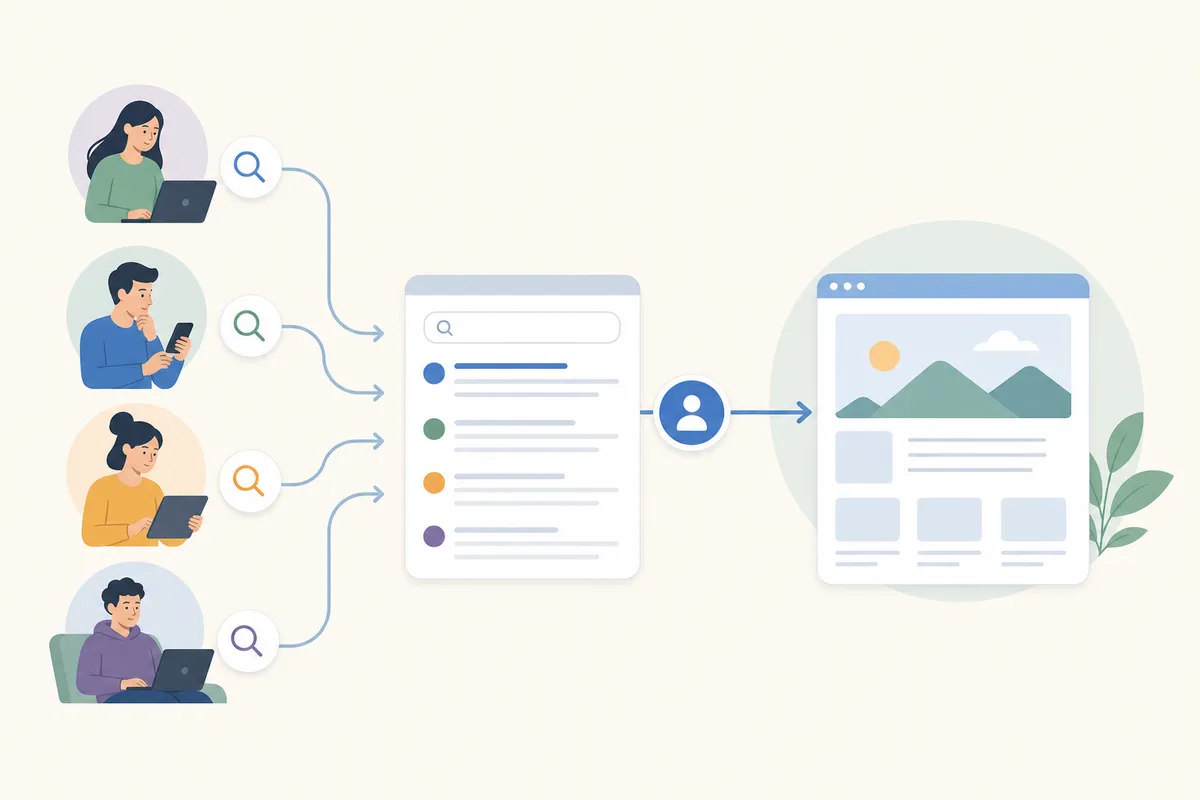
Organic website traffic is the stream of visitors who find you through a search engine's unpaid results. Someone types a question into Google or Bing, your page appears because it earned the position, and they click through. No auction and no fee per visit.
GA4 groups these visits under the Organic Search channel, which is what lets you judge the channel on its own numbers instead of a blended total.
What counts as organic
Three kinds of clicks land in this bucket:
- Standard unpaid listings in Google, Bing, DuckDuckGo, and other search engines
- Your citation inside Google's AI Overviews or AI Mode
- Unpaid results in vertical searches, such as the image or video tabs
Each of those visits shares one trait: the person was already searching for something you cover. That built-in intent is why organic visitors usually engage more deeply than people who were interrupted by an ad.
What does not count
Paid search ads are their own channel, tracked and billed separately. Social, email, and direct visits are not organic either, however unpaid they feel.
The surprising exclusion is AI assistants. In GA4's default channel groups, a visit from ChatGPT or Perplexity is usually recorded as Direct or Referral, not Organic Search, unless you build custom tracking for it. Those visits are worth watching. They are simply a different line in your reports.
Organic vs. paid traffic: which deserves your budget?
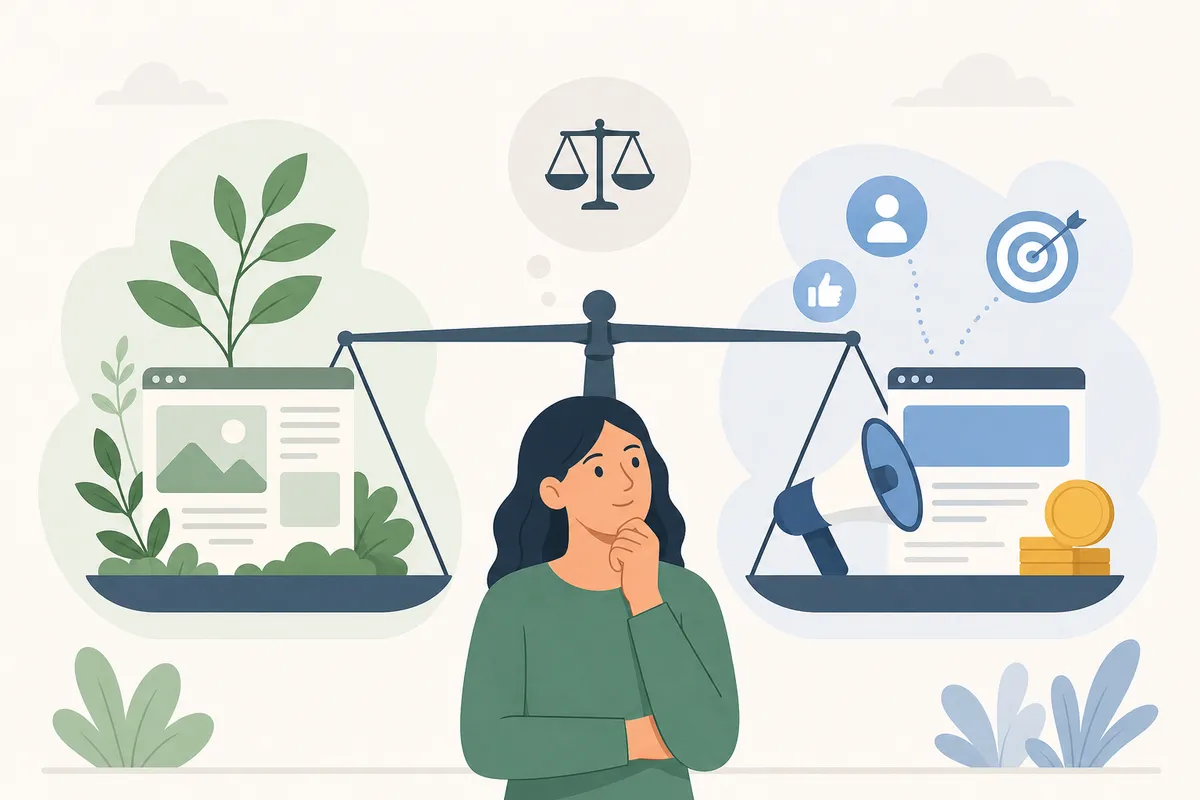
Paid search buys speed. Organic search builds an asset. Most businesses need some of both, but the two behave so differently that mixing up their jobs wastes money.
The sharpest difference shows up when spending stops. A paused ad account produces nothing the next morning. A ranked page keeps producing for as long as it stays relevant, which is why the playbook for getting more customers from Google without ads leans so heavily on content that holds its position.
The two channels also feed each other. Klipfolio's benchmark write-up argues that weak organic listings drag paid performance down with them, so treating the pair as rivals for one budget misses how they combine.
| Factor | Organic search | Paid search | What it means for you |
|---|---|---|---|
| Cost per visit | No fee per click; you invest in content and site health | You pay auction rates for every single click | Organic gets cheaper per visit as pages accumulate |
| Speed to results | Typically months of steady work | Traffic can start the same day | Use ads for launches and tests, organic for durable demand |
| Durability | Keeps flowing while the page stays relevant and indexed | Stops the moment the budget stops | Only one of these channels compounds |
| Share of visits | About 53.3% of online visits arrive through organic search, per Market Veep | Roughly 10% of total traffic volume, per Klipfolio citing Search Engine Land | The bigger pool of buyers is on the organic side |
Why organic traffic is worth the wait
Intent is the short answer. An organic visitor searched for the exact problem you solve, then chose your page over the alternatives. That self-selection shows up in the numbers agencies publish. Market Veep cites a typical organic visitor-to-lead conversion rate of around 16% across sectors, and reports that 28% of local inquiries lead to a purchase.
Intent is visible before the click, too. Market Veep notes that mobile searches beginning with "do I need" have surged over 65%. Those are buying questions, typed at the moment the need appears, and organic results are where most of them get answered.
Trust builds alongside it. Searchers know which results are ads and which earned their spot. In one survey Market Veep references, 91% of participants said SEO improved their online performance and marketing goals. Read that as sentiment rather than physics, but the direction matches what ranked businesses see.
There is also a proof point close to home. SearchBlueprint grew its own organic traffic 347% by running the same audits and fixes it sells, which is about as direct a test of the channel as a software company can run.

Understanding organic website traffic in the AI search era
AI answers have changed the way a click is earned. The clicks themselves still matter, and the volume numbers say so. Semrush's study on how AI is reshaping traffic channels found that organic search generated over 1 trillion visits in 2025, while AI traffic remained a fraction of that even after growing 66%. The same research found that only four of the 17 industries analyzed (apparel, beauty, food, and retail) saw organic traffic growth in 2025.
Two practical shifts follow from that.
First, some questions now end on the results page. AI Overviews answer directly, and a share of clicks that once reached websites no longer does. Fighting that page by page is wasted effort.
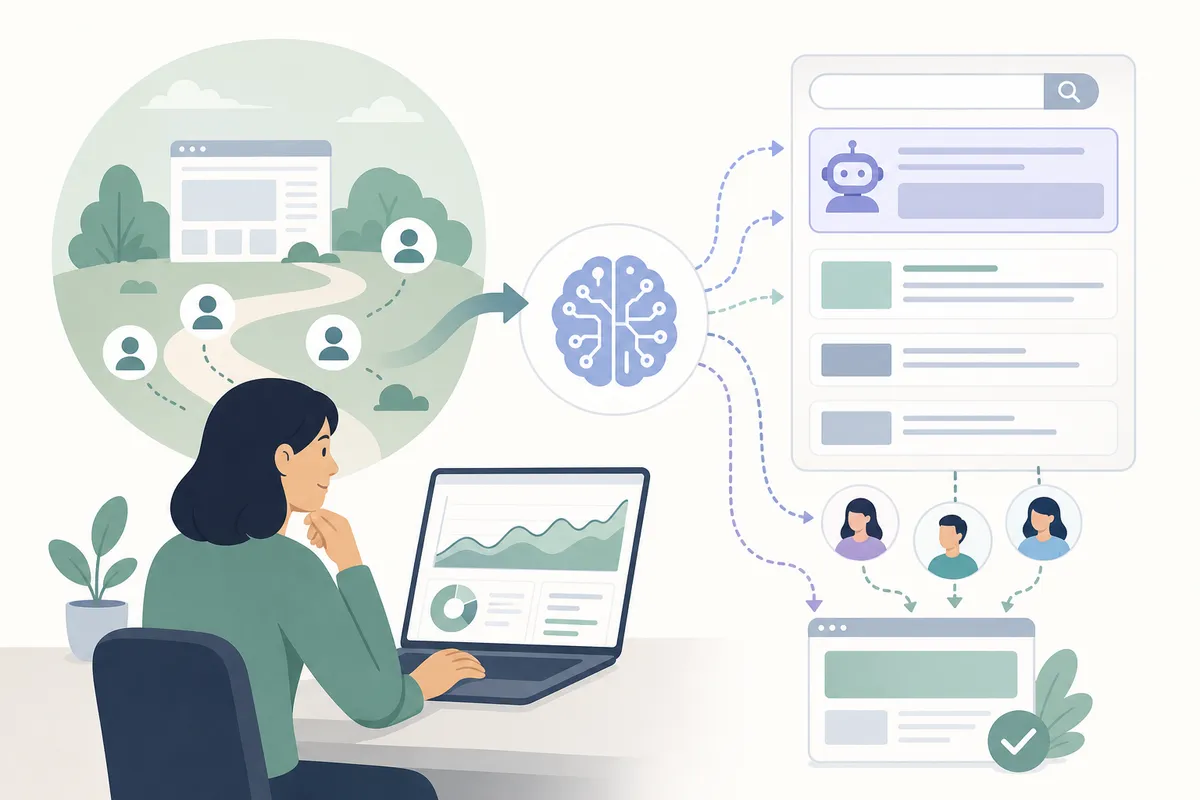
Second, the same qualities that earn rankings now earn citations. AI systems rarely read a page top to bottom. They lift the passage that answers the question, so pages built from clear, self-contained sections get quoted more often than pages that bury the answer. A click on your citation counts as organic traffic, exactly like a click on a blue link. An organic SEO strategy built to compound treats rankings and citations as one job, because the underlying work is the same.
How to grow organic traffic: five moves that compound
No single tactic grows organic traffic on its own. The sites that win run the same loop over and over: make the site crawlable, target real questions, answer them better than anyone, earn references, and refresh what ages.
1. Clear the technical path
Google cannot rank a page it has not crawled and indexed. The documentation at Google Search Central walks through that pipeline and what blocks each stage. Broken links, redirect chains, blocked resources, and slow templates all tax it. Fix errors first. An unindexed page earns nothing at all.
2. Target keywords people actually type
Guessed topics produce content nobody searched for. Researched topics produce pages with a waiting audience. Work from seed terms through intent checks to difficulty calls; this seven-step keyword optimization walkthrough covers the full sequence. Search behavior drifts, so revisit the list a few times a year instead of treating it as a one-time exercise.
3. Answer the question in the first paragraph
Front-load the answer, then earn the deeper read. Clear section headings and self-contained passages help human readers and AI systems alike. Specifics get cited while vague claims get skipped, so lead with numbers and named steps. The same principles run through the six steps that still put pages on Google's first page.
4. Earn links and mentions
References from reputable sites remain a strong signal of authority. The dependable route is publishing something worth citing, then doing the unglamorous follow-up: asking sites that already mention your brand to link, and covering the gaps in sources your competitors rely on. Skip anything that looks like a shortcut here; Google's spam policies are explicit about purchased and manipulative links.
5. Refresh what already ranks
Pages decay quietly. A post that slipped from position 3 to position 9 usually recovers with updated facts and a sharper opening answer. Save the full rewrite for pages that never ranked. Refreshing proven pages tends to pay back faster than publishing new ones, because the ranking history is already there.
How to measure organic traffic without fooling yourself
Two free reports cover most of what you need. GA4 shows organic sessions under Reports, then Acquisition, then Traffic acquisition. Google Search Console shows the queries you appeared for, plus impressions and click-through rate. Read them together: GA4 tells you what visitors did, Search Console tells you how they found you.
Before judging any trend, confirm your pages are indexed at all. A quick site:yourdomain.com search, or Search Console's page indexing report, settles it. Then expect some noise: rankings commonly wobble for a few weeks after site changes while Google recrawls, and that is normal rather than a verdict.
Judge trends against the same period last year instead of last week. Search demand is seasonal in most niches, and a quiet August tells you little about the health of the channel. When you compare, keep conversions in the same view: an organic line that doubles while leads stay flat usually means the new keywords carry the wrong intent.
| Metric | Where to find it | What it tells you | Warning sign |
|---|---|---|---|
| Organic sessions | GA4 Traffic acquisition report | The volume trend of unpaid search visits | A slow bleed spread across many pages |
| Impressions and CTR | Search Console performance report | How often you appear and how often you win the click | Impressions rising while clicks stay flat |
| Organic conversions | GA4 key events filtered to Organic Search | Whether visits become leads and sales | Traffic up while conversions sit still |
| Indexed pages | Search Console page indexing report | Whether Google can serve your pages at all | Published pages stuck in "Crawled - currently not indexed" |
If the trend is flat and you cannot see why, the causes are usually mundane. Work through these nine fixable reasons a website gets no traffic before assuming a penalty or an algorithm grudge.
Do it yourself or get help?
Measurement and content are genuinely DIY-friendly. GA4 and Search Console take time to learn rather than deep expertise, and a steady publishing habit does the rest. A small site can go a long way on those alone.
Get help when the problems turn structural. Site migrations, stubborn indexing failures, sitewide template issues, and crowded niches reward specialists, because a wrong move there costs months. A fair test: if you have published steadily for several months and organic traffic has not moved, the bottleneck is probably not effort, and a diagnostic pass will find it faster than more publishing will.
If you do hire help, ask for evidence over adjectives: what was measured on your site, and what each proposed fix is expected to change.
FAQs
What is organic website traffic?
Organic website traffic is every visit that arrives through unpaid search engine results. Clicks on your citations in Google's AI Overviews count as well. Paid ads, social media, email, and direct visits sit in other channels.
Is organic traffic really free?
The click itself costs nothing. Earning the position takes content and steady technical upkeep, and the economics improve as you go, because older pages keep producing without new spend.
Do visits from ChatGPT count as organic traffic?
Not in default analytics. GA4 usually records visits from AI assistants as Direct or Referral unless you set up custom tracking. Clicks on your citation inside Google's AI Overviews, by contrast, do count as organic.
How long does organic traffic take to grow?
Months, as a rule. A new page has to be crawled and indexed, then tested against established competitors, and rankings often wobble after changes before they settle. Steady publishing over several months beats short bursts of activity.
What is a good conversion rate for organic traffic?
Market Veep reports organic visitors convert to leads at around 16% across sectors. Your own number depends on industry and search intent, so benchmark against your history: a rising rate on steady traffic means your keyword targeting is getting sharper.
Talk to the team
Understanding organic website traffic gets much easier with a finished example in front of you. Browse this sample SEO report to see how organic visits sit beside rankings and the fixes that moved them, then talk to the team about what the same view of your site would show.
Resources / References
- Organic Search channel
- counts as organic traffic
- Google Search Central
- Google's spam policies
- Search Console's page indexing report
Related reading: An Organic Traffic Growth Workflow for Scalable SEO Success.
Related reading: AI Audience Targeting Strategies for More Organic Traffic.
Sources
About the author
SearchBlueprint researched, wrote and scored this article with the content pipeline our customers run on their own sites. The score in the byline is what our content engine gave this page before it published. Nothing here is reviewed by hand, which is the point: it is the product's output, published where anyone can check it.