7 Proven Organic Traffic Tips for Sustainable Online Growth
SearchBlueprint · · 8 min read · scored 90/100
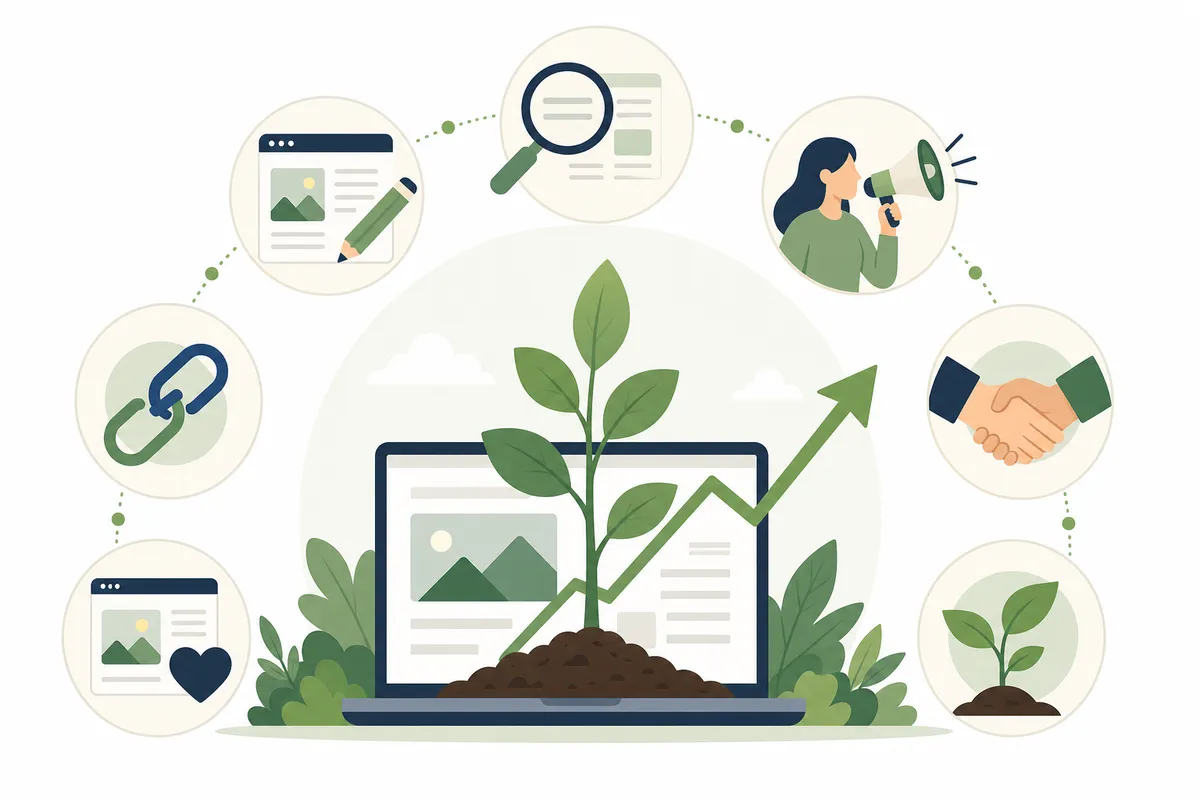
Proven organic traffic tips for sustainable online growth focus on four things: matching content to real search intent and publishing genuinely useful pages on a consistent schedule. They also include earning backlinks from sites your audience already trusts and fixing the technical issues that quietly cap how much of that traffic ever arrives.
Start With Search Intent, Not Keyword Volume

Before you write a single page, figure out what the searcher actually wants. A keyword with high search volume is worthless if the page you build doesn't match why people are typing it in. Search engines have gotten good at spotting the mismatch, and so have readers. They leave within seconds when a page answers the wrong question.
The Four Intent Types Behind Every Search
Most queries fall into one of four buckets. Knowing which one you're writing for changes the format, the length, and even the call to action on the page.
| Intent type | What the searcher wants | Example query | Content that wins |
|---|---|---|---|
| Informational | An answer or explanation | "how does organic traffic work" | A blog post that teaches the concept fully |
| Navigational | A specific site or brand | "searchblueprint login" | Nothing to optimize for, they already know where they're going |
| Commercial investigation | A comparison before deciding | "best SEO reporting tool" | Comparison pages, proof, and case studies |
| Transactional | To act right now | "seo audit report demo" | A page with one clear next step |
Writing a sales pitch for an informational query, or a long explainer for a transactional one, is one of the fastest ways to waste otherwise good content.
Why Long-Tail Phrases Convert Better Than Head Terms
Short, high-volume keywords are also the most competitive ones. A newer site rarely outranks established competitors for a broad term like "SEO tips." But a specific phrase like "organic traffic tips for a five-page local site" has far less competition. It also sends a much clearer signal of what the searcher needs. Building a page strategy around long-tail keywords that convert better than broad head terms is usually the faster path to your first real traffic, even though each individual term brings in fewer searches.
Publish (and Refresh) Content That Earns Organic Traffic
What "High-Quality" Content Actually Means Now
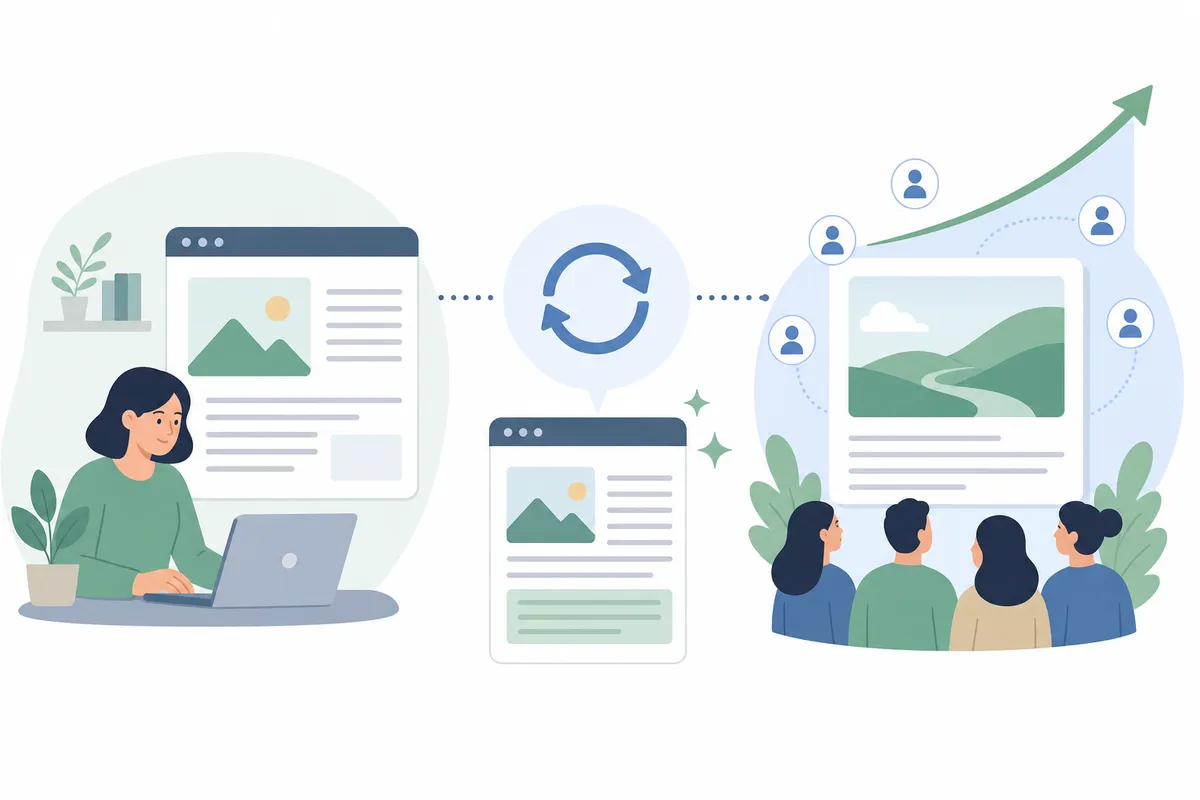
Search engines evaluate content against a framework known as E-E-A-T: experience, expertise, authoritativeness, and trustworthiness. In practice, that means a page should read like it was written by someone who has actually done the thing it describes, not summarized from other articles. It should be accurate, specific, and honest about limits, including saying when a DIY approach is fine and when a reader genuinely needs a professional. Thin pages that restate common knowledge without adding anything new rarely rank, no matter how well the keywords are placed.
New Content vs. Refreshed Content: Which Wins Faster
Publishing isn't only about new pages. Some of the fastest organic traffic gains come from fixing content that already exists.
| Approach | Best used when | Typical effort | Typical payoff |
|---|---|---|---|
| Publish new content | The topic has no page on your site yet | High, research, drafting, editing | New keywords you couldn't rank for before |
| Refresh existing content | A page has stalled or slipped in rankings | Lower, update facts, add sections, fix intent gaps | Faster movement, since the page already carries some authority |
A page sitting on page two or three of results is often one update away from moving up. That is why updating old content instead of only publishing new posts tends to be underused compared to how well it performs.
Fix the Technical Basics That Cap Your Organic Traffic

Page Speed and Core Web Vitals
A page can have perfect content and still lose rankings if it loads slowly or shifts around while a visitor is trying to read it. Google measures this through Core Web Vitals. Three numbers matter: how fast the main content appears, how quickly the page responds to a click or tap, and how much the layout jumps around during loading. You can check where your own pages stand using Google's own Core Web Vitals guidance. It lays out exactly what's measured and why it affects rankings.
Title Tags, Meta Descriptions, and Header Structure
On-page basics still matter more than most site owners expect. A title tag around 50 to 60 characters keeps your full headline visible in search results instead of getting cut off. A meta description in the 150 to 160 character range gives you room to earn a click without Google rewriting it. One clear H1 per page, with H2s and H3s underneath that follow a logical order, helps both readers and search engines understand what a page actually covers. If your site is missing these basics across multiple pages, working through a step-by-step technical and on-page checklist is a faster fix than guessing page by page.
Build the Links That Compound: Backlinks and Internal Linking
Backlinks: A Few Trusted Links Beat Dozens of Weak Ones
A backlink is another site vouching for yours. Search engines treat it as a trust signal separate from how good your content is. That is why two pages with identical content can rank very differently depending on who links to them. One link from a respected, relevant site in your industry typically outweighs dozens of links from low-quality or unrelated domains. The sustainable way to earn them is to build something worth linking to: original research, a genuinely useful tool, or a guide that's more complete than what's already ranking. Buying links or trading them in bulk is the opposite, and search engines are increasingly good at detecting and penalizing both.
Internal Linking: Point Your Own Authority at the Pages That Convert
Internal links are the ones fully under your control, and they're often neglected. Every link from an established page to a newer one passes along some of that authority and helps search engines find and understand the new page faster. Link with varied, descriptive anchor text rather than repeating the same phrase everywhere. And make sure your most important pages, the ones you actually want visitors to convert on, aren't buried three or four clicks from your homepage.
Track the Organic Traffic Metrics That Actually Matter
Search remains the starting point for most online activity. One widely cited industry estimate puts the share of American online experiences that begin with a search engine above 90 percent. That's why organic traffic is worth tracking closely rather than checking once a quarter. Watch organic sessions, which queries are bringing people in, and where individual pages sit in rankings over time, not just total visitor counts. A page that ranks but doesn't convert is a different problem than a page that converts well but nobody finds. The fix for each is different. You might still be unclear on what organic traffic actually is and how it compounds over time. That's the right place to build a mental model before you chase individual tactics.
FAQs
What is organic traffic, and how is it different from paid traffic?
Organic traffic is visitors who land on your site from unpaid search results, as opposed to clicking a paid ad. It costs nothing per click, tends to have lower bounce rates, and keeps arriving long after you publish a page. That's why most businesses want to grow it first.
How long does it take for organic traffic tips like these to show results?
Most of these tips take a few months to move rankings. That's because search engines need time to recrawl and reassess updated or new pages. Technical fixes can show up in weeks. New content and backlinks usually take longer, often three to six months before traffic growth feels steady.
Do I still need backlinks if my content is already excellent?
Yes. Great content earns links faster, but it rarely earns them by itself. Search engines use backlinks as a trust signal separate from content quality. So a page with no external links is starting from behind pages that have several from credible sites.
How often should I update old content instead of writing new posts?
Review your best-performing and stalled pages every few months. A page that's slipped in rankings usually responds faster to an update, like fresh data or an expanded section, than a brand-new post would in the same amount of time.
What's the single most sustainable organic traffic strategy?
There isn't one lever. Sustainable growth comes from combining intent-matched content, technical health, and a steady backlink and internal linking habit. Leaning on one tactic alone, like only building links or only publishing volume, tends to plateau or get undone by the next algorithm update.
See Which Tip Would Move Your Site First
Not every gap above costs you the same amount of traffic. A site with strong content but weak technical health needs a different first move than one with the opposite problem. Guessing which one applies to you wastes the months these proven organic traffic tips for sustainable online growth are supposed to save. Talk to the team. Or start with a sample SEO report to see exactly what that kind of audit uncovers on a real site, sustainable growth priorities and all.
Resources / References
Sources
About the author
SearchBlueprint researched, wrote and scored this article with the content pipeline our customers run on their own sites. The score in the byline is what our content engine gave this page before it published. Nothing here is reviewed by hand, which is the point: it is the product's output, published where anyone can check it.