7 Types of Website Traffic Explained (And Which to Grow)
SearchBlueprint · · 10 min read · scored 95/100

There are seven types of website traffic explained here, each worth tracking in 2026: organic search, direct, referral, paid, organic social, email, and AI platform visits. Each one tells you something different about how people found you, and each grows through a different strategy. The split behind your visitor count says more than the count ever will.
Website traffic itself is the number of visits your site receives, measured in sessions and unique visitors. This guide is for site owners, marketers, and agency teams who can see that number but want to know what it means: what each traffic type signals, how to separate them in Google Analytics 4, and where to put your effort first.
The seven types of website traffic
Analytics tools sort every session into a channel based on how it started. Six of these channels have been standard for years. AI platform traffic is the new arrival, and a few analytics tools now report it as its own row. Together, the seven cover nearly every visit your site will ever record.

1. Organic search traffic
Organic traffic arrives through unpaid results on Google or Bing. Someone searches a question, your page ranks, they click. For most businesses it is the channel most worth building: the breakdown above attributes 53% of all website traffic and over 44% of revenue to organic search, against 15% for paid search and 5% for social. Imforza's often-quoted figure points the same way, with 70% to 80% of users skipping paid ads to click organic results instead.
It is also slow and unevenly earned. Ahrefs found that 96.55% of webpages get no traffic from Google at all, which is what happens when pages go up without keyword research or internal links. Google explains its ranking systems in the Search Central documentation, and the short version is that rankings follow relevance and quality signals; publishing more pages moves nothing by itself. If this channel is new to you, start with what organic traffic is and how to grow it.
2. Direct traffic
Someone typed your URL, opened a bookmark, or tapped a saved link. A steady direct number usually reflects brand recognition, and the habit split between searching Google and typing a URL says a lot about how memorable your name is.
Direct is also the catch-all bucket. Any visit analytics cannot attribute gets filed here, including links shared through WhatsApp, untagged email clicks, and many AI-assisted visits. Before you celebrate a direct spike, check which pages it lands on. When obscure inner pages start collecting direct visits, the real source is usually somewhere your analytics cannot see.
3. Referral traffic
A click from another website lands here: a partner page, a news story, an industry roundup. The benefit is double, because the backlinks behind those clicks also feed your search rankings, and links from relevant, trusted sites help far more than volume from weak ones. Grow it by publishing original data worth citing, writing guest posts, and turning unlinked brand mentions into links.
4. Paid traffic
Ads generate this one: Google Ads, LinkedIn, Meta, display networks. It is the fastest channel for testing a message or filling a pipeline this month, and the only one with a hard off switch. The visits stop the day the budget does. Watch cost per conversion rather than cost per click, and send every ad to a landing page that repeats the ad's promise.
5. Organic social traffic
Unpaid clicks from LinkedIn, Instagram, X, TikTok, and similar platforms fall in this bucket. The channel scales with your following and posting consistency, and it usually converts below search or email because the visitor was interrupted mid-scroll rather than searching for you. One boundary to remember: the moment you promote a post, analytics moves those clicks into the paid bucket.
6. Email traffic
Clicks from your newsletters and lifecycle sends land here. These visitors already opted in, which makes them some of the warmest traffic you can get. The common benchmark is a click-through rate of 2% to 5%; where you sit in that range depends on your industry. Email is also the one channel you own outright; no algorithm sits between you and your list.
7. AI platform traffic
When ChatGPT, Perplexity, Gemini, or another assistant cites your page in an answer and the reader clicks through, the visit belongs to this channel. It is small for most sites today and messy to measure, because many AI-originated visits carry no referrer and get filed under direct. If your analytics tool does not break out AI sources yet, watch for unexplained direct visits landing on deep pages. That pattern is often AI traffic wearing a disguise.
Traffic types compared: speed, cost, and staying power
No single channel wins on every axis. The trade-offs look like this:
| Traffic type | How it arrives | Speed to results | Cost profile | Staying power |
|---|---|---|---|---|
| Organic search | Unpaid clicks on Google or Bing results | Slow, often months to rank | SEO and content effort, no per-click fee | High: a ranking page can pay off for years |
| Direct | Typed URLs, bookmarks, untracked links | Builds gradually with brand recall | Indirect, through brand building | High while your name stays memorable |
| Referral | Links on other websites | Medium, as links accumulate | Outreach and content time | Medium to high: earned links persist |
| Paid | Ads on search and social platforms | Immediate | Per click, rising with competition | None: stops with the budget |
| Organic social | Unpaid clicks from social posts | Fast per post, fades within days | Posting time and consistency | Low: feeds bury posts quickly |
| Clicks from your own subscriber list | Immediate per send | List building plus a sending tool | High: you own the list | |
| AI platforms | Citations inside AI assistant answers | Unpredictable | The same work as SEO, plus quotable writing | Early, and growing |
The strongest acquisition reports show two lines at once: quick wins from paid while organic builds underneath, with email holding onto the people both bring in.

How to check your traffic sources in GA4
Where the numbers live
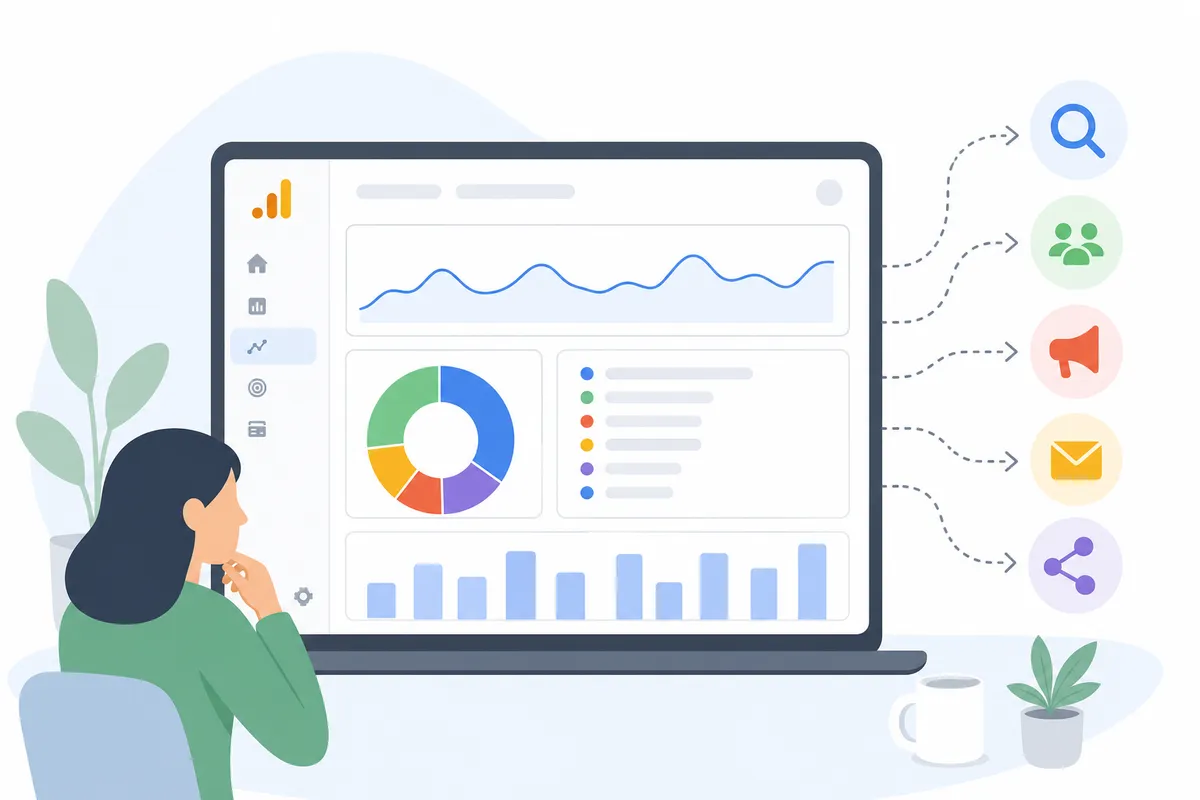
Open Reports, then Acquisition, then Traffic Acquisition. Every row pairs a source with a medium, so google / organic, newsletter / email, and linkedin / social each get their own line, and that pairing tells you whether a spike came from an algorithm shift, one email send, or a post that traveled. The source is the specific origin of a visit; the channel is the category it belongs to.
Look past sessions to engagement rate, average engagement time, and conversions per source. A channel can post big session numbers and still contribute nothing if visitors leave within seconds. To size up a competitor's traffic, Semrush, Ahrefs, and Similarweb each have free checkers.
Make the data trustworthy
Three habits keep the report honest:
- Tag every campaign link with UTM parameters so email and ad clicks stop leaking into direct. A free UTM builder keeps the naming consistent across your team.
- Filter your own office and team IP addresses out of analytics. Your staff visiting the site daily is not demand.
- Set up conversion events before you judge any channel. Sessions without conversions tell you nothing about revenue.
If the acquisition report still feels opaque, this walkthrough on reading an SEO report without a technical background translates the jargon into decisions.
Which traffic types deserve your budget
Match the channel to the goal
Good website traffic converts at a rate that justifies what it cost to acquire, judged channel by channel against your goal. Raw sessions do not pay invoices, and a small source that converts steadily is worth more than a large one that bounces.
| Your goal | Lead with | Support with | Watch this number |
|---|---|---|---|
| Pipeline this quarter | Paid search and paid social | Email nurture for the clicks you capture | Cost per conversion |
| Durable lead flow | Organic search | Referral links from industry sites | Organic conversions, month over month |
| Brand recall | Organic social plus PR referrals | A short, memorable domain for direct visits | Branded search and direct growth |
| Repeat business | Direct visits from returning customers | Email click-through rate |
Paid and organic run on different clocks
Paid proves its return this month and stops when the spend stops. Organic compounds: a page you publish and maintain now keeps pulling visitors long after the invoice for it is forgotten. That compounding is the case for building SEO traffic that keeps arriving for years while ads carry the short term.

How AI search is changing your traffic mix
The sharpest change in traffic right now is happening inside the search results page. Industry analyses found that more than two-thirds of Google searches in the first four months of 2026 ended without a click, largely because AI Overviews answer the question on the spot. Your content can shape that answer and still record no session.
AI assistants and private sharing also strip referral data. A visit that began with an AI recommendation often lands in your reports as direct, which quietly inflates that bucket and understates the channels doing the work.
None of this makes SEO optional. Assistants pull their citations from pages that already rank, so visibility keeps paying even when the click never arrives. What changes is the scorecard:
- Build owned channels, especially email, that no answer engine can intercept.
- Write self-contained passages that assistants can quote and attribute.
- Watch referral rows for AI platforms, and treat unexplained direct growth as a measurement question until you can explain it.
FAQs
What are the main types of website traffic?
The seven main types of website traffic are organic search, direct, referral, paid, organic social, email, and AI platform traffic. Analytics tools group every session into one of these channels based on how the visit began.
What is the difference between direct and referral traffic?
Referral traffic comes from a click on another website. Direct traffic has no identifiable source: typed URLs, bookmarks, and any visit whose origin analytics cannot see. When in doubt, analytics files a session as direct, which is why that bucket runs larger than true brand-driven visits.
Which type of website traffic is worth the most?
For most businesses, organic search: the channel breakdown cited earlier credits it with 53% of traffic and over 44% of revenue. The honest answer still depends on your goal, since email usually converts warmest and paid moves fastest, so compare conversion rate per channel before crowning one.
Why is my direct traffic suddenly high?
Usually dark traffic. Links shared in messaging apps, untagged email campaigns, and AI assistant recommendations all arrive without a referrer and get filed as direct. Check which pages receive those visits; deep pages point to hidden sources. Tagging your own links with UTMs removes part of the mystery.
Do social media links improve search rankings?
Social links are generally not counted the way editorial backlinks are. The payoff is indirect: a post that travels puts your content in front of people who may later link to it, search your brand, or return directly. Treat social as an awareness channel that feeds the others.
Check your traffic mix this week
Open your Traffic Acquisition report and sort last month's sessions across the seven types of website traffic explained here. Mark which channels produced conversions and which only produced sessions. The gaps you find are next quarter's plan. If you would like a second pair of eyes on the numbers, talk to the team and look through a sample SEO report to see how traffic, rankings, and fixes break down page by page.
Resources / References
Sources
About the author
SearchBlueprint researched, wrote and scored this article with the content pipeline our customers run on their own sites. The score in the byline is what our content engine gave this page before it published. Nothing here is reviewed by hand, which is the point: it is the product's output, published where anyone can check it.