9 Content Distribution Methods That Actually Drive Traffic
SearchBlueprint · · 10 min read · scored 95/100

Content distribution methods are the channels you use to get content in front of people after you publish: owned channels like your website and email, earned coverage and shares you didn't pay for, and paid placements you buy outright. Most sites lean on one channel and wonder why traffic stalls; the fix is running all three together, on purpose.
What "Content Distribution" Actually Means
Content distribution is not the same thing as posting a link once and moving on. It's the process of publishing, sharing and promoting a piece of content across every channel where your audience already spends time, on a schedule, with a goal attached.
The most common misconception is that distribution equals social media. It doesn't. Plenty of brands post daily on two or three platforms and still see flat traffic, because social is only one leg of a three-legged stool. A blog post that ranks in search, an email that reaches an inbox, and a guest mention on someone else's site each pull in a different kind of reader.
Creation produces the asset. Distribution decides whether anyone besides your existing audience ever sees it. Skip distribution and even genuinely useful, well-written content, like the kind covered in why engaging content boosts SEO, sits unread.
The Three Types of Content Distribution Channels
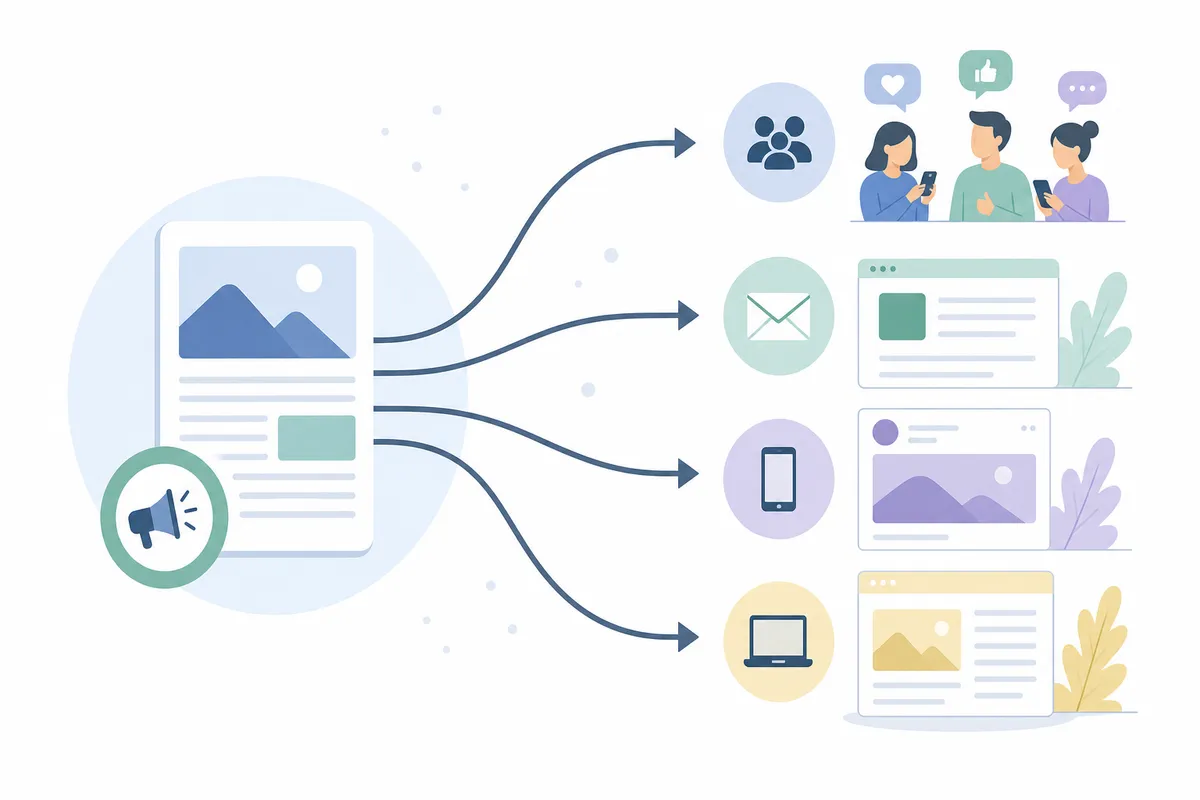
Every content distribution method falls into one of three buckets: owned, earned or paid. Each one behaves differently, costs differently, and earns a different kind of trust.
| Channel type | What it is | Examples | Best for |
|---|---|---|---|
| Owned | Platforms you fully control | Website, blog, email list, app, branded social profiles | Long-term audience building and SEO equity, at no per-click cost |
| Earned | Coverage or shares you don't pay for | Press mentions, backlinks, guest posts, organic social shares, reviews | Third-party credibility and reach past your own list |
| Paid | Placements you buy outright | Search ads, social ads, sponsored content, paid influencer posts | Fast reach on a launch date or a hard deadline |

Owned channels
Owned channels are where you set the rules: publishing schedule, format, calls to action, everything. A survey by the Content Marketing Institute found that 79% of marketers run an active blog and 73% use email newsletters, which makes owned media the backbone most content distribution methods build on.
The tradeoff is reach. Owned channels only reach people who already know you exist, which is exactly why they need to be genuinely worth reading. Thin, generic posts don't get shared or linked to; specific, useful ones do.
Earned channels
Earned channels are the ones you can't buy: a journalist covering your data, another site linking to your guide, a customer sharing your post because it actually helped them. The same Content Marketing Institute survey found 90% of marketers use social media for distribution, and organic shares on those platforms are one of the most common forms of earned reach.
Earned media is the hardest to control and the slowest to build, but it carries the most credibility, because someone else chose to vouch for you.
Paid channels
Paid channels are the accelerant. You put money behind a piece and it reaches people who've never heard of your site, immediately. That makes paid the right call when you're launching something time-sensitive or need to prove a channel works before investing more in it organically.
Paid alone is expensive to sustain, and it stops producing results the moment you stop paying. Most effective content distribution strategies use paid to jump-start owned and earned momentum, not replace it.
How Content Distribution Works for SEO
Search engines don't rank content in a vacuum. They watch what happens after it's published: whether other sites link to it, whether people click through from search and stay, whether it keeps getting shared months later. Every one of those signals comes from distribution, not creation.
A backlink from a genuine guest post or a press mention tells Google a page is worth trusting. Engagement from an email send or a social post tells search engines real people found the page useful, not just that it exists. Distribution is what turns a published page into a page with authority.
There's a newer layer to this, too. AI answer engines like Google's AI Overviews, ChatGPT and Perplexity pull from pages that are clear, well-structured and easy to quote out of context. If your content only ever reaches its own audience, an AI tool has no way to find and cite it either. It's worth checking the signs your content isn't ready for AI search before you invest heavily in any one channel.

How to Choose the Right Content Distribution Methods for Each Piece
Not every piece of content belongs on every channel. Matching format to channel is the difference between a distribution plan that compounds and one that just generates noise.
Start with the topic itself. A free content idea generator can show you what your audience is actually searching for before you write a word, which makes every downstream distribution decision easier, because you're already writing toward demand that exists.
From there, match format to channel:
- Long-form guides and pillar pages belong on owned channels first, then earn backlinks through outreach once they're published.
- Original data and research is the most shareable format for earned channels; it gives journalists and other sites a genuine reason to cite you.
- Case studies and testimonials work best on owned channels for sales conversations, then as paid retargeting for people who've already visited your site.
- Quick tips and behind-the-scenes clips suit native social formats, where a small paid boost can extend an already-engaging post.
None of this works without knowing who you're actually writing for. Spend time understanding what your audience genuinely needs before picking channels, not after.
Building a Content Distribution Strategy, Step by Step
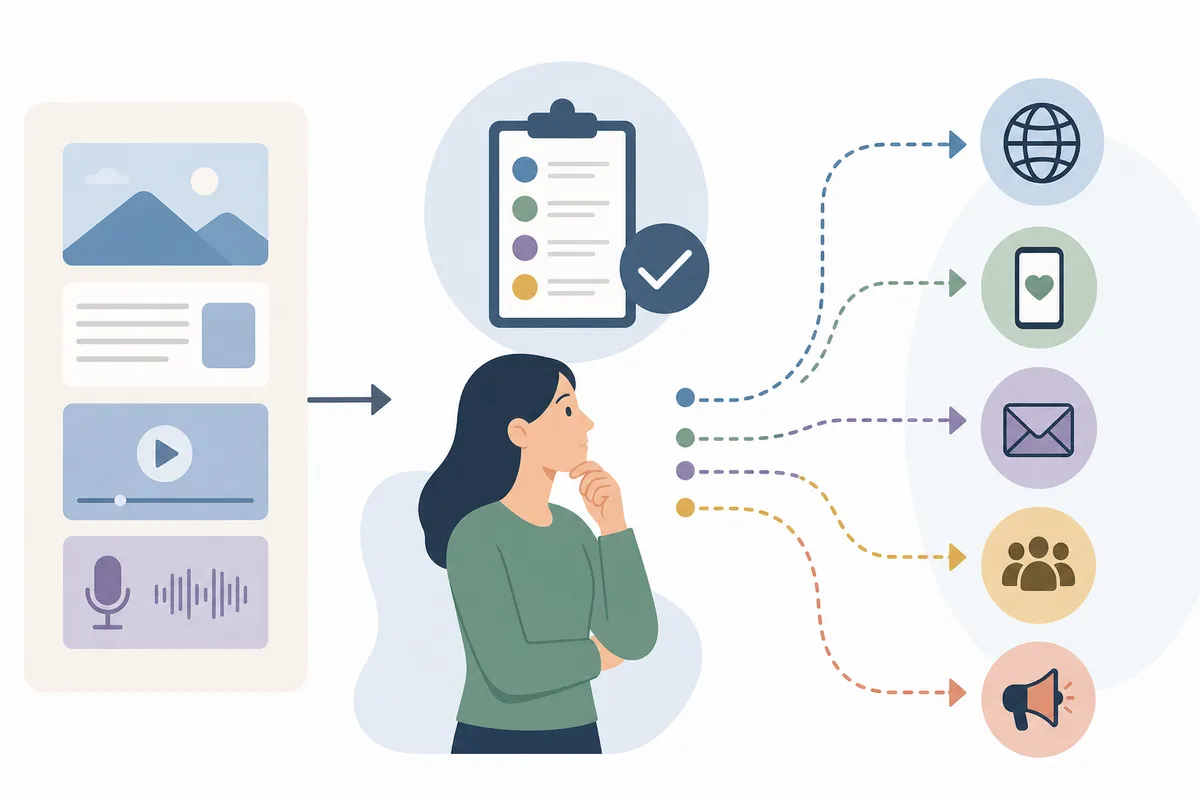
A content distribution strategy is just a documented plan for how, where and when your content reaches people. Building one doesn't take long if you follow a clear order.
- Set one goal per piece. Traffic, leads and brand awareness call for different channels, so decide which one matters before you publish.
- Define your audience with real data. Use your own analytics and customer feedback, not guesses, to find out where people already spend time.
- Map content to the buyer journey. Early-stage readers need education; late-stage readers need proof and a clear next step.
- Pick two or three channels to start, rather than spreading thin across every platform at once.
- Build an editorial calendar that includes not just the publish date, but where and how each piece will be promoted.
- Review results and adjust. Some channels will outperform others fast; move budget and effort toward what's working.
If you want a fuller checklist before you build your first calendar, these content planning tips cover the planning side in more depth. If you'd rather work through structured video lessons than a checklist, HubSpot Academy also offers a free lesson specifically on developing a content distribution strategy.
Automation, Repurposing and AI in Content Distribution
Manually posting the same content to five different channels, one at a time, doesn't scale. Most teams now lean on some form of automation, and a growing number use AI to help adapt content for each channel.
Repurposing one asset into many
The fastest way to get more distribution without creating more content is repurposing. One report can become a blog post, an email sequence, a handful of social posts and a slide deck, each reformatted for the channel it lands on rather than copy-pasted as-is.
A useful rule many social teams follow is an 80/20 split: 80% new content, 20% recycled from what already performed well. If you're unsure whether a channel is worth the recycling effort, test it for a few weeks and check the data rather than guessing.
Curating other people's relevant content alongside your own is another way to keep channels active without writing everything from scratch. These content curation strategies are built for exactly that.
Where AI actually helps
AI tools can draft channel-specific variations of a piece quickly: a shorter version for social, a plainer version for email. Used carelessly, though, AI-generated distribution copy can read as generic and hurt the same rankings it's meant to support. It's worth reading when AI content works for SEO and when a human draft wins before handing distribution copy entirely to a model, and how to use AI writers without hurting your rankings if you decide to use one.
Common Content Distribution Mistakes to Avoid
Most distribution problems trace back to a handful of repeatable mistakes, not a lack of effort.
| Mistake | Why it fails | Fix |
|---|---|---|
| Relying on one channel only | A single algorithm change or platform shift wipes out your entire reach | Run at least one owned, one earned and one paid channel at a time |
| Posting the same content everywhere, unchanged | Each platform has different audience expectations and formats | Reframe the headline, format and length for each channel |
| No editorial calendar | Distribution becomes reactive instead of planned | Map publish dates and promotion channels together, in advance |
| Ignoring usage rights and disclosure rules | Reused images, quotes or paid partnerships without proper licensing or disclosure create legal and platform risk | License what you use and disclose sponsored or paid placements clearly |
| Never checking the data | You keep spending time on channels that aren't working | Review core metrics on a set schedule and shift effort toward what performs |
Measuring Whether Your Distribution Is Working
Different channel types need different success metrics. Judging a paid ad by the same yardstick as an email newsletter will give you the wrong answer.
| Channel type | Primary metric to track | What "working" looks like |
|---|---|---|
| Owned | Traffic, time on page, email open rate | Steady growth over months, not just around publish day |
| Earned | Backlinks, mentions, referral traffic | Coverage from sites your audience actually trusts |
| Paid | Cost per conversion, click-through rate | Reach that's profitable, not just high in volume |
Set a review schedule, weekly or monthly, and stick to it. A channel that looks quiet in its first week can still be worth keeping if the trend line over a full quarter is climbing.
FAQs
What are the three main content distribution methods?
The three main content distribution methods are owned (your website, blog and email list), earned (press mentions, backlinks and organic shares) and paid (search ads, social ads and sponsored content). Most effective strategies combine all three rather than relying on just one.
Which content distribution method is best for a small business?
Owned channels are usually the best starting point, since they cost no per-click fee and build an asset you keep long-term. Earned and paid channels work best once you have a few pieces of genuinely useful owned content to point people toward.
How often should you post to distribution channels?
There's no fixed number that works for every brand, but many social teams follow an 80/20 rule: about 80% new content and 20% recycled from posts that already performed well. Consistency matters more than volume.
Do you need to pay for content distribution to see results?
No. Owned and earned channels can build real traffic without ad spend, though it usually takes longer. Paid distribution speeds up reach, especially for a launch or a deadline, but it stops working the moment you stop paying for it.
How does content distribution affect SEO rankings?
Search engines use signals that come from distribution, not creation, including backlinks earned from other sites, engagement from real visitors, and shares that keep a page active over time. A page that never gets distributed rarely earns the signals it needs to rank.
Test One Distribution Channel This Month
Pick one content distribution method you're not using yet, whether that's starting a weekly newsletter, pitching a single genuine guest post, or running a small paid test, and give it a real month before judging it. If you want a clearer picture of which channels are actually driving traffic to your own site right now, see a sample SEO report to see what a full audit of your content distribution methods can surface.
Resources / References
Sources
About the author
SearchBlueprint researched, wrote and scored this article with the content pipeline our customers run on their own sites. The score in the byline is what our content engine gave this page before it published. Nothing here is reviewed by hand, which is the point: it is the product's output, published where anyone can check it.