Ecommerce Link Building: How to Earn Links That Actually Sell
By Toy Wen Da, Co-Founder · Updated · 11 min read · scored 95/100
Ecommerce link building means earning backlinks that point at your product pages, category pages and content hubs, not just your blog. Product pages rarely attract links on their own, so the real work is building assets that do earn them and then routing that authority inward, through internal links, to the pages that sell.
What makes ecommerce link building different from regular SEO
Most link building advice is written for blogs, SaaS tools and publishers, whose pages are built to be shared. Yours are built to sell a product, and that changes almost everything about how you earn a link.
Product and category pages rarely earn links on their own
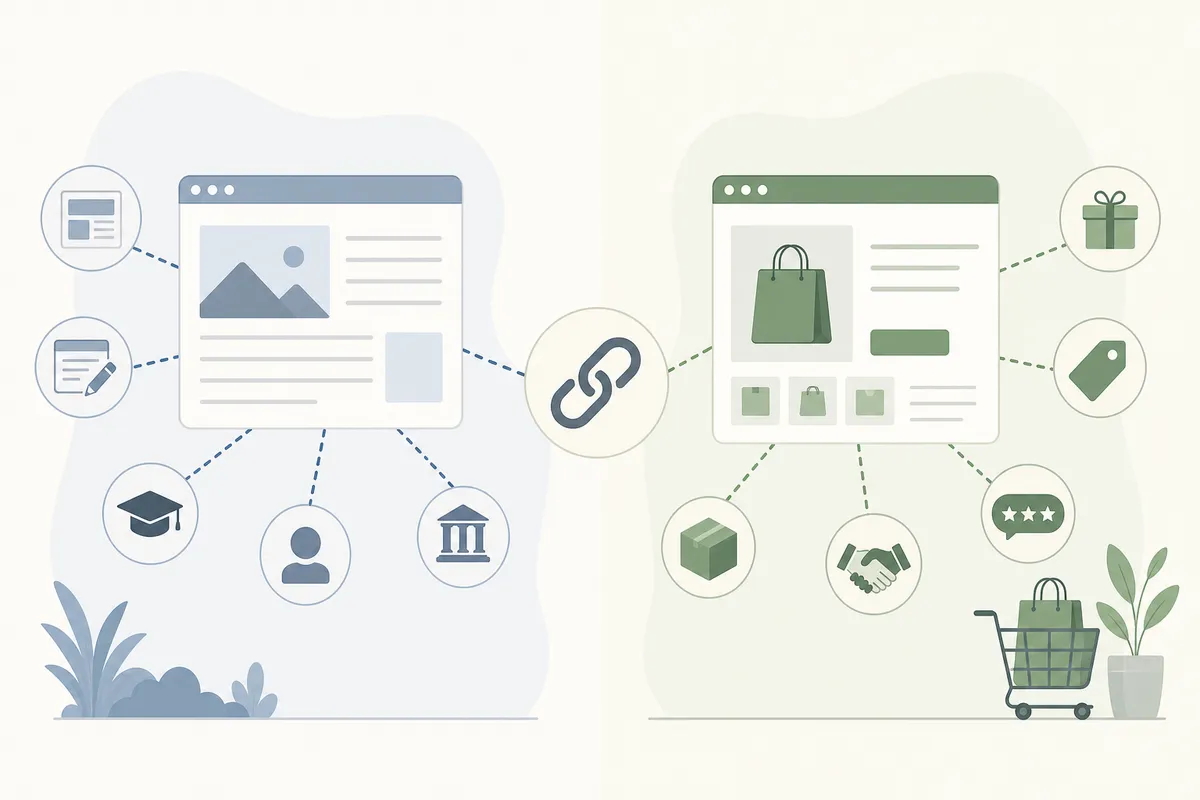
Nobody bookmarks a category page for fun. A journalist will happily link to a buying guide that helps readers choose the right product, but not to a page that reads like an ad. Industry surveys on link building priorities back this up: most link builders report spending the bulk of their effort earning links to blog content, and only a small share goes toward product pages directly.
This is the actual shape of the problem, not a flaw in your strategy. Your product and category pages are where the revenue lives, but they are rarely where the links land first. The fix is to build assets that do earn links and connect them to your commercial pages through deliberate internal linking. Ecommerce SEO for Shopify and BigCommerce stores depends on getting that internal routing right, not just on the outreach itself.
You're competing with Amazon-scale domains, not just rivals your size
Regular link building competes against businesses roughly your own size. Ecommerce link building competes against Amazon, Walmart and whichever category giant owns your niche. Their domains carry decades of accumulated authority, and their product listings outrank yours by default in a lot of searches, regardless of link count.
The fight is still winnable, but relevance matters more than raw volume. A single backlink from a niche blog your customers read can outperform a dozen links from sites with no connection to what you sell. Our guide to what actually moves ecommerce rankings in 2026 covers the technical and content side that link building has to work alongside.
The ecommerce link building strategies that work in 2026
Once you accept that your product pages will not earn links directly, the strategy becomes clear: build assets that do, then link inward. Here is the step-by-step process for building backlinks that a lot of stores skip past. Below are the specific tactics that work best for online stores in 2026.
Build content assets worth linking to
Your content has to solve a real problem, answer a real question or hand over data people want to cite. Three asset types consistently outperform the rest for ecommerce brands:
- Buying guides. An honest comparison, like how to pick a running shoe for your foot type, earns links because other sites want to send readers to it. A page that just says "buy our shoes" never will.
- Original data and surveys. Publish research nobody else has. A kitchenware brand surveying 500 home cooks about their habits gives journalists something concrete to cite.
- Interactive tools and calculators. A sizing tool or a coverage estimator gives other sites a functional reason to link, not just a polite one.
None of this works without internal linking. Contextual backlinks carry more ranking weight than a bare directory listing because the surrounding content signals relevance, and the same logic applies inside your own site. A guide that never links to the category it supports is authority left on the table.
Run digital PR campaigns journalists actually want
Digital PR means doing something genuinely notable and then reaching out to journalists who cover that space. A well-run campaign can build hundreds of links in a single push. Some of that happens naturally around a product launch, and some of it gets engineered.
Outdoor retailer REI's "Opt Outside" campaign closes stores on Black Friday and gives staff the day off. National outlets have picked it up for years running, purely because it is a real, repeatable stance rather than a one-off stunt. Copy the pattern: pick something true about your brand and make it newsworthy, and don't manufacture an event just for the mention.
Recover unlinked brand mentions
Established brands get mentioned online constantly without a link attached. A blog might reference your product by name in a roundup and never link to your site, which makes the fix a cheap win sitting in plain sight.
Set up a free alert tool to catch new mentions of your brand name, check whether each one links back, and email the site owner when it does not. Most owners will add the link once you ask, since it costs them nothing and the omission is usually an oversight rather than a decision. This tactic sits alongside several others worth running in parallel, and Nine backlink tactics that are actually working right now shows how they fit together.
Replace competitors' broken links with your own
Every established site accumulates broken outbound links as pages get retired or moved. Find a competitor's dead link, confirm what the original page covered using an archive tool, and offer your own equivalent page as the replacement.
Broken link building still works because site owners dislike a broken link on their page, and it is often easier for them to swap one URL for another than to remove the reference. That makes it one of the highest-acceptance outreach tactics available to ecommerce brands.
Keep permanent discount and promotion pages live year-round
The ecommerce calendar repeats every year: spring sale, back-to-school, Black Friday, Christmas. Sites that write about your seasonal promotion will link to it, and if that URL disappears after the sale ends, you lose the link equity along with the page.
Barnes & Noble's ongoing film discount promotion and Amazon's permanently reused /blackfriday URL follow the same logic. Keep the address static and update what is live on it each year. A student or veteran discount page works the same way, since deal and money-saving sites tend to reference these on an ongoing basis rather than just once.
| Strategy | What It Targets | Time to Results | Best For |
|---|---|---|---|
| Content assets (guides, tools, data) | Category and blog pages, then routed inward | 2 to 4 months to earn links, ongoing after | Stores with a real content team or budget for one |
| Digital PR campaigns | Brand pages, homepage, occasionally category pages | Weeks to plan, days to land once pitched | Brands with a genuine story or newsworthy angle |
| Unlinked brand mentions | Homepage, brand or about pages | Days per mention found | Established brands with existing press coverage |
| Broken link building | Any page you can offer a genuine replacement for | Weeks per outreach batch | Stores with strong existing resource content |
| Permanent discount pages | Category or promotion landing pages | Builds over multiple seasonal cycles | Stores that run the same promotions annually |
Where your links should point: category pages, product pages and platform quirks
Not every commercial page deserves the same share of your link budget. Category and collection pages tend to survive far longer than individual product listings, because a single SKU can vanish after one season while its category stays live for years. A link earned to a product discontinued after Black Friday is authority spent on a page that no longer exists.
Category pages usually win the link budget
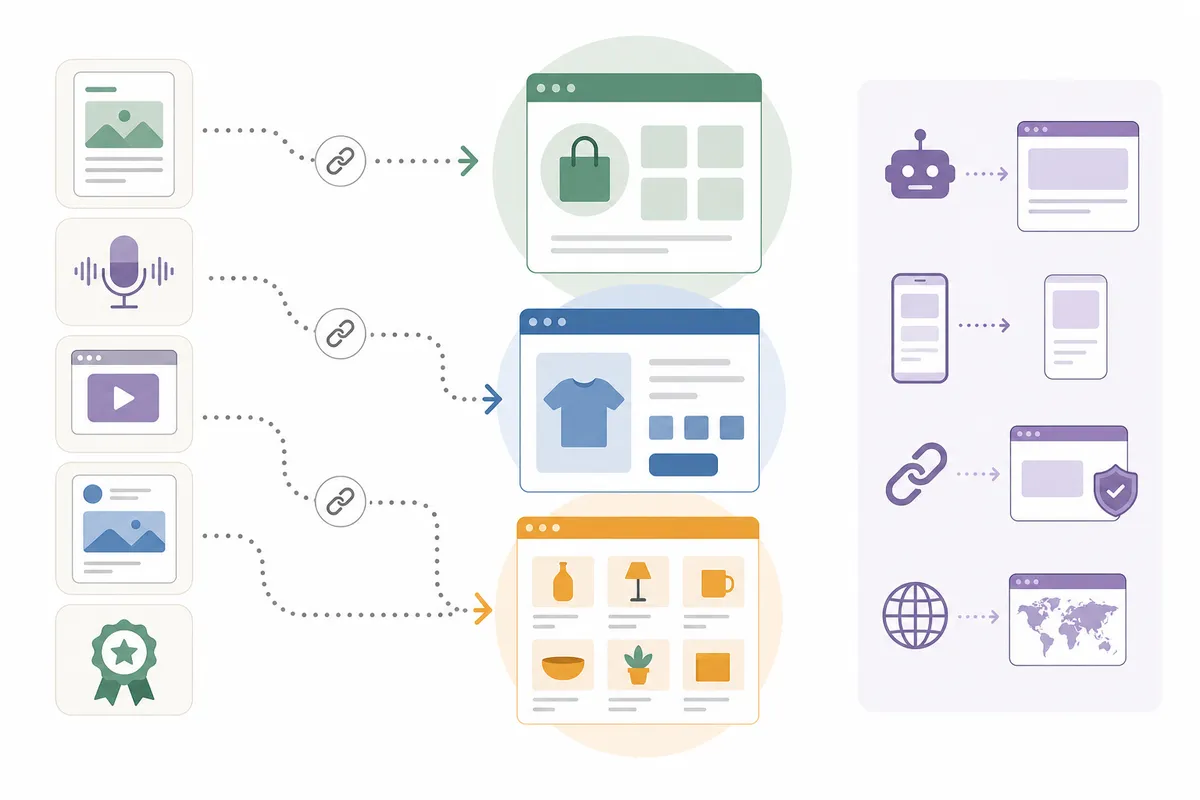
Weight your outreach toward category and collection pages, resource hubs and comparison content, which survive your catalog's natural turnover and keep compounding in value. Reserve product-page link building for items that are genuinely evergreen, already well linked internally and unlikely to leave the catalog within a year.
Your platform decides what you can even link to
Store architecture is not neutral. It decides which URLs are stable enough to be worth earning links to in the first place.
| Platform | Typical Link-Target Path | Structural Risk | Confirm Before You Pitch |
|---|---|---|---|
| Shopify | /products/ and /collections/ |
Fixed paths, limited customization | Collection page is canonical and indexable |
| WooCommerce | Fully customizable category paths | Path can change if settings are edited later | URL structure is locked before outreach starts |
| Magento / BigCommerce | Deep, layered-navigation URLs | Faceted filters spawn near-duplicate URLs fast | The exact filtered URL you're promoting is canonical, not a filter combination |
Faceted navigation is the quiet budget-killer here. A filter for color, size or price can generate a URL that looks like your money page but is not always the one Google wants to rank. Before running any campaign, confirm the target URL is canonical and indexable, and confirm product schema is present if you are promoting a product page directly.
Common ecommerce link building mistakes that waste budget
A handful of tactics show up constantly in ecommerce link building plans and consistently underperform or backfire. Knowing what to skip saves as much budget as knowing what to run.

Google spells out what counts as a link scheme in its spam policies, and paid links without a proper disclosure sit squarely on that list, alongside undisclosed paid product reviews. The safer, cheaper path is almost always to redirect that budget toward a genuine PR angle or a linkable asset. If you are weighing a paid or automated service against building manually, What automated backlink building actually costs, and what it risks is worth reading before you commit a budget line.
| Mistake | Why It Fails | Do This Instead |
|---|---|---|
| Paid links and undisclosed reviews | Violates Google's spam policies, risks a manual penalty | Redirect the budget into digital PR or a linkable asset |
| Redirecting discontinued pages to the homepage | Google often treats it as a soft 404, passing little to no equity | Redirect to the closest matching product, model, or category |
| Excessive press releases | Dilutes effort across dozens of low-impact stories | Run one strong PR campaign instead of many minor ones |
| Gimmicky promotions built purely for press | Journalists and readers spot manufactured hype fast | Anchor campaigns in something genuinely true about the brand |
A documented, repeatable process protects you from most of these mistakes because it forces you to check platform, target URL and disclosure before outreach goes out. A five-step workflow for keeping link building repeatable is a practical starting template if you do not already have one written down.
How to measure ecommerce link building results
Link count alone tells you very little. What matters is whether the pages receiving links move in rankings, traffic and revenue over time. Industry benchmarks put average ecommerce SEO ROI at roughly 317% over three years, with a breakeven point around nine months in. Set that expectation with stakeholders before a campaign starts, because link building rarely pays back in month one and treating it as a channel that should is how budgets get pulled too early.
Track new links as they land, not just at the end of a quarter. The workflow for tracking backlinks automatically, and what it costs walks through what a monitoring setup involves for a store running multiple campaigns at once. Monitoring matters because links do not stay put: research on backlink decay found that a substantial share of links, cited at 42% in one analysis, go dead within a year as sites redesign, move content or shut down. Automatic backlink monitoring tips cover how to catch that decay before it erodes a campaign you already paid for.
Ecommerce link building and AI search visibility
AI assistants like ChatGPT, Claude and Perplexity are increasingly part of how people research products before they buy. They draw their answers from brands with strong, verifiable coverage across the web, so a backlink profile built on genuine mentions and citations feeds that visibility the same way it feeds traditional rankings.
This is another reason digital PR and unlinked brand mentions matter beyond their direct SEO value. Every credible citation of your brand adds to the signal that you are a real, referenceable business, whether or not it carries a followed link. Google and AI answer engines both look for that signal.
FAQs
What is ecommerce link building?
Ecommerce link building is the process of earning backlinks to an online store's product pages, category pages and content hubs. Because commercial pages rarely attract links directly, most of the work goes into building linkable content that then routes its authority inward through internal links.
How many backlinks does an ecommerce store actually need?
There is no fixed number that applies across stores. It depends heavily on your niche's competition and your current authority relative to rivals. A smaller number of highly relevant links from sites your customers read will typically outperform a larger batch of unrelated ones.
Is buying links for an ecommerce store ever safe?
No. Paid links that pass ranking credit without disclosure violate Google's spam policies and risk a manual penalty on your whole site. Paid or gifted product reviews are treated the same way unless the relationship is disclosed, and the link also needs to be marked nofollow or sponsored.
Should links point to product pages or category pages?
Category and collection pages are usually the better target, since they survive your catalog's natural turnover far longer than individual product listings. Reserve product-page link building for items that are genuinely evergreen and unlikely to be discontinued.
How long does ecommerce link building take to show results?
Individual placements can take weeks to earn, and the ranking impact compounds over months rather than appearing immediately. Industry benchmarks put average payback around nine months, so plan campaigns as a sustained effort rather than a short sprint.
See what's actually holding your link profile back
Most stores lose more ranking potential to weak internal linking and orphaned assets than to a shortage of backlinks. Before you commit budget to ecommerce link building outreach, talk to the team. Look at a sample SEO report to see exactly what a full audit of your site would surface first.
Resources / References
Sources
About the author
SearchBlueprint researched, wrote and scored this article with the content pipeline our customers run on their own sites. The score in the byline is what our content engine gave this page before it published. Nothing here is reviewed by hand, which is the point: it is the product's output, published where anyone can check it.