Google Business Ranking: The 3 Factors That Decide Yours
By Toy Wen Da, Co-Founder · Updated · 10 min read · scored 98/100
Google states openly that your Google Business ranking comes down to three things: relevance, distance and prominence. Relevance is how well your profile matches the search. Distance is how close you are to the person searching. Prominence is how well known and trusted your business looks online. Get all three right and you appear where customers are actually looking.
What is a Google Business ranking?
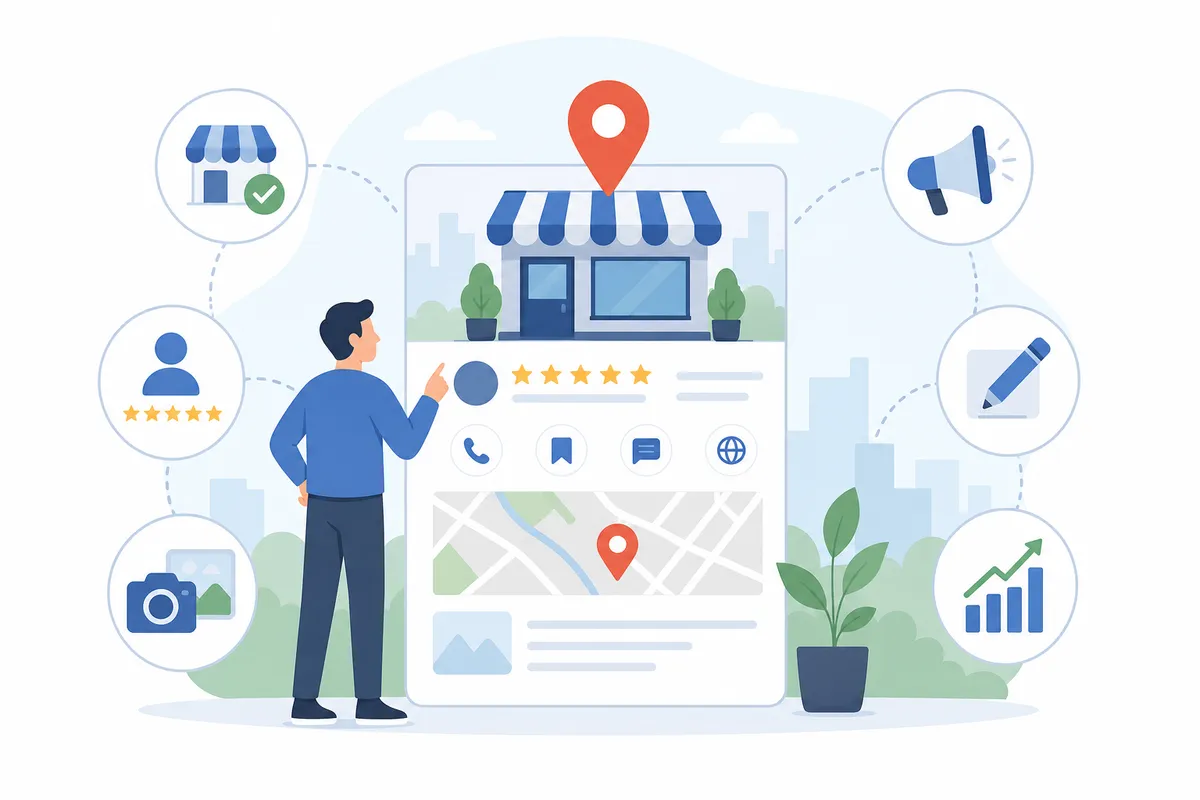
Your Google Business ranking is the position your listing holds in local search results and on Google Maps when someone nearby searches for a business like yours. It's tied to your Google Business Profile, the free listing that shows your hours, address, phone number, photos and reviews.
Picture a bakery in Austin. Someone two blocks away searches "bakery near me," and the bakery that ranks first in the local pack gets seen, clicked and visited first. The one ranked eighth might as well not exist for that search.
This matters whether you run one location or fifty, because a strong ranking puts you in front of people who are already looking to buy rather than people you have to persuade.
Why your Google Business ranking matters
Tracking where you rank tells you whether your marketing is working and whether customers can find you.
Survey data cited by Statista puts roughly 21% of U.S. consumers online for a local business every day, which is a large and constant pool of buying intent. If your ranking keeps you off the first page or out of the map pack's top three, most of that traffic never sees you.
Ranking also builds trust before a customer ever calls. People read a top-three local listing as more credible than one buried on page two, even when the service is identical, and that perception alone shifts who gets the click.
What a better ranking buys you
| Ranking Position | Typical Visibility | Customer Behavior |
|---|---|---|
| Top 3 (map pack) | Seen by nearly every searcher in the area | Treated as a trusted, established option |
| Positions 4–10 | Seen only by people who scroll or click "more places" | Viewed as a backup, often compared on price |
| Page 2 or lower | Rarely seen without a specific search for your name | Effectively invisible to new customers |
A tool built for rank tracking can show which of these bands you're in, keyword by keyword, so you don't have to guess.
How to check your Google Business ranking
You need an honest read on where you stand today before you try to improve it, and there are three practical ways to get one.
Run a manual Google search
Open an incognito window, log out of your Google account and search the term a customer would use, such as "plumber in Denver" or "coffee shop near me." Logged-in searches and saved location history skew results toward businesses you already know, so incognito gives a cleaner read.
Note your position in the organic results and in the local map pack separately, because they're ranked independently and can move in opposite directions.
Check your position on Google Maps
Open Google Maps, type a relevant keyword plus a location and see where your pin lands relative to competitors. This matters most for businesses that depend on foot traffic, like restaurants, retail and home services.
Your Maps ranking shifts with the searcher's exact location, since distance is one of the three deciding factors. Someone standing outside your door sees a different result than someone two miles away, so check from a few spots in your service area. Try several phrasings of the same search too, because "coffee shop," "café" and "best latte" can each return a different order.
Use a rank-tracking tool
Manual checks give you a snapshot. A rank-tracking tool gives you the trend: automated checks over time, across multiple keywords and locations, without you running the same search fifty times a week.
| Tool | Best For | Pricing Model | Notable Detail |
|---|---|---|---|
| A dedicated SEO rank tracker | Tracking organic page positions alongside local rankings | Varies by plan | Project-based setup with keyword lists per domain |
| Localo | Local-only Google Search and Maps tracking | Free rank checker, 14-day free trial on paid plans | Rated 4.9 by G2 across 100+ reviews; one case study shows a business moving from position #56 to #1 |
| GMB Radar | Geo-grid tracking across multiple locations | Credit-based: $15/month (5,000 credits), $30/month (12,000 credits), or $100/month (50,000 credits) | 1 credit per location check, 10 credits covers one keyword across 10 locations |
| BrightLocal / SEMrush | Agencies managing several client profiles | Varies by plan | Adds competitive analysis and reputation tracking alongside rank data |
Pick based on how many locations and keywords you're watching. A single-location business doesn't need a 50,000-credit plan, while an agency managing twenty clients will burn through a basic tier fast. Rank tracking built into your broader SEO workflow saves you from juggling a separate tool for this one number.
The 3 factors that decide your Google Business ranking
Google is explicit that local ranking comes down to relevance, distance and prominence, and that you can't pay for a better spot, per Google's own search documentation. Knowing each one shows you where to spend your effort.
Relevance
Relevance is how well your Business Profile matches what someone typed. If a searcher wants "Italian restaurant," Google wants to show Italian restaurants, not a general diner that happens to serve one lasagna dish. The more complete and specific your profile is, from category and services to description, the easier that match becomes.
Distance
Distance measures how far your business sits from the searcher or from the location they specified. You can't move your storefront to chase it, but you can make sure your address is accurate and that your service-area settings, for businesses that travel to customers, reflect reality.
Prominence
Prominence is your business's reputation and footprint: review count, review quality, website authority and how often you're mentioned or linked to elsewhere online. It has the most room to improve, and most of the work below is aimed at it.
Relevance vs. distance vs. prominence
| Factor | What It Measures | Can You Influence It? |
|---|---|---|
| Relevance | Match between your profile and the search term | Yes, category, description, services, posts |
| Distance | Physical proximity to the searcher | Mostly fixed, unless you add verified service areas |
| Prominence | Reputation signals: reviews, links, mentions | Yes, the biggest opportunity for most businesses |
Customer reviews: your biggest prominence lever
Reviews are social proof that real customers had a real experience, and both how many you have and what they say feed directly into prominence.
A business with a few dozen reviews rarely outranks one with hundreds of positive ones, all else equal. Content matters too: when reviewers name specific services, that strengthens the relevance signal as well.
Responding matters as much as collecting. A prompt, professional reply to a negative review shows Google your profile is active and shows the next customer you take feedback seriously. Ignoring criticism, or replying only to the glowing five-star reviews, undercuts the trust reviews are supposed to build.
Business information and NAP consistency
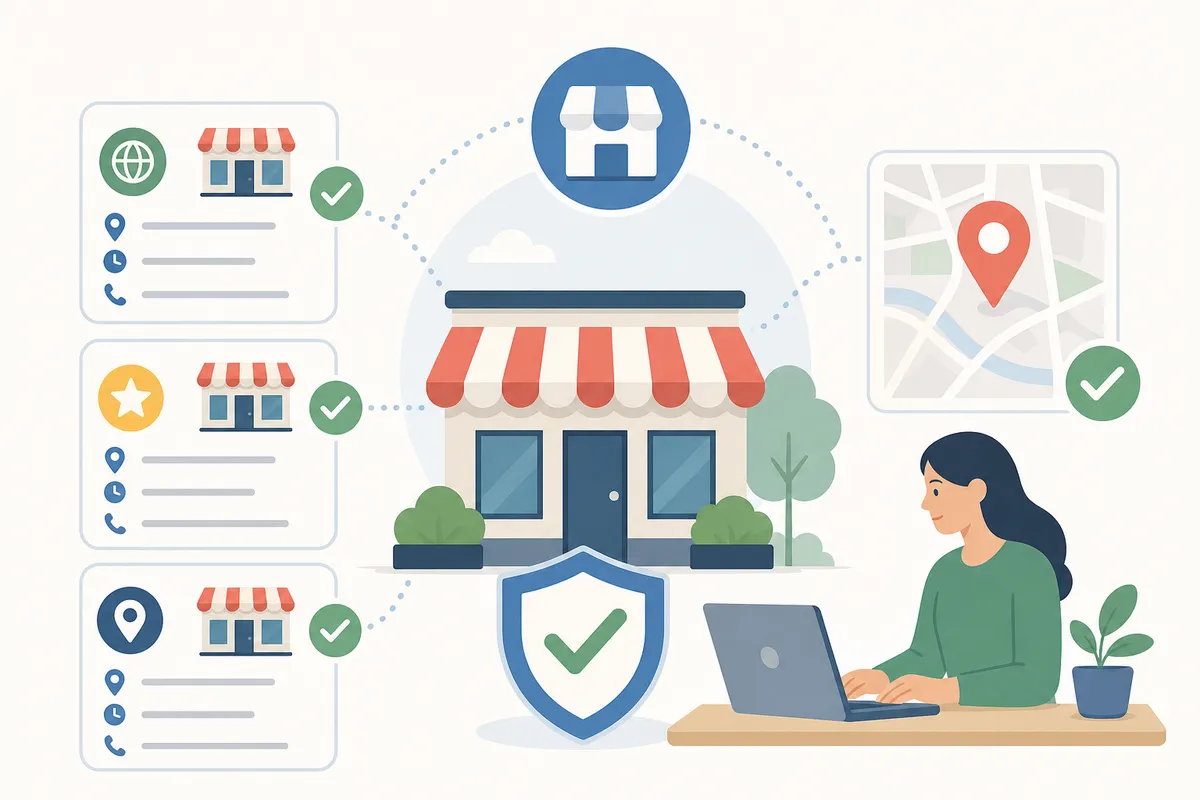
Google needs your name, address and phone number (NAP) to match everywhere it finds them: your website, your profile, directory listings and social pages. Mismatches confuse the algorithm, and they confuse customers who get a wrong number or an outdated address.
At minimum, your profile needs:
- An accurate, specific business description, not boilerplate
- Correct hours, including seasonal or holiday changes
- A verified address or service area, with directions if your entrance is tricky to find
- High-quality photos of your location, products or team
- The right business category, plus secondary categories if they apply
Thin descriptions hurt more than owners expect. Google reads the wording of your profile much as it reads page content elsewhere, so a page's content quality metrics matter whether that content sits on your website or your Business Profile. A description padded with nothing specific gives Google nothing to match against real searches.
How to improve your Google Business ranking
Once you know where you stand and what Google is scoring, the fixes are mostly mechanical. None are instant, but they compound.
Complete every field in your profile
Fill in every section Google offers, including services, products, attributes such as parking, Wi-Fi and accessibility, and the business description. A flower shop in Portland gains more from listing "wedding arrangements, same-day delivery, custom bouquets" than from a generic "we sell flowers." Relevance is scored on specificity.
Earn reviews systematically
Don't leave reviews to chance. Ask in person after a good interaction, or send a follow-up email with a direct link to your review page. Respond to every review within a few days, thank the good ones specifically and address complaints without getting defensive.
Work local keywords into your profile and site
Use the phrases customers actually type, like "homemade," "same-day," "licensed" or "family-owned," in your description, product listings and profile posts. They should read naturally and never look stuffed. If you haven't identified which local terms carry search volume, a proper keyword research process will show which are worth targeting before you write a word.
Build prominence with backlinks and mentions
Local press mentions, directory listings and links from other sites in your area all add to prominence. It's slower than filling out a profile but more durable. Earning the right backlinks rather than buying cheap, spammy ones protects your gains and avoids the risk of a penalty. Checking which links and mentions competitors already have, through competitor analysis, gives you realistic targets instead of guesswork.
Keep checking and adjust
Local rankings move. A competitor adds fifty reviews, Google updates its algorithm, or a new business opens three blocks away. Recheck monthly at minimum, and treat a drop as a cue to investigate rather than panic. Businesses that track position automatically through a rank-tracking setup catch problems while they're still small, and pairing that with local SEO tools that map a rank grid across your service area shows which neighborhoods you're winning and which you've lost.
Common mistakes that quietly hurt your ranking
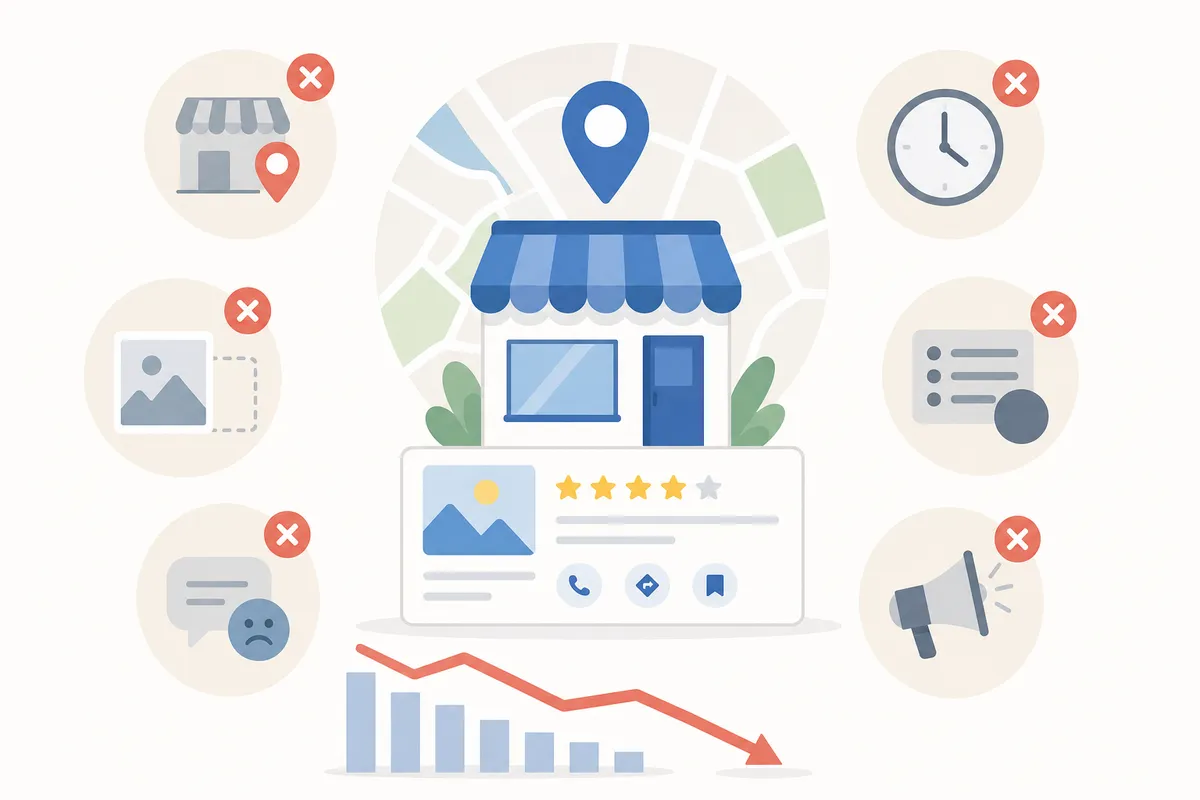
Most ranking problems aren't mysterious. They're a handful of repeat offenders.
| Mistake | Why It Hurts Your Ranking | Fix |
|---|---|---|
| Inconsistent NAP across the web | Confuses Google's trust signals and search queries | Audit and correct your name, address and phone everywhere you're listed |
| Ignoring negative reviews | Signals a dormant, disengaged profile | Reply within a few days, every time, good or bad |
| Thin or generic business description | Gives Google nothing specific to match to searches | Rewrite with real services, specialties and local terms |
| Duplicate or unverified listings | Splits reviews and signals across two profiles | Claim, verify and merge duplicates through Google Business Profile support |
| No photos or outdated photos | Lowers trust and engagement with the listing | Add current, high-quality photos regularly |
FAQs
How long does it take to improve a Google Business ranking?
There's no fixed timeline, since it depends on your starting point and how competitive your area is. Profile fixes like completing missing fields can show modest movement within weeks. Prominence gains from reviews and backlinks typically take longer, often a few months, to show clearly.
Can I pay Google for a better local ranking?
No. Google states plainly that there's no way to request or pay for a better local ranking. Paid ads can appear above organic local results in some layouts, but they don't change your actual Google Business ranking.
Does my Google Business ranking differ by location?
Yes. Distance is one of the three deciding factors, so someone searching two blocks from your business often sees a different ranking than someone searching two miles away. Checking from only one spot gives you an incomplete picture.
Do more reviews always beat better reviews?
Not exactly, because both matter. A large volume of reviews signals prominence, but a high average rating and reviews that mention specific services reinforce relevance too. A business with 200 reviews at 3.5 stars often underperforms one with 80 reviews at 4.8 stars.
What's the fastest way to check where I currently rank?
An incognito manual search or a Google Maps search from your own phone gives you an instant, free read. For an ongoing picture across multiple keywords and locations, a rank-tracking tool removes the need to repeat that search by hand every week.
See Where You Actually Stand

Checking your position once won't tell you whether it's improving. Pull a sample report to see how your profile and site measure up on the factors covered here, then talk to the team about turning that into a real plan for your Google Business ranking.
Resources / References
Sources
About the author
SearchBlueprint researched, wrote and scored this article with the content pipeline our customers run on their own sites. The score in the byline is what our content engine gave this page before it published. Nothing here is reviewed by hand, which is the point: it is the product's output, published where anyone can check it.