How Many Backlinks Do I Need to Rank? The Real Number
By Toy Wen Da, Co-Founder · Updated · 14 min read · scored 99/100
How many backlinks do you need to rank a page on Google? It depends on who you're outranking. Match the median referring domains of comparable pages already sitting in positions 4 through 10, and you have a realistic shot at page one.
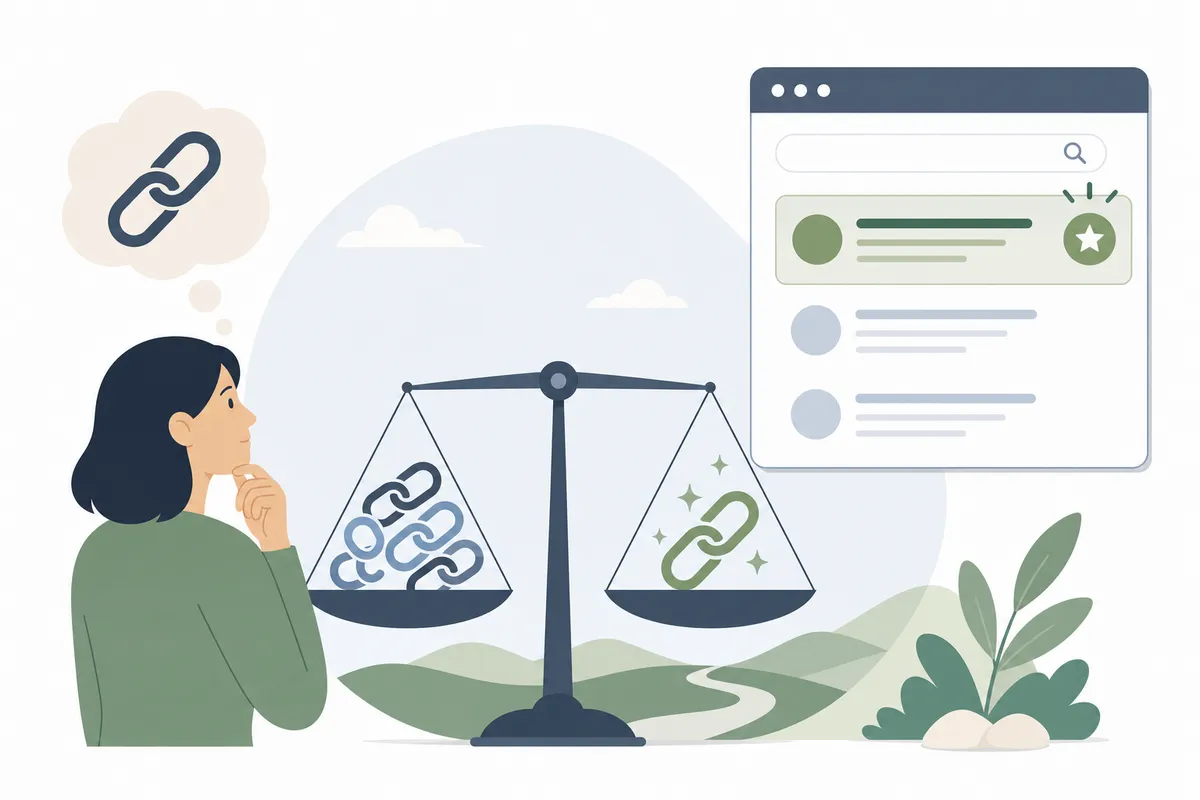
That is less satisfying than "you need 50 links" or "aim for 100," but a flat number ignores the one thing that decides your target: what's already ranking. A local service page might need five referring domains, while a national commercial term might need eighty, and both figures are correct for their own search result.
The short answer: it depends on who you're trying to outrank
Google doesn't publish a backlink quota, and no credible SEO tool can tell you "you need exactly 42 links." Google's ranking systems use links for discovery and as one signal among hundreds, at both the page level and the site level. The same page can need three referring domains for one keyword and eighty for another, depending entirely on the competition already occupying that search result.
The useful question is how many links this keyword, for this kind of page, in this market, already requires, and you find out by looking at what's currently ranking. How many backlinks you actually need to rank a given page gets answered one keyword at a time.
Two targets are worth separating:
- The entry target is the median referring domains of positions 4 through 10. Hit it and you have a credible shot at page one.
- The breakout target is the median referring domains of positions 1 through 3. It's only worth chasing once your content matches search intent and you're already on page one.
Referring domains vs. backlinks: count the right thing
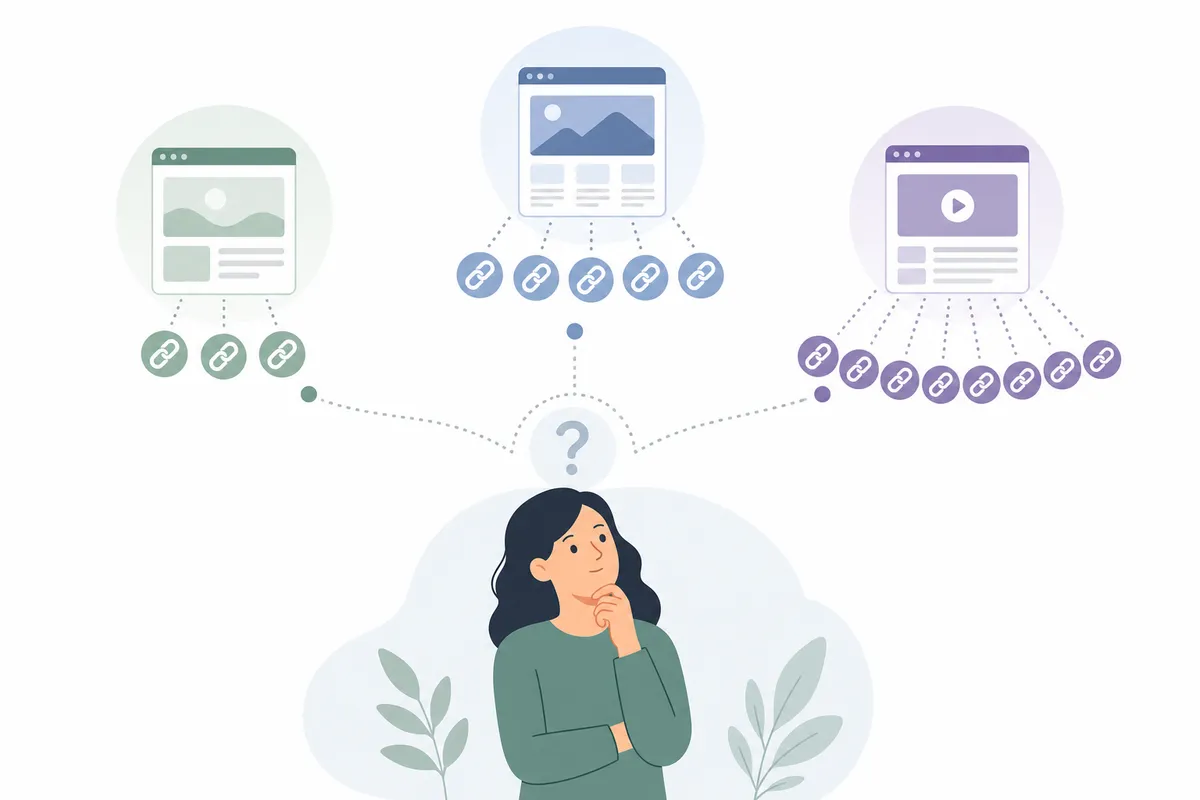
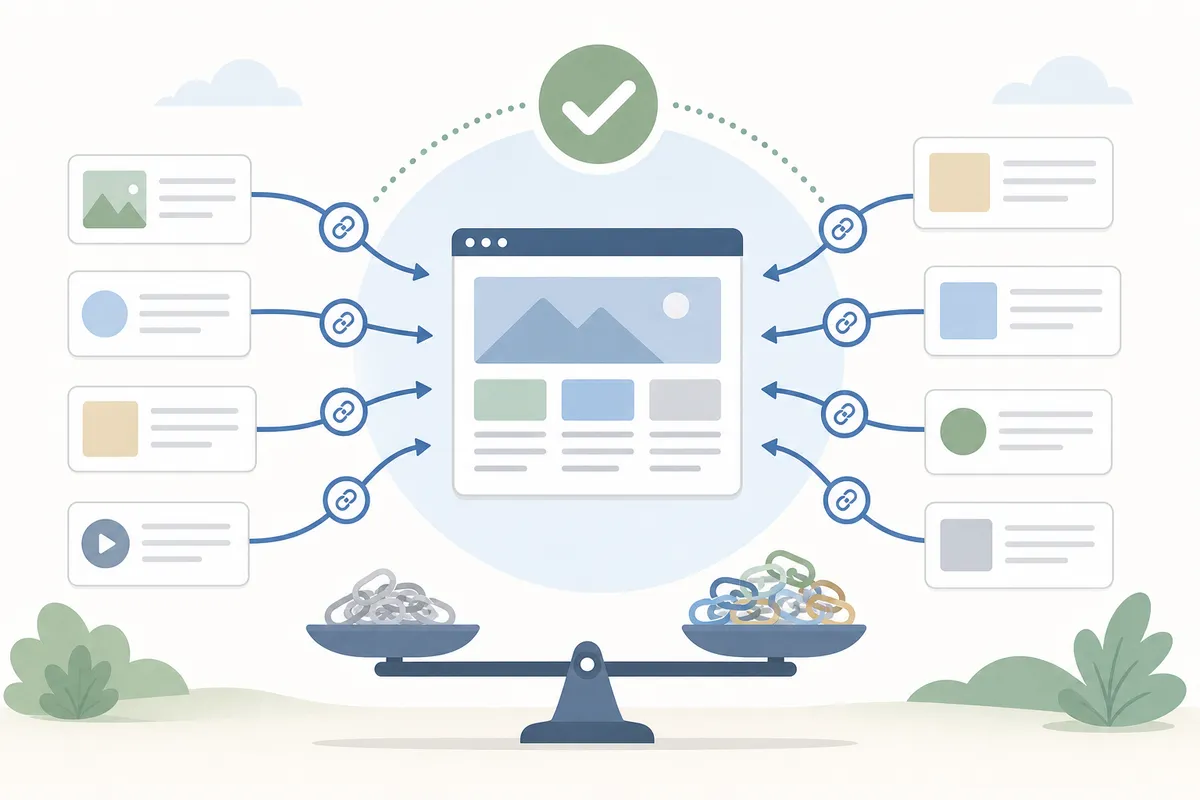
Get the unit right before you calculate anything. A backlink is one link from one page; a referring domain is one website linking to you, no matter how many individual links it contains. Ten links from a single blog amount to one site vouching for you, while ten links from ten separate sites are ten separate endorsements, and those are what search engines weigh more heavily.
Every major backlink tool reports both figures, but referring domains is the one to plan around. If you want the fuller picture of what a backlink is and which ones are worth chasing, this guide to backlinks for SEO covers the mechanics in more depth.
Scope matters too. You count backlinks to the exact URL you're trying to rank, because a homepage with 400 referring domains says nothing about whether a single blog post three folders deep is competitive.
How to calculate how many backlinks you need
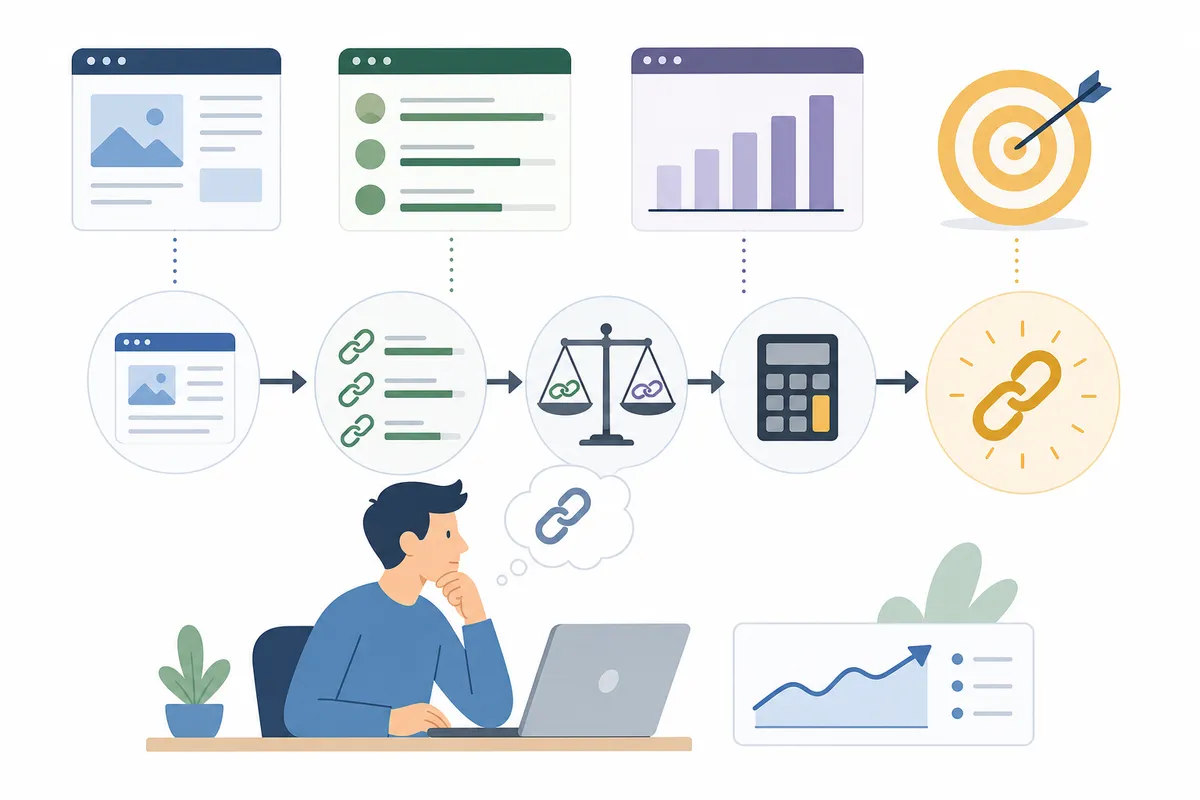
Three steps turn "it depends" into a number you can work toward, and none of them requires guessing.
Step 1: pull the top 10 and note their referring domains
Open a backlink tool such as Ahrefs, Semrush or Moz and look at the current top 10 results for your target keyword. Record the referring domain count for each individual ranking URL rather than the domain total. Then drop the outliers you can't realistically compete with: massive brands, homepages ranking for a query you're targeting with an article, and sites like Reddit or government domains that rank for reasons unrelated to backlinks.
Check what the competing pages cover as well as how many links they have. Finding the content gaps your competitors rank for will often show that a thinner link profile wins because the page answers the query better.
Step 2: use the median, not the average
Once you've filtered down to comparable pages, take the median referring domain count. A single page with 300 referring domains can drag an average far above what you need, and the median resists that distortion. If positions 4 through 10 show counts of 9, 14, 17, 22 and 30, your entry target sits roughly in the high teens.
Step 3: adjust for your site's strength and content quality
Treat the median as a starting point and adjust by judgment:
- Adjust up if your page is thinner than the competition, the query is local or high-volume, or the links you can realistically earn are weaker than what's already ranking.
- Adjust down if your site already carries topical authority in this area, your content clearly answers the query better, or the competing totals look padded with low-quality or irrelevant domains.
Build the first batch of referring domains, wait a few weeks for search engines to recrawl and recount them, then check whether the page moved. If it didn't, the bottleneck is often content quality, search intent or internal links rather than backlinks.
Real examples: low, medium and high competition keywords
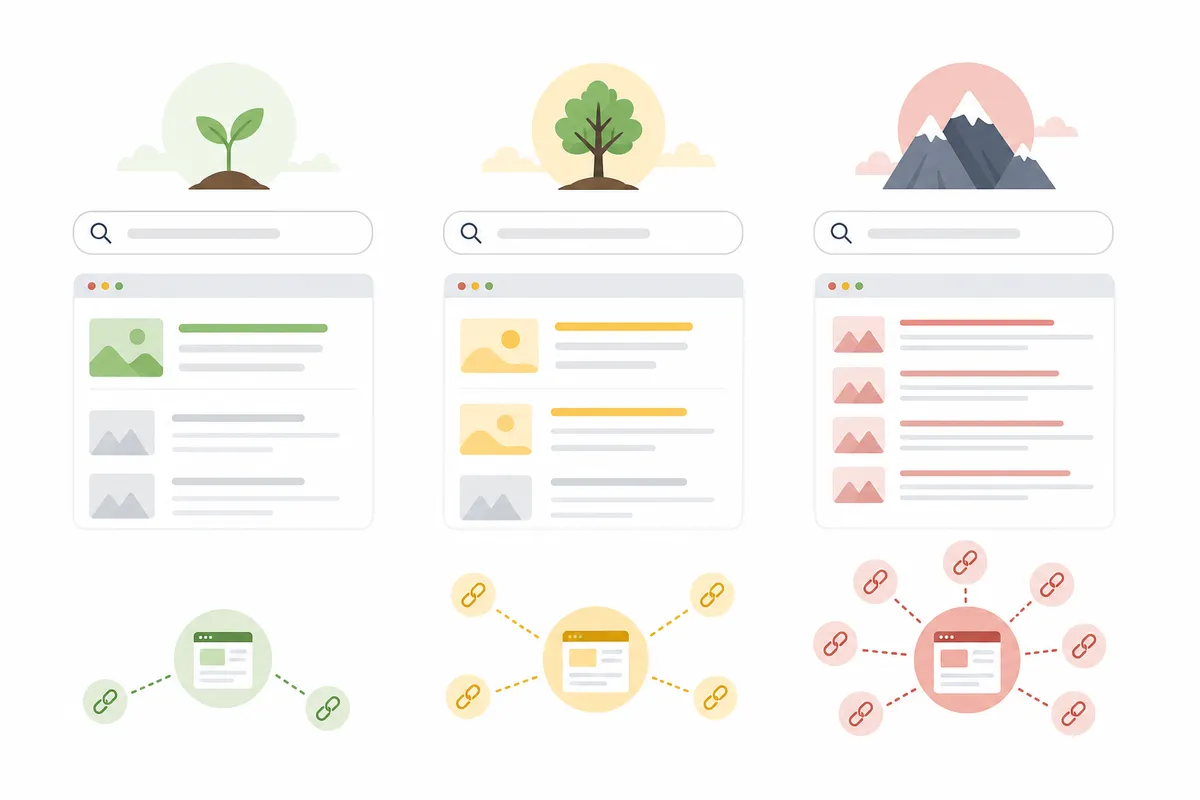
Here is how the same framework plays out across different levels of competition.
| Competition Level | Typical Page-1 Referring Domains (Positions 4-10) | Typical Top-3 Referring Domains (Positions 1-3) | What Usually Decides the Winner |
|---|---|---|---|
| Low (long-tail, low-volume) | 0 to 5 | 5 to 15 | Content that answers the query completely; links are often optional |
| Medium (niche commercial or SaaS term) | 11 to 22 | 18 to 29 | A realistic first campaign of 10 to 15 new relevant referring domains |
| High (competitive local service) | 4 to 10 | 10 to 20+ | Reviews and a complete Business Profile alongside links; Ahrefs measured a 0.33 correlation between referring domains and local rankings, higher than the average query |
| Very high (competitive national commercial term) | 42 to 71 | 70 to 110+ | Broader site authority and brand mentions; page-level links alone rarely close this gap on a young domain |
For a competitive national term, the faster path is usually to narrow the target. Ranking for competitive keywords often starts with an adjacent, more winnable phrase, and you expand once you've built topical authority.
Page one vs. the top three: two different targets
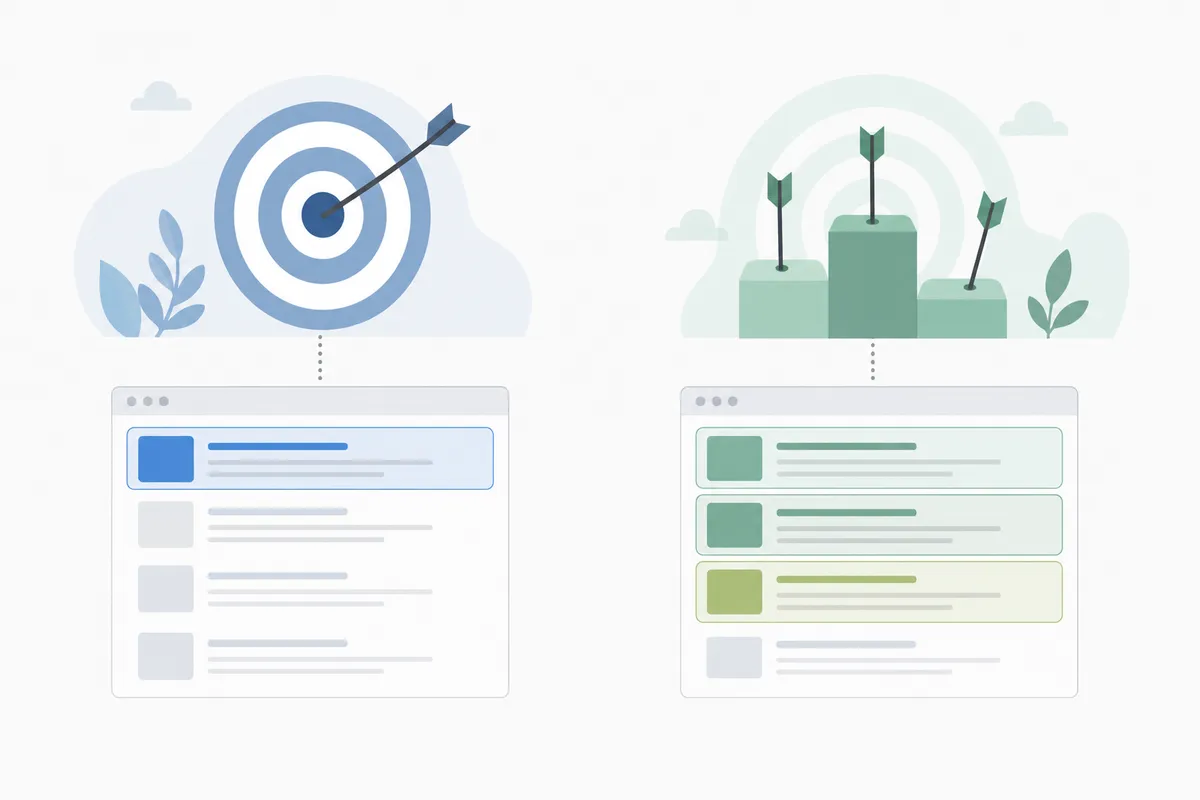
Treat page one and the top three as sequential goals. Page one is almost always the cheaper, faster win, because positions 4 through 10 tend to have noticeably fewer referring domains than the top three.
Pushing from page one into the top three usually means matching or beating the referring domains of the current 1 through 3, and it's rarely worth the investment unless your content already outperforms theirs on relevance and depth. Make the call once you're on page one and the content is ready to compete.
What's a good number of backlinks for a whole website?
A website doesn't rank; its individual pages do, so there's no universal "good number" for total backlinks. The meaningful comparison is your key pages' referring domains against the pages you're competing with.
Site-wide link strength still lifts every page's baseline. One study tracking 200 sites found Domain Rating climbing in step with total verified backlinks: a median DR of 6 for sites with fewer than 10 backlinks, DR 11 at 10 to 49, DR 26 at 50 to 149, and DR 30 at 150 or more. That pattern suggests sitewide authority often comes from a handful of genuinely linkable pages, such as original research, data studies or a well-designed infographic that earns backlinks on its own, rather than links spread evenly across the site.
There is also a floor. Ahrefs' search traffic study found that 96.55% of pages in its index get zero Google traffic, and only about 1 in 6,671 pages with no referring domains at all ever climbs past 1,000 monthly visits. Semrush's research points the same way from a different angle: 92.3% of new domains that held top-100 rankings for 13 straight months had earned at least one backlink.
How many new backlinks should you build each month?

There's no required monthly pace, and anyone who quotes a fixed number is guessing. The right pace is whatever closes your specific gap with links that would hold up on their own merits.
Ahrefs' backlink growth study found that most #1-ranking pages gain followed links from new referring domains at roughly 5% to 14.5% a month. Customer data from one backlink platform also showed a relationship between monthly link volume and traffic growth, measured as Google clicks over a 28-day window against the 28 days before:
| New Backlinks Per Month | Share of Sites That Grew | Median Growth in Google Clicks |
|---|---|---|
| Fewer than 5 | 65% | 1.59x |
| 5 to 14 | 78% | 1.66x |
| 15 to 29 | 69% | 1.54x |
| 30 or more | 80% | 2.18x |
Look at the middle rows: sites earning 15 to 29 links a month grew no faster than sites earning 5 to 14, so link count alone doesn't explain the difference. Relevance, the specific pages being linked and the content behind them do most of the work. If you're building a monthly link campaign from scratch, a structured five-step process for building backlinks is a more reliable starting point than an arbitrary target.
What the research says about backlinks and rankings
The clearest independent evidence ties referring domains to rankings more closely than total backlinks. Across roughly 1 million keywords, Ahrefs found referring domains correlated 0.255 with search rankings in 2025, compared with 0.131 for Domain Rating. Neither is a strong single-factor predictor, which is expected given that Google weighs hundreds of signals together, but referring domains came out well ahead of a site-wide authority score.
Backlinko's analysis of 11.8 million search results adds that the #1 result carries on average 3.8 times more backlinks than positions 2 through 10 combined. That gap says less about link count being destiny than about how concentrated authority is at the top of a result set.
Google's Search Essentials documentation describes links as one of the ways its systems discover and evaluate pages, alongside content quality and page experience, rather than a standalone ranking lever. Full documentation: Google Search Essentials.
When fewer backlinks are enough, and when more won't help
Fewer backlinks are enough when your content clearly outperforms what's ranking, the keyword is long-tail or low-volume, or your site already carries topical trust in the subject. A handful of genuinely relevant referring domains can then out-rank a competitor with triple the link count but weaker content.
More backlinks stop helping once you've matched the competitive median and your content, intent match and internal linking are solid. Past that point you get diminishing returns, and extra links from irrelevant or low-quality sites can work against you. Google's guidance treats manipulative link schemes as a violation, and a page built on borrowed authority rather than earned relevance is the one most likely to get flagged. For a longer look at which links are safe to pursue and which risk a penalty, see earning natural backlinks without the downside.
How many backlinks do you need for AI Overviews and AI answers?
Backlinks influence more than the traditional ten blue links. One study of 200 sites found that those with 150 or more verified backlinks received 16 times the citations in AI-generated answers of sites holding fewer than 10. The same study tied backlink volume to Domain Rating in clear steps: DR 6 for fewer than 10 backlinks, DR 11 for 10 to 49, DR 26 for 50 to 149, and DR 30 for 150 or more.
| Verified Backlinks | Median Domain Rating | Relative AI Citation Rate |
|---|---|---|
| Fewer than 10 | DR 6 | Baseline |
| 10 to 49 | DR 11 | Higher, not quantified separately |
| 50 to 149 | DR 26 | Higher, not quantified separately |
| 150 or more | DR 30 | 16x the baseline group |
AI answer engines appear to lean on the same authority signals that search rankings do, only amplified. A thin, unlinked page is unlikely to get cited by an AI assistant for the same reason it struggles to rank organically: nothing vouches for it. As more search moves inside AI answers, links earned through relevance still pay off.
Can you rank fast with backlinks?
Not reliably. New links must be crawled, indexed and factored into rankings, and that recrawl delay puts a floor under how fast backlinks can move a page. Treat any projected timeline as a minimum.
Backlinks also aren't the fastest lever when a page is underperforming. If the content doesn't match search intent or internal links aren't pointing enough authority at the page, external links built first waste effort that content and internal-link fixes would have solved faster. The realistic sequence is to fix intent and content quality, confirm internal links are in place, and then add referring domains to close the remaining gap.
How many links does a new website need to start ranking?
A brand-new domain starts every comparison from zero referring domains. Pages on established, trusted sites often need fewer page-level links to rank than the same content would on a week-old domain, since trust accumulates sitewide as well as per page.
The practical move for a new site is to pick a winnable keyword first, usually long-tail and lower-volume, rather than aiming at a term with a 70-referring-domain median. A proper keyword research process will surface those easier entry points before you send a single outreach email. Win a few of them and let the domain accumulate some baseline trust, and the target for your next, more competitive keyword gets easier to hit.
How to check how many backlinks you have
Every tool counts differently because each crawls a different slice of the web, so use more than one and compare trends over time instead of treating any single number as exact.
| Tool | Cost | What It Shows | Best For |
|---|---|---|---|
| Google Search Console | Free | Top linking sites and top linked pages for your own verified property | A baseline of what Google itself has discovered; Google states it's a sample, not a comprehensive list |
| Bing Webmaster Tools | Free | Referring domains and linking pages, with comparison against other domains | A second, independent data source for your own site |
| Ahrefs, Semrush, or Moz Link Explorer | Paid (free limited lookups) | Referring domains for any domain or URL, including competitors | Competitive research and page-level referring domain counts |
| A link monitoring tool | Varies | Whether previously earned links are still live | Catching lost links before they quietly erode your count |
Search Console and Bing's tool are the two free starting points because they reflect what the search engines have actually found, though Google is explicit that its report is a sample and won't tell you whether a link is nofollow. Google Analytics is sometimes mistaken for a backlink source, but it tracks visits, not links, and what Google Analytics actually shows about backlinks, and what it misses is worth reading before you rely on it.
Backlinks won't fix the wrong keyword or thin content
Backlinks are one input among many, and often not the first one worth fixing. If a page targets a keyword with the wrong intent, such as informational content chasing a transactional query, no number of referring domains will reliably move it. The same goes for content that's thinner or less specific than what's already ranking.
Check that the page holds up before you invest in a link campaign. Optimizing a page without resorting to keyword stuffing and writing pages that are actually built to rank are both worth doing first. A page that answers the query better than the competition sometimes needs fewer backlinks than the framework above suggests, because content quality is itself a ranking signal.
FAQs
How many backlinks does a new page need to rank on page one?
It depends on the keyword's competition, but the method is the same every time: find the median referring domains of positions 4 through 10 for that exact keyword, filter out outliers you can't realistically match, and treat that median as your entry target. For a lightly contested long-tail term that can be zero to five; for a competitive commercial term it's often 50 or more.
Is it better to have more backlinks or more referring domains?
Referring domains matter more. Ten links from one site are one endorsement repeated, while ten links from ten different sites are ten separate endorsements. Across roughly 1 million keywords, Ahrefs found referring domains correlated more strongly with rankings than Domain Rating, which is one reason every major SEO tool reports them as a distinct metric from total backlinks.
Do nofollow links count toward how many backlinks I need?
Treat them separately. Nofollow is a hint to search engines that a link may not deserve the same weight as an unmarked one, which is why practitioners who want a true picture of a competitor's referring domains typically isolate dofollow links first. Nofollow links can still send real traffic and visibility, but don't count on them to close a page-level referring domain gap.
How long does it take for new backlinks to affect rankings?
There's no fixed timeline. It depends on how quickly search engines recrawl the linking page and the linked page, and on how the rest of your ranking signals compare to the competition. Treat any estimate as a floor and reassess after a few weeks instead of expecting an immediate jump.
Can too many backlinks hurt your rankings?
Volume alone rarely causes harm, but the quality and relevance of the links do matter. A sudden spike of low-quality or clearly manipulative links can draw scrutiny, and links built to hit a number rather than because they're relevant are the ones most likely to backfire. Earning links naturally, from sites that would plausibly cite you anyway, avoids the risk.
Get your backlink targets, page by page
Running this calculation by hand across every page on your site adds up fast, and most of the work is pulling the same referring-domain data for every keyword you're trying to win. If you're still asking how many backlinks you need to rank each of your key pages, talk to the team and see what a page-by-page backlink gap analysis looks like against your own site's current rankings.
Resources / References
Sources
- how many backlinks do you actually need to rank?
- [How Many Backlinks Do I Need To Rank? Answered)
- You Don't Need 1000 Backlinks to Rank on Google (Here's ...
- How many backlinks do I need?
About the author
SearchBlueprint researched, wrote and scored this article with the content pipeline our customers run on their own sites. The score in the byline is what our content engine gave this page before it published. Nothing here is reviewed by hand, which is the point: it is the product's output, published where anyone can check it.