The Importance of Backlinks: Why Links Still Move Rankings
SearchBlueprint · · 12 min read · scored 92/100

The importance of backlinks comes down to independent evidence: search engines treat links from other websites as proof that your pages deserve to rank. Pages with more quality referring domains tend to earn more traffic, rank for more keywords, and get cited more often in AI-generated answers.
This guide is for site owners, marketers, and agency teams deciding how much of their SEO effort links deserve. It covers what the ranking studies actually show, what separates a link that helps from one that hurts, and how to build a profile that survives algorithm updates.
Key Takeaways
- Backlinks remain one of Google's strongest trust signals. Testimony in the US Department of Justice antitrust case confirmed that Google evaluates the quantity and quality of links pointing to a site.
- Quality beats volume. One relevant editorial link from a respected publication can outweigh dozens from unrelated or low-quality sites, and sites with fewer links sometimes outrank competitors with hundreds more.
- Backlinko's analysis of 11.8 million search results found the top result averages 3.8 times more backlinks than positions 2 through 10.
- Links now shape AI visibility too. Semrush research found that link authority correlates with how often a brand appears in AI answers.
- Buying links, repeating exact-match anchor text, and sudden link spikes violate Google's spam policies and can erase everything the good links earned.
What backlinks are and how they actually work
A backlink is a link from a page on someone else's website to a page on yours. You will also see them called inbound links or incoming links. They are different from internal links, which connect pages within your own site.
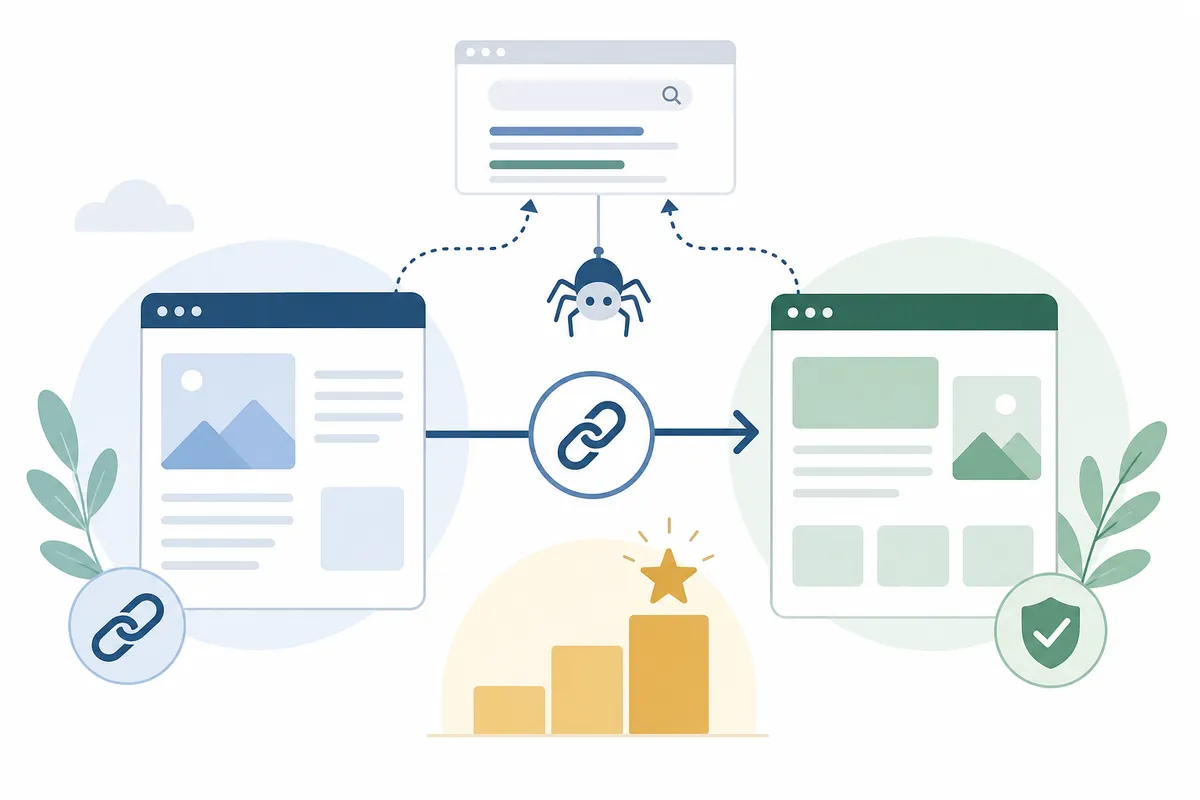
Links existed long before SEO did. Journalists cite sources, bloggers recommend tools, and trade publications reference research because it helps their readers. Google's founding insight was to read those references as signals: its original PageRank algorithm scored pages on a roughly 0 to 10 scale based on the links pointing at them, and links have stayed central to ranking ever since.
A single link says little. A pattern of links from trusted, relevant sites says a lot, because each one is an editorial decision someone else made about your content. Search engines aggregate those decisions to judge which page, out of thousands covering the same topic, deserves the top positions. For a closer look at how that judgment happens inside the ranking systems, read what role backlinks actually play in SEO.
Why backlinks matter for SEO
Backlinks sit at the center of off-page SEO, the work that happens away from your own pages. If that term is new to you, the broader picture of what off-page SEO means and why it moves rankings is worth ten minutes. Within it, links do five distinct jobs.
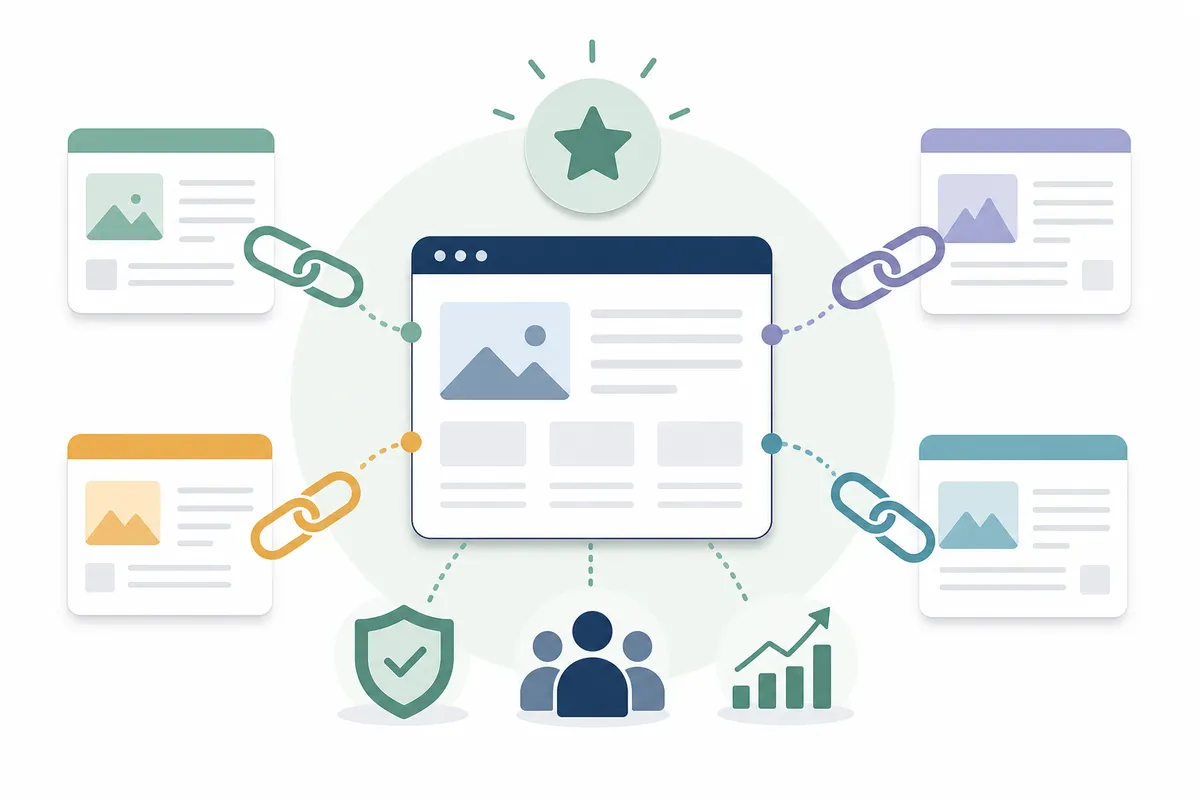
They give search engines proof of trust
Google cannot interview your business or fact-check every page you publish. It looks for signals that reduce uncertainty, and links are among the strongest because they are hard to fake at scale. Moz's guide to backlinks, updated by Chima Mmeje in April 2025, describes them as votes of confidence that feed a site's E-E-A-T: experience, expertise, authoritativeness, and trustworthiness.
They correlate with higher rankings
The data here has been consistent for a decade. Backlinko analyzed 11.8 million Google search results and found the number one result averages 3.8 times more backlinks than positions 2 through 10. Semrush's Ranking Factors 2.0 study put it plainly: "The more backlinks a domain has, the higher its position on the SERP." And in testimony during the Department of Justice case, former Google engineer Dr. Eric Lehman described a ranking signal as "how many links on the web are there that point to this web page" alongside the estimated authoritativeness of the page. Correlation alone proves nothing, but when the studies and the sworn testimony point the same way, treat the question as settled.
They send referral traffic that keeps paying
A link on a page people actually read sends visitors directly, and those visitors arrive with context and intent. Unlike an ad, the link keeps sending them for as long as the host page stays live. Ahrefs' research adds that pages with more referring domains get more organic traffic on average, so the direct clicks and the ranking lift stack on top of each other.
They help your pages get found and indexed faster
Crawlers discover content by following links, and Google's own guide to how Search works describes finding new pages by extracting links from pages it already knows. A new page with nothing pointing at it is an orphan, and search engines can take a long time to find it, if they find it at all. A link from a frequently crawled site creates a path that gets your page discovered and evaluated much sooner.
They compound into site-level authority
Each strong link raises the credibility of the whole domain, not just the page it points at, which is why established sites rank new content faster than new sites do. Third-party scores such as Domain Authority are not Google ranking factors, but they track this compounding well enough to be useful benchmarks. Building that durable, site-wide credibility is a long game, and how organic search authority accrues and why it pays covers it in detail.
What makes a backlink worth having
Volume stopped being the game years ago. RivalMind's Andy Francis, writing in August 2026, notes that businesses with fewer backlinks sometimes outrank competitors with hundreds more, because Google reads what each link says about relevance and reputation rather than simply counting them. Five factors decide most of a link's value.
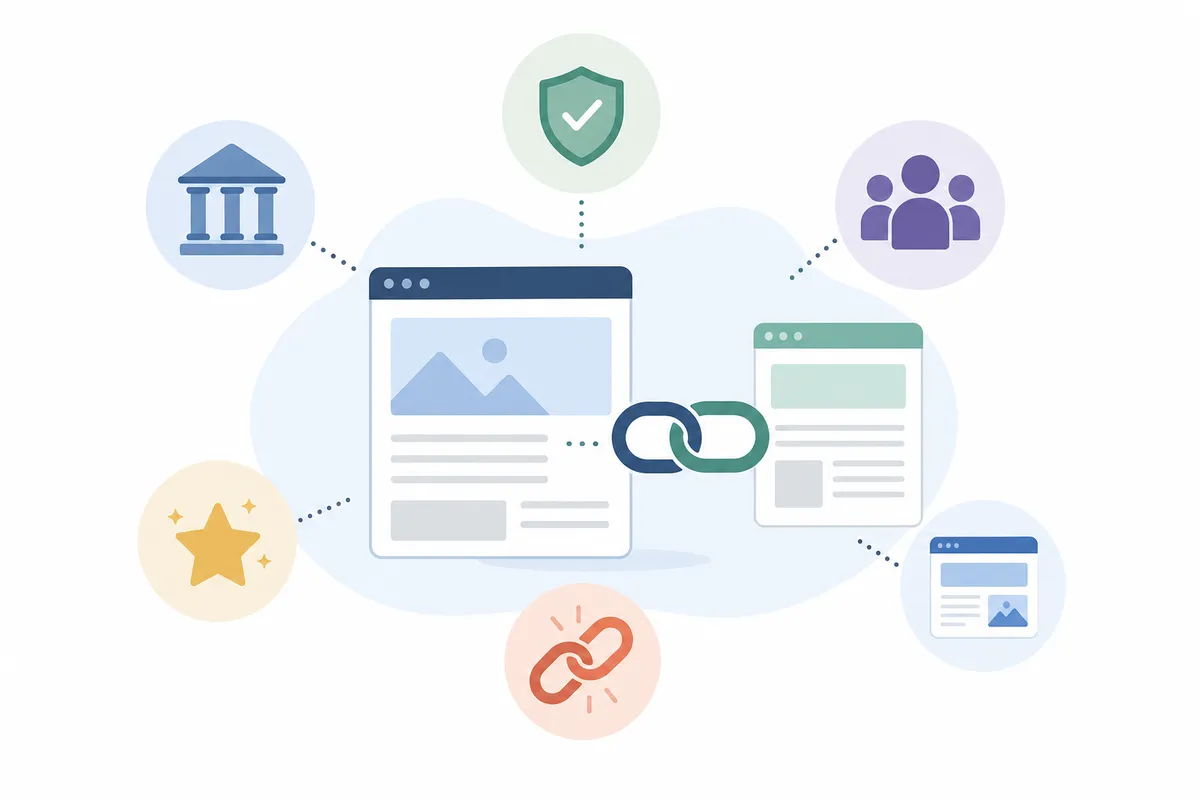
The five factors that decide link value
| Quality factor | What search engines read from it | Strong example | Weak example |
|---|---|---|---|
| Relevance | The linking site covers your topic, so its recommendation carries meaning | A pet care blog linking to a veterinary clinic | A car dealership linking to that same clinic |
| Authority | Trusted domains pass more credibility than unknown ones | A national industry body or major publication | A week-old blog with no readership or history |
| Placement | Links inside the main content are editorial; boilerplate links are not | A citation within the body of an article | A footer or sidebar link among dozens of others |
| Anchor text | Descriptive anchors explain the destination to readers and crawlers | "Expert kitchen remodeling ideas" pointing to a remodeling guide | "Click here", or one exact keyword repeated on every link |
| Follow status | Dofollow links pass ranking credit; nofollow links mostly do not | An earned editorial dofollow link | A forum signature link tagged nofollow |
Anchor text: descriptive beats optimized
The words carrying the link should read naturally in the sentence and describe what the reader will find. A healthy profile mixes branded anchors, plain phrases, and the occasional keyword-rich one. When nearly every link to a page uses the same optimized phrase, that pattern looks engineered, and engineered is exactly what the spam systems hunt for.
Dofollow, nofollow, and what actually passes
A nofollow tag asks search engines not to pass ranking credit through a link. Google's documentation on qualifying outbound links sets out when to use nofollow, sponsored, and UGC. Those links still send readers, build brand recognition, and often lead to editorial links later, so they are far from worthless. The full picture on whether nofollow backlinks still help SEO is more nuanced than the tag suggests.
The main types of backlinks, compared
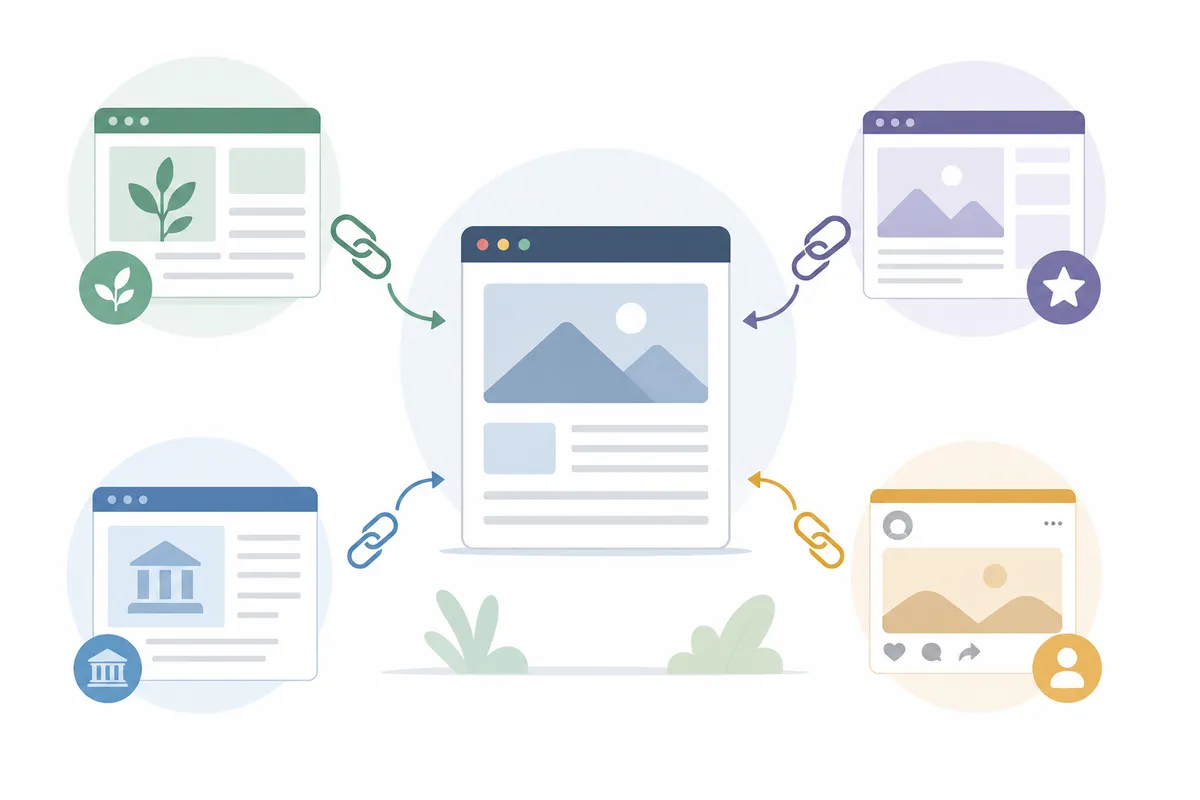
Where a link comes from shapes both its value and its risk. The common sources break down like this.
| Type | How it is earned | Typical SEO value | Watch out for |
|---|---|---|---|
| Editorial links | Another site cites your content because it is useful | Highest; earned on merit with no exchange | You cannot control timing or anchor text |
| Digital PR and media mentions | Journalists quote your expertise or data | Very high, and among the hardest to earn | Requires genuinely newsworthy input |
| Guest post links | You contribute an article to a relevant publication | Good when the host site is real and related | Mass posting on thin sites reads as manipulation |
| Directory and resource links | You submit to curated industry or local lists | Modest; most useful for local SEO | Generic paid directories add nothing |
| UGC, forum, and social links | People share your pages in communities | Indirect; traffic and visibility, usually nofollow | Dropping your own links reads as spam |
| Sponsored links | You pay for placement, labeled rel="sponsored" | No ranking credit when labeled correctly | Unlabeled paid links violate Google's policies |
Editorial and PR links do the heavy lifting in almost every strong profile. The deliberate craft of winning them is what external link building involves, and it looks very little like the mass outreach most inboxes suffer.
How to earn backlinks that count
The sites with the strongest profiles rarely chase links one at a time. They create reasons to be cited, then make sure the right people see them. Four approaches produce most of the durable wins, and a fuller menu sits in the link building strategies SEO specialists run first.
Publish something worth citing
Original data, calculators, templates, and genuinely deep guides earn links because they give other writers something they cannot easily recreate. One real statistic only you can provide will outperform ten generic listicles, because a citation needs a source and you become it.
Put a real expert on record
Journalists and bloggers constantly need credible sources. Offering commentary, sharing internal numbers, and answering sourcing requests earns media mentions that are among the hardest links to replicate, which is precisely why they carry so much weight.
Guest post for the audience, not the link
A thoughtful contribution to a respected publication in your niche builds authority and sends real readers your way. Write to help the host's audience first; the link is a byproduct. Spinning thin posts across dozens of low-grade blogs is the version search engines learned to devalue years ago.
Turn relationships into mentions
Partners, suppliers, trade associations, local organizations, and event hosts all maintain pages that link out. These mentions make editorial sense because a genuine relationship sits behind them, and they belong to the wider family of off-page tactics that build authority without spam.
Mistakes that turn backlinks into liabilities
Links can hurt as well as help. Google's spam policies name link schemes explicitly: buying or selling links that pass ranking credit, excessive exchanges, and automated link building can all lead to lower rankings or manual actions.
The patterns that cause the most damage:
- Buying dofollow links. Sellers advertise openly, and the footprints they leave are exactly what spam detection is trained on.
- Private blog networks and link farms. Networks built only to pass credit tend to share hosting, templates, and outbound patterns that give them away.
- Exact-match anchors everywhere. Real profiles are messy. Uniform keyword anchors signal coordination, not popularity.
- Sudden volume spikes. Hundreds of new links landing on a small site in a week looks engineered, because it almost always is.
- Quantity over relevance. Fifty links from unrelated sites can do less for you than three from publications your customers actually read.
None of this means link building is dangerous by nature. It means the safe version follows rules, and growing a link profile without penalty risk is a discipline worth learning before the first outreach email goes out.
The importance of backlinks in the AI search era
Every few years someone declares links dead, usually right after an update that devalued a spam tactic. The record says otherwise. Charles Floate of PressWhizz, who says he has worked in this industry for nearly 20 years and personally overseen thousands of link placements, still ranks links among the top three factors, and both the leaked Google documentation and the DOJ testimony back the general point: links remain core to how quality is estimated.
What has changed is the audience for your authority. Semrush analyzed AI mentions against backlink signals and found that link authority boosts visibility in AI answers, and that link volume matters less than link quality. ChatGPT, Perplexity, and Google's AI Overviews lean toward sources the wider web already treats as trustworthy, and links are how that trust gets recorded. The sites earning AI citations today are, overwhelmingly, the ones that earned real links first.
How to measure where your backlink profile stands
You cannot fix a gap you have not measured, so start with numbers rather than outreach.
Benchmark against whoever outranks you
Pull the link profiles of the three sites above you for your main keyword and count referring domains, not raw links. The scale varies wildly by niche: Floate describes checking the top result for "how to start a blog" and finding more than 31,000 inbound links pointing at it. Your market is probably gentler, but the exercise is the same, and it turns "we need links" into "we need roughly this many, from sites like these."
The numbers worth watching
| Metric | What it tells you | Healthy sign | Warning sign |
|---|---|---|---|
| Referring domains | How many distinct sites vouch for you | Steady month-on-month growth | Flat for a year while competitors climb |
| Dofollow share | How much of the profile passes ranking credit | A natural mix of dofollow and nofollow | Almost entirely one or the other |
| Anchor text spread | Whether the profile looks earned | Mostly branded and natural phrases | One exact-match keyword dominating |
| Link velocity | How fast new links arrive | Gradual gains tied to content you published | Sharp spikes with no publishing event behind them |
| Referral sessions | Whether links send actual readers | Visitors arriving from linking pages | Thousands of links but zero referred visits |
Referral traffic is easy to verify in Google Analytics: open Reports, then Acquisition, then Traffic acquisition, set the dimension to Session source/medium, and filter for referral. For the link data itself, how to use a backlink checker, and which free one to trust walks through reading a profile without paying for an enterprise tool.
FAQs
What is the importance of backlinks in SEO?
Backlinks show search engines that other sites vouch for yours. They remain one of Google's strongest ranking signals, confirmed by industry studies and by testimony in the DOJ antitrust case, and they also drive referral traffic, speed up indexing, and increase your chances of being cited in AI answers.
How many backlinks do I need to rank?
There is no universal number. Check the referring domain counts of the pages already ranking for your target keyword and treat that as your benchmark. In some niches a dozen relevant links wins; in others the leaders hold thousands. Relevance and authority decide more than the raw count.
Do nofollow backlinks still help SEO?
Not directly, since the tag asks search engines not to pass ranking credit. They still send visitors, grow brand awareness, and often lead to editorial dofollow links later, so a profile with plenty of nofollow links is normal and healthy.
Is it safe to buy backlinks?
No. Paid links that pass ranking credit violate Google's spam policies and risk manual penalties. Correctly labeled sponsored links are allowed but pass no credit, so buying links for rankings either breaks the rules or accomplishes nothing.
Do backlinks matter for AI search results?
Yes. Semrush research found link authority correlates with how often brands are mentioned in AI answers, with quality mattering more than volume. AI assistants tend to cite sources the web already trusts, and links are the clearest record of that trust.
Talk to the team
The fastest way to see the importance of backlinks for your own site is to measure your profile against the competitors who outrank you. Browse a sample SEO report to see how link gaps, keyword positions, and prioritized fixes are laid out, then talk to the team about running the same analysis on your domain. One benchmark now beats six months of guessing at outreach.
Resources / References
- votes of confidence
- Department of Justice case
- guide to how Search works
- qualifying outbound links
- spam policies
Related reading: Link Building for SEO: What Actually Moves Rankings in 2026.
Related reading: The Backlink Strategy That Builds Rankings Without the Risk.
Sources
About the author
SearchBlueprint researched, wrote and scored this article with the content pipeline our customers run on their own sites. The score in the byline is what our content engine gave this page before it published. Nothing here is reviewed by hand, which is the point: it is the product's output, published where anyone can check it.