SEO for Plumbers and Electricians: A Complete Guide to What Actually Books Jobs
SearchBlueprint · · 11 min read · scored 92/100
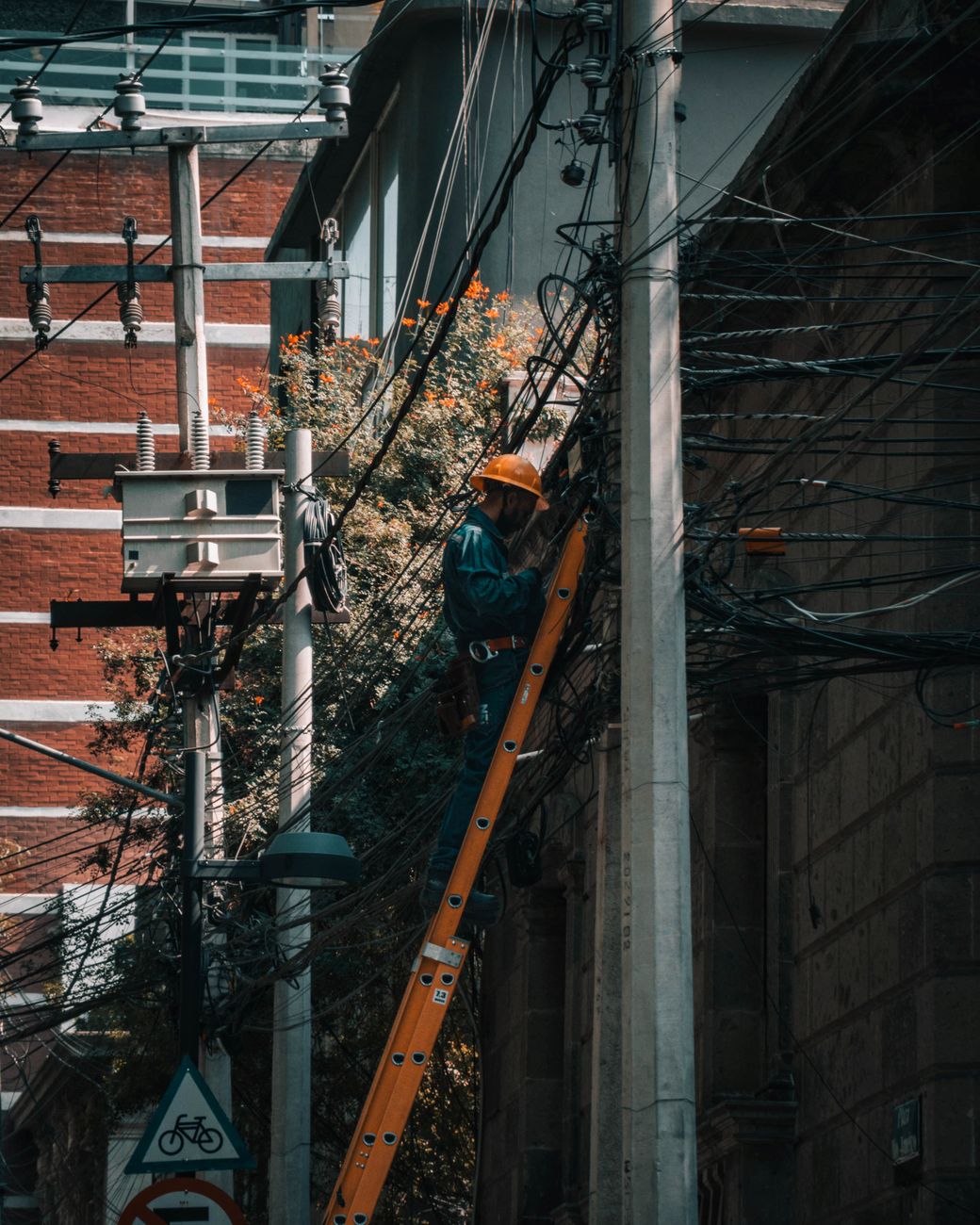
SEO for plumbers and electricians means winning three battles: the Google map pack for "near me" searches, dedicated service-and-suburb pages for every job type you do, and a steady flow of reviews. Win them in that order. Website blogging and backlinks matter, but they come after those foundations, not before.
This guide walks through the full system, from your Google Business Profile to what a realistic budget looks like, with results real contractors have reported along the way.
Key Takeaways
- Trades-marketing guides cite that 46% of Google searches have local intent, and 78% of mobile local searches lead to a purchase within 24 hours. The map pack is your highest-value real estate.
- Your Google Business Profile, review count, and NAP consistency drive local rankings more than anything on your website.
- Build one page per service per area you serve, never one homepage stuffed with every city name.
- Agencies list plumbing SEO from as low as $299/mo; specialist growth partners cost far more but report named outcomes like $800K year-over-year growth.
- Track calls and booked jobs, not rankings and impressions. A report full of green arrows means nothing if the phone stays quiet.
Why Search Replaced the Yellow Pages for Trades

When a pipe bursts or a breaker panel starts humming, nobody reaches for a directory. They search "emergency plumber near me" or "licensed electrician in [city]" and call one of the first two or three results. ServiceTitan's plumbing SEO guide cites 87% of consumers using search engines like Google to find these services. Other industry guides note that over 90% of users never scroll past the first page.
The stakes are concrete. One agency working exclusively in this space, Plumbing HVAC SEO, reports generating 7.1M+ leads for 600+ home service contractors over 15 years. Average monthly client retention sits at 96%+. Their named client results include Plumbing Nerds, up $800K year over year to $2.7M. Another is The Meridian Company, a 9-year client with $5M+ in reported growth. Those aren't anonymous percentages. They're contractors who treated search as a primary lead channel.
The lesson for your plumbing or electrical business: search visibility is not a marketing nice-to-have. It's the modern equivalent of the biggest ad in the phone book, except the winner takes most of the calls.
The Local SEO Foundation for Plumbers and Electricians
Local SEO is the practice of ranking for searches made in your service area. Google's local algorithm weighs three things: distance (how close you are to the searcher), relevance (how well your listing matches the query), and prominence (reviews, citations, and general reputation). You can't move your workshop, but you can dominate the other two.
Get Your Google Business Profile Right First
Your Google Business Profile (GBP) decides whether you appear in the map pack, the three listings with a map that sit above the regular results for searches like "plumber near me." Before you touch your website, complete every field:
- Primary category ("Plumber" or "Electrician") plus secondary categories like "Emergency Plumbing Service" or "Electrical Installation Service"
- Service areas listed by the towns and suburbs you actually cover
- Hours, including 24/7 or after-hours availability if you offer it
- Photos of your team, trucks, and completed jobs, not stock images
- Services listed individually: drain cleaning, water heater replacement, panel upgrades, EV charger installation
Google Search Central publishes detailed guidance on how its systems read business information and structured data, see Google Search Central for the official documentation. Following it beats guessing.
Keep Your Name, Address, and Phone Consistent Everywhere
Citations are mentions of your business name, address, and phone number (NAP) on directories like Yelp, Angi, Bing Places, and Apple Business Connect. They act as trust signals. Small mismatches ("St." on one listing, "Street" on another, an old phone number on a third) confuse search engines and dilute your prominence. Audit your listings once, fix every inconsistency, and check them quarterly.
Make Reviews a Daily Habit, Not a Campaign
Reviews are among the strongest local ranking factors. They're also what wins the click once you rank. A 4.8-star electrician with 200 reviews beats a 4.9-star electrician with 11 reviews almost every time.
Build it into your close-out process: after every completed job, the technician or your office sends a direct review link by text. Reply to every review, positive and negative. Google values active engagement, and future customers read your responses as a preview of how you handle problems.

Structure Your Website: One Page per Service, per Area

The single biggest website mistake trades businesses make is relying on one homepage to rank for everything. Google ranks pages, not businesses. If you offer twelve services across eight suburbs, you need pages that match how people actually search.
Service Pages That Go Deep
Build a dedicated page for each core service: drain cleaning, water heater repair, repiping, panel upgrades, rewiring, generator installation. Each page should cover what the service involves, typical signs a customer needs it, what affects the price, and how fast you can get there. Thin 150-word pages don't rank; pages that genuinely answer the customer's questions do.
Location Pages That Aren't Doorway Pages
For each town or suburb you serve, create a page like "Emergency Plumber in [Suburb]", but fill it with genuinely local detail. Cover neighborhoods you serve, common local issues (old galvanized pipes in pre-war housing stock, aluminum wiring in certain developments), response times from your base, and reviews from customers in that area. A page that just swaps the city name is a doorway page, and Google's spam policies target exactly that pattern.
This location-page approach isn't unique to trades. The same structure drives local visibility for hair and scalp clinics and other appointment-based businesses. The playbook transfers because the search behavior is the same: a local person, a specific problem, a decision made in minutes.
Emergency Pages Built for Speed
Emergency searchers don't browse. Your emergency plumbing and emergency electrical pages need the phone number in the first screen, tap-to-call buttons, your response-time promise, and nothing that delays action. Industry guides report that 78% of mobile local searches lead to a purchase within 24 hours. For emergency searches, it's closer to 24 minutes.
Match Keywords to Buying Stage
Not every search deserves the same page. Electrician SEO and plumber SEO both split cleanly into buying stages, and each stage needs a different page type:
| Buying stage | Example search | Page that should rank | Priority |
|---|---|---|---|
| Emergency / ready now | "emergency plumber near me open now" | Emergency service page with tap-to-call above the fold | Highest, these callers convert within hours |
| Ready to hire | "best electrician in [city]", "licensed plumber [suburb]" | Location page with reviews, license info, and pricing framing | High, the searcher is comparing two or three providers |
| Service seeking | "water heater replacement service" | Service page explaining process, timeline, and cost drivers | High, decision within days |
| Problem aware | "why does my breaker keep tripping" | Blog post that diagnoses honestly, then links to the service page | Medium, builds trust and captures future customers |
| Informational | "how does a tankless water heater work" | Educational blog post, no hard sell | Low, authority-building only |
Use free keyword tools to find the exact phrases used in your market, then map each one to a single page. Two pages chasing the same term compete with each other, and Google typically ranks neither well.
Content and Authority Without Losing Your Evenings
You don't need to become a writer to build topical authority. You need a modest, consistent output of genuinely useful posts: "Signs You Need an Emergency Electrician," "What to Do After a Burst Pipe," "How to Winterize Your Pipes in [City]." These posts do three jobs. They capture problem-aware searchers, give Google context about your expertise, and earn links from local sites.
The realistic question in 2026 is how much of this to automate. AI drafting has become good enough for structured local content, but service pages that carry your license numbers, guarantees, and pricing still deserve a human pass. Our breakdown of when AI content works and when a human writer is worth it covers where each fits. The short version: automate the volume, and hand-check anything a customer relies on before handing you money.
One more authority note: local backlinks beat generic ones. A link from your chamber of commerce, a supplier, a community sports club, or a local news mention carries more local weight than a dozen directory links. Sponsoring local organizations often earns these naturally. It's the same tactic that works for niche local businesses from trades to sports academies: be visibly part of the community, and the links follow.
Technical Basics That Actually Matter for Trades Sites
You don't need an enterprise technical audit. You need five things done properly:
- Mobile-first design. Most emergency searches happen on phones. Buttons must be thumb-sized and the number tappable.
- Fast load times. Emergency customers won't wait for a slow page. Compress images, cut unnecessary scripts, use decent hosting.
- LocalBusiness structured data. Schema markup helps Google understand your business type, service area, and hours. The vocabulary is documented at Schema.org.
- Clean site structure. Services and locations reachable in two clicks from the homepage, with internal links between related pages.
- HTTPS and a working contact form. Basic, but broken forms silently kill leads every week.
If you also sell parts, fixtures, or smart-home gear online, note that product listings follow different rules. Category structure, product schema, and inventory pages are their own discipline, covered in our guide to e-commerce SEO for Shopify and BigCommerce stores. Don't let a small shop section tangle up your service-site structure.
DIY, Agency, or Software: What It Costs
Yes, you can do the basics yourself. GBP optimization, review requests, and title tags are all learnable. The honest trade-off is time versus money, and the market offers three broad paths:
| Option | Typical cost | What you get | Best for |
|---|---|---|---|
| DIY | Your time (several hours/week) | Full control; GBP, reviews, and citations are genuinely doable solo | Solo operators and new businesses watching every dollar |
| Budget agency | Listed from as low as $299/mo (e.g., iBoost Web's plumber SEO plans) | Website optimization, listings management, basic content | Small shops that want the fundamentals handled |
| Specialist growth partner | Significantly higher, custom-quoted | Full-funnel: SEO, ads, Local Services Ads, conversion, monthly revenue reviews | Established contractors with trucks to keep busy, the tier where firms report outcomes like 2X revenue in two years |
| SEO software + light DIY | Mid-range monthly subscription | Automated drafting, rank tracking, location pages, audits | Owners who want leverage without agency retainers |
Two data points to calibrate against. Tommy Mello of A1 Garage Door Services, a $30 million-plus home services business, suggests spending at least half of your online marketing dollars across SEO, PPC, Google Business Profile, Local Services Ads, and review generation. And clickguru, a Toronto agency, describes an electrician whose website traffic doubled and call inquiries rose 40% within six months of investing in local SEO. Results vary by market, but the pattern is consistent: the trades businesses that treat search as a system, not a one-off project, are the ones reporting named numbers.
Measure Calls and Booked Jobs, Not Vanity Metrics
The failure mode in SEO for plumbers and electricians isn't bad tactics. It's measuring the wrong things. A monthly report full of impressions and keyword movements can look impressive while the phones stay quiet.
Track instead:
- Calls from search (use a tracking number on your GBP and site)
- Form and booking submissions by source
- Booked jobs and revenue attributed to organic search
- Map pack position for your top five money keywords, per suburb
- Review velocity, new reviews per month, per platform
Review these monthly. If a location page ranks but generates no calls, the problem is conversion, not SEO. Fix the page's phone prominence and proof before writing anything new.
FAQs
How much does SEO for plumbers and electricians cost?
It ranges widely. Budget agencies list plans from as low as $299/mo, while specialist home-services growth partners charge custom retainers well above that. DIY costs only your time. The right tier depends on your market's competitiveness and how many trucks you need to keep busy.
How long until SEO produces leads?
Google Business Profile improvements and review growth can move map-pack visibility within weeks. Website rankings for competitive service terms typically take months. One agency case describes an electrician whose traffic doubled and inquiries rose 40% within six months, a realistic timeline for meaningful results in a mid-sized market.
Can I do SEO for my trade business myself?
Yes, for the fundamentals. Optimizing your GBP, requesting reviews after every job, and keeping citations consistent are all owner-doable. Technical audits, site-speed work, and competitive content strategy are where a specialist or a good software platform earns its cost.
What's the single most important local ranking factor?
Your Google Business Profile, powered by reviews. Google weighs distance, relevance, and prominence. You control relevance through a complete profile and prominence through steady, replied-to reviews. Industry guides cite 46% of all Google searches as having local intent, so this is where the volume lives.
Do plumbers and electricians really need a blog?
Not a daily one. A steady trickle of genuinely useful posts, burst-pipe first steps, breaker-tripping causes, seasonal maintenance for your climate, captures problem-aware searchers and builds the topical authority that helps your service pages rank. Quality and local relevance beat volume.
Get Your Own Numbers on the Table
Reading about SEO for plumbers and electricians is worth exactly one thing: knowing what to check on your own site this week. Start with your Google Business Profile and your top three service pages. Then see how the gaps get documented in practice: look through a sample SEO report and talk to the team to see what a full audit of your market would surface.
Resources / References
Sources
About the author
SearchBlueprint researched, wrote and scored this article with the content pipeline our customers run on their own sites. The score in the byline is what our content engine gave this page before it published. Nothing here is reviewed by hand, which is the point: it is the product's output, published where anyone can check it.