Organic Ranking Tips That Actually Move the Needle in 2026
SearchBlueprint · · 6 min read · scored 89/100
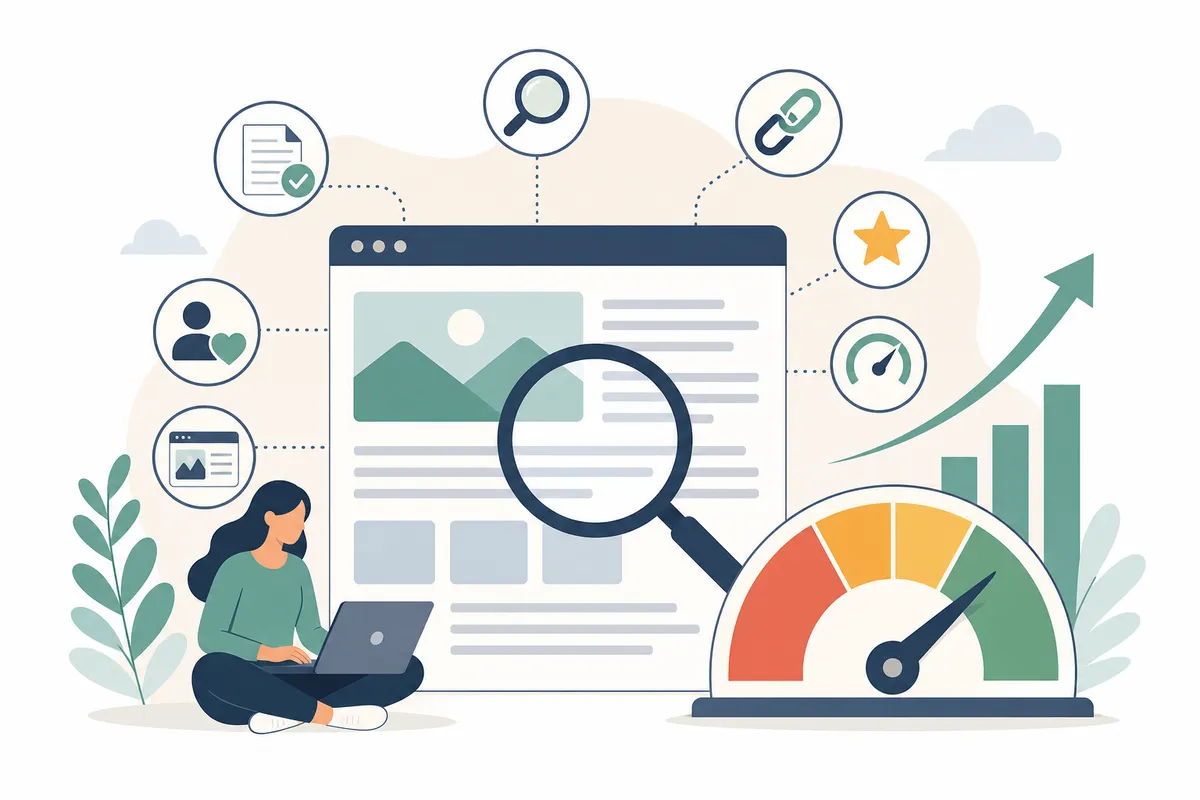
The best organic ranking tips focus on three things: content that fully answers a query, a site Google can crawl and trust, and links from other real sites. Rankings move when all three improve together, not when you chase one metric alone.
Most advice online treats these as separate projects. They are not. A page with great content but a broken sitemap will not rank. A technically flawless site with thin content will not rank either. The sections below walk through what actually moves organic rankings, in the order that gets you results fastest.
What Actually Drives Organic Rankings in 2026
Google's ranking systems combine hundreds of signals, but they group into four buckets you can actually act on: content relevance, technical health, authority, and user experience. According to Google's Search Central documentation on ranking systems, these systems work together rather than as one master formula.
That matters for how you prioritize your time. A single missing signal rarely tanks a page. A pattern of weak signals across all four areas does.
| Ranking factor category | What it evaluates | How to check it | Priority |
|---|---|---|---|
| Content relevance and depth | Whether the page fully answers the query, better than competing pages | Compare your page against the top three results for the same term | High |
| Technical health | Crawlability, indexing, site speed, mobile rendering | Google Search Console coverage and Core Web Vitals reports | High |
| Authority and backlinks | Links and mentions from relevant, trustworthy sites | Backlink profile tools, spot checks on referring domains | Medium |
| User experience signals | Bounce behavior, time on page, click-through from search | Search Console performance data, analytics | Medium |
Work down that table in order. Fixing technical issues before writing more content is almost always the higher-leverage move.
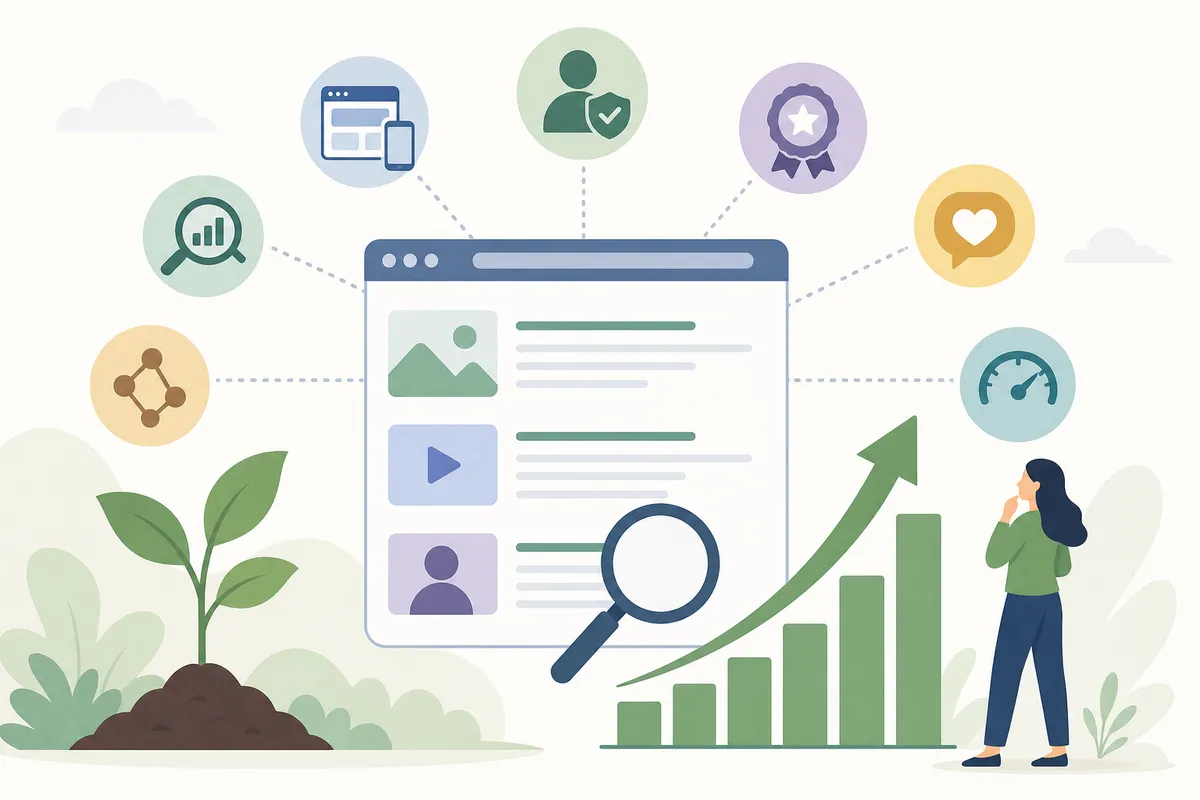
Build Topical Authority With Content Clusters

Ranking one page for one keyword is a losing strategy. Search engines reward sites that cover a topic from every reasonable angle, not sites with one strong article surrounded by thin pages.
Start With One Hub Page
Pick a broad topic your customers search for and build a comprehensive page around it. This becomes your hub. It should link out to every related, narrower article you publish.
Fill In the Supporting Spokes
Each spoke page goes deep on one specific question or sub-topic, then links back to the hub. Over time, this cluster signals to search engines that your site is a genuine authority on the subject, not a page that happens to mention it once. The guide on organic search optimization strategies and what actually ranks breaks down how to sequence hub and spoke content without spreading your effort too thin.
Avoid publishing spoke pages that just restate the hub in different words. Each one needs its own reason to exist: a different question, a different buyer stage, or a different level of detail.
Fix the Technical Foundations First

Content and links cannot rescue a page Google cannot crawl or trust. Technical fixes are usually the fastest way to see organic rankings move, because you are removing barriers rather than waiting on new content to earn authority.
Crawling and Indexing
Check that your important pages are not accidentally blocked by robots.txt, that your sitemap lists your real URLs, and that Search Console shows them as indexed. A page that is not indexed cannot rank, no matter how good it is.
Page Experience and Core Web Vitals
Slow-loading pages and layout shifts hurt both rankings and conversions. Test your key pages on mobile first, since most searches now happen there. The breakdown on what to fix in organic search engine optimization, in order walks through a practical sequence for tackling these issues without getting stuck reordering priorities every week.
Earn Backlinks That Move Organic Rankings
Backlinks remain one of the strongest trust signals search engines use, even as other signals have grown in weight. The goal is relevance and credibility, not raw quantity.
| Link building tactic | Effort required | Typical payoff |
|---|---|---|
| Guest posts on relevant industry sites | Medium | Steady referral traffic plus topical authority |
| Digital PR around a genuinely newsworthy angle | High | Fewer links, but from higher-authority sites |
| Reclaiming broken or lost backlinks | Low | Fast recovery of link equity you already earned |
| Competitor gap analysis and outreach | Medium | Targeted links your competitors already hold |
| Local directories and industry citations | Low | Helps local relevance more than domain authority |
A handful of relevant links from sites in your industry will usually outperform dozens of unrelated ones. For a broader menu of tactics beyond backlinks, the article on proven organic traffic tips for sustainable growth covers the acquisition side alongside link building.
Get On-Page and Structured Data Right
On-page signals are the cheapest organic ranking tips to act on, because you control every element directly. Title tags, header structure, internal links, and image alt text all tell search engines what a page is actually about.
Structured data adds another layer on top of that. Marking up FAQs, articles, or products in schema format helps search engines and AI answer engines understand your content well enough to quote it directly. That matters more each year, as more searches end in an AI-generated summary instead of a list of blue links.
The techniques in 9 proven on-page SEO techniques that actually boost rankings cover the specific elements worth prioritizing first, from title tag structure to internal linking patterns.
Write for Extraction, Not Just for Keywords
Break dense sections into short paragraphs, bullet points, and tables wherever a comparison is genuinely useful. Answer engines and featured snippets both favor passages that make sense pulled out of context, with the specific number, step, or answer stated plainly rather than implied.
Measure Progress the Right Way
Rank tracking alone tells you where you stand, not why. Pair position data with click-through rate and page-level engagement to see whether a ranking gain is actually turning into traffic. A page that climbs three spots but loses clicks usually has a title or snippet problem, not a ranking problem.
Review your top pages on a set schedule rather than only when traffic drops. Catching a slow decline early is far easier than recovering from a page that has quietly dropped out of the top results for months.
FAQs
How long does it take to see results from organic ranking tips?
Most sites need a few months of consistent work before rankings shift meaningfully. Technical fixes can show results within weeks, but content and backlink gains usually take three to six months to compound.
Do organic rankings still matter now that AI answers questions directly?
Yes. AI Overviews and chat-based answers largely pull from pages that already rank well organically, so strong organic rankings still feed both traditional clicks and AI citations.
What's the single biggest organic ranking mistake to avoid?
Publishing thin pages that repeat what already ranks, instead of adding real depth, examples, or a clearer answer than the current top results provide.
Can you improve organic rankings without building backlinks?
Some gains are possible through content and technical fixes alone, but competitive keywords almost always need external links pointing to your pages as a trust signal.
How often should you update old content to protect organic rankings?
Review your best-performing pages every six to twelve months, and sooner if a competitor visibly outranks you or your traffic starts dropping.
See Where Your Organic Rankings Stand Right Now
Pick one item from this list and act on it this week: rewrite your weakest title tag, close your biggest content gap, or fix one broken technical issue. Then look at a sample SEO report to see how a full audit lines up priority fixes for organic ranking tips like these, in order of impact.
Resources / References
About the author
SearchBlueprint researched, wrote and scored this article with the content pipeline our customers run on their own sites. The score in the byline is what our content engine gave this page before it published. Nothing here is reviewed by hand, which is the point: it is the product's output, published where anyone can check it.