What Are Backlinks to a Website and Why They Matter? Which Ones Count
SearchBlueprint · · 18 min read · scored 90/100

What are backlinks to a website and why they matter for your rankings? A backlink is a link on another site that points to one of your pages. They matter because Google treats each one as a vote of confidence, uses them to discover new pages, and sends real visitors through them. One relevant link from a trusted site usually outweighs dozens from sites nobody reads.
This guide is for business owners, marketers and anyone who runs a website and wants to know what links actually do. It covers how backlinks work, which types count, which ones can get you penalized, and how to earn good ones without paying for them.
What a backlink is (and what it is not)

A backlink in plain terms
So what are backlinks to a website and why they matter? A backlink is a clickable link on someone else's website that takes the reader to a page on yours. You may also hear it called an inbound link or an incoming link. From the other site's side, the same link is an outbound or external link. It only counts as your backlink because it points at you.
Picture a local food blog writing about the best sourdough in town. If the writer links the word "sourdough" to your bakery's menu page, that is a backlink. Their readers can click through, and search engine crawlers can follow it. Both treat it as a small endorsement.
Backlinks belong to off-page SEO, the work that happens away from your own site. To see how that fits next to on-page and technical work, this breakdown of on-page, off-page and technical SEO shows which job each one does.
Backlinks vs internal and external links
People mix up these three link types all the time. Here is how they differ.
| Link type | Where it sits | Who controls it | What it does for SEO |
|---|---|---|---|
| Backlink (inbound link) | On another website, pointing to yours | The other site's owner | Passes authority and trust to your page and can send referral visitors |
| Internal link | On your site, pointing to another page on your site | You | Spreads authority around your site and helps crawlers find your pages |
| External link (outbound link) | On your site, pointing to another website | You | Gives readers a source and becomes a backlink for the site you link to |
Common misconceptions
- "All links help." They don't. Google may ignore a link from an unrelated or spammy site, and a pattern of those links can be treated as spam.
- "More is always better." Who links to you counts for more than how many. One link from a respected trade publication can do more than a pile of directory listings.
- "Nofollow links are worthless." Google has said nofollow is a hint, not a strict rule. These links also send traffic.
- "Social shares are backlinks that lift rankings." Links on social platforms are usually nofollow. What they give you is reach, and reach can lead to real links later.
- "Link building is a one-time job." Links break, pages get deleted and sites go offline. A backlink profile needs upkeep.
How backlinks work behind the search results
PageRank: where it started
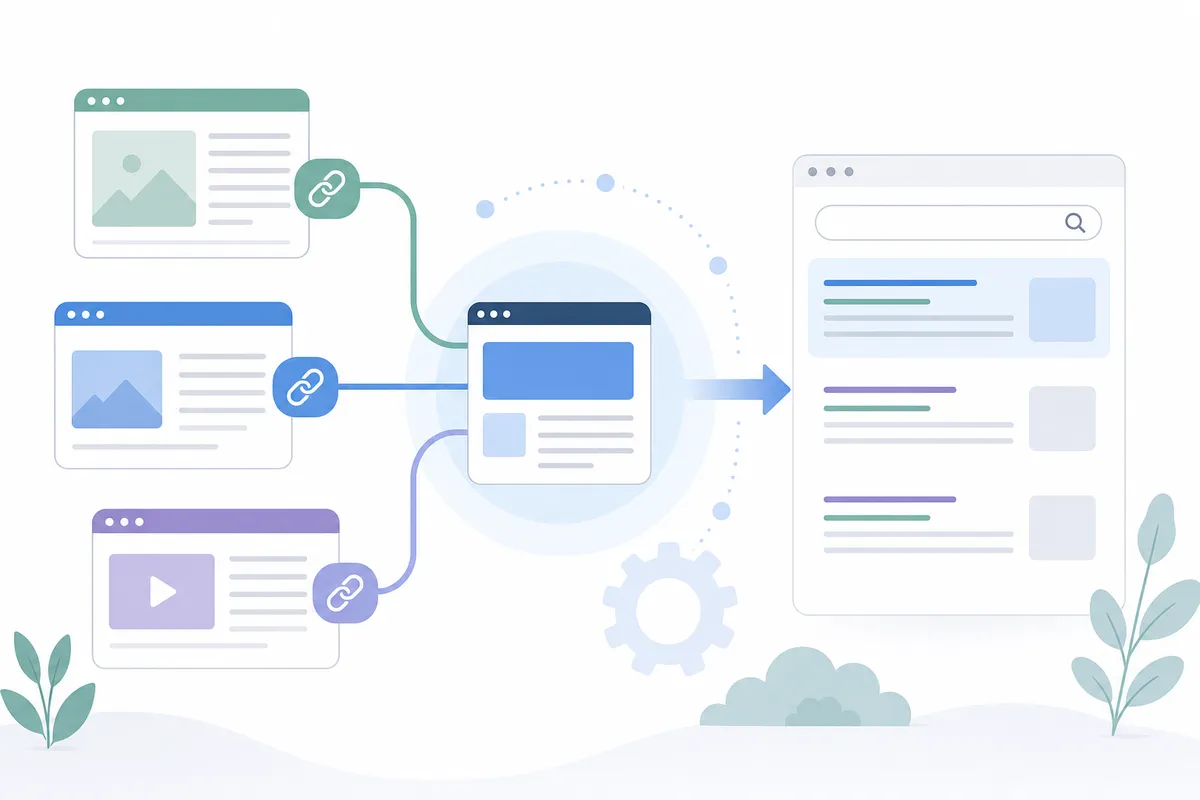
When Google launched in 1998, it ranked pages with an algorithm called PageRank, named after co-founder Larry Page. The idea was simple. If many pages link to a page, it's probably important. And a link from an important page counts for more than a link from an obscure one.
Mailchimp's guide to backlinks gives a clear example. Take two pages on the same topic. Page A has 200 backlinks and Page B has 20. Page A would likely rank higher, because it has ten times as many links pointing to it. A link from Page A to your site would also carry more weight than a link from Page B.
The scores feed back into each other. A page's value depends on the pages linking to it, and their value depends on their own links. So the calculation runs again and again until the numbers settle. The formula has changed a lot since 1998. Links still count as votes, though.
Link equity flows through your site
The value a link passes is called link equity. When a news site links to your homepage, your homepage gains some authority. Your homepage then links to your service pages, blog posts and contact page. Some of that value flows on to them through your internal links.
This is why big brands can get new pages ranking quickly. Their domains have earned a lot of links, and their internal linking passes that strength to fresh content. For a smaller site, it means one good backlink to one page can lift other pages too, as long as your internal links connect them.
Links help search engines find your pages
Crawlers move across the web by following links from page to page. Google Search Central explains that most pages in its results are found automatically as its crawlers explore the web. Following a link from a known page to a new one is a big part of how that happens.
A new page with no links pointing to it can go unnoticed for a long time. A backlink from a site Google crawls often gives it a path in.
Why backlinks matter for your website
They remain one of the strongest ranking signals
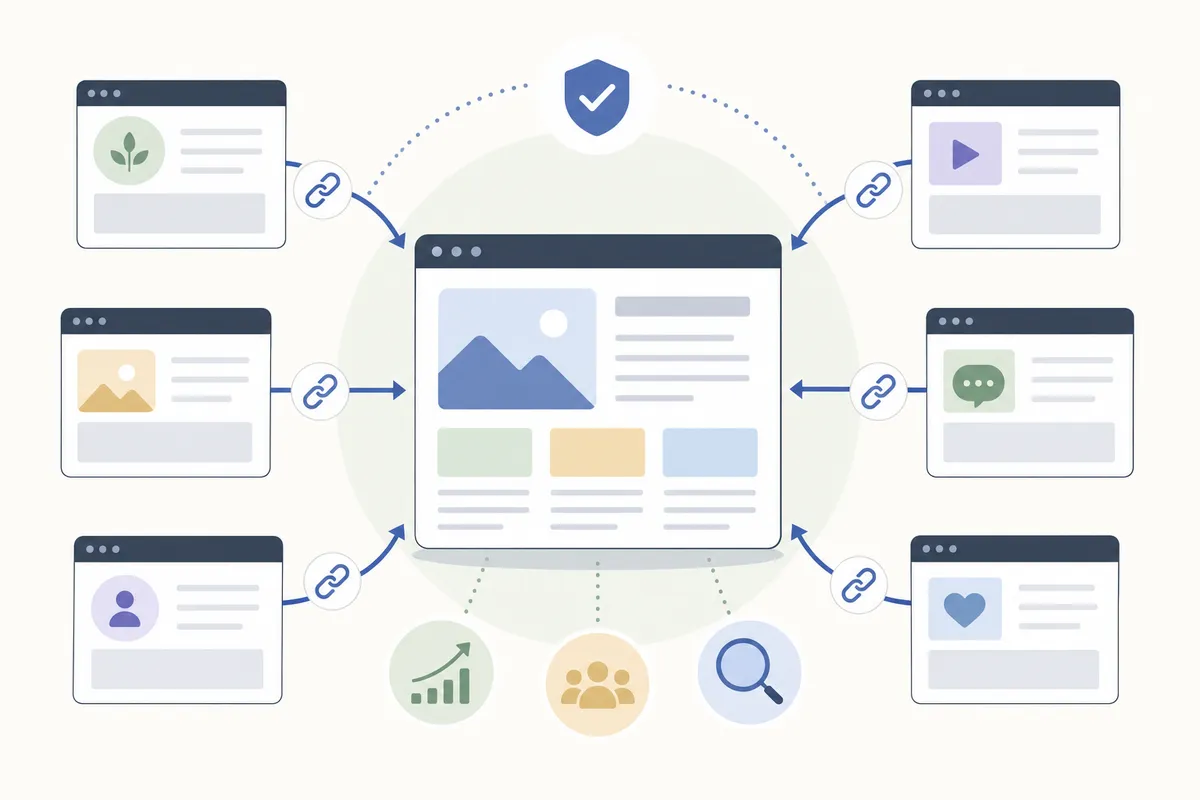
Google uses many signals to rank a page, and it does not publish how much each one weighs. The major SEO references still agree on links. Moz describes backlinks as "votes of confidence" and names them one of the strongest signals Google uses. Neil Patel went further in a 2017 video, saying Google uses over 200 ranking factors and that backlinks are number one. That ranking is one practitioner's view, but most of the industry agrees with the direction.
You can see it in the results. Semrush points out that the top pages for a competitive search like "iphone reviews" each have hundreds of backlinks. For more of the evidence, read this piece on why links still move rankings.
They send visitors who already care
A backlink is also a door. When a trusted site links to you, some of its readers click through. They arrive already interested in your topic, so they are more likely to read, sign up or buy than a visitor who landed by chance.
That traffic keeps coming, too. A paid ad stops the day you stop paying. A link in a popular article keeps sending visitors for as long as the article stays live and people keep reading it.
They build authority and trust over time
Each good link adds to your site's reputation. Moz ties backlinks to E-E-A-T: Experience, Expertise, Authoritativeness and Trustworthiness, the qualities Google looks for in content. A site that respected sources cite looks like it knows its subject.
This compounds. Authority helps new pages rank faster, and pages that rank get seen and linked more. If you want a plan for that, here is how to build organic search authority one step at a time.
They shape what AI answers cite
Backlinks now count for more than the classic list of search results. Google's AI Overviews, ChatGPT and Perplexity all choose sources to cite, and they lean on the same trust signals. A Semrush study of 1,000 domains found that high-quality backlinks meaningfully improve AI visibility. Google's AI Overviews and AI Mode are built on its existing search systems, so a strong link profile likely helps there too.
The same study found that nofollow links had nearly the same effect on AI visibility as followed links. AI systems seem to read your backlink profile as a whole, not one link at a time.
Types of backlinks and what each one is worth
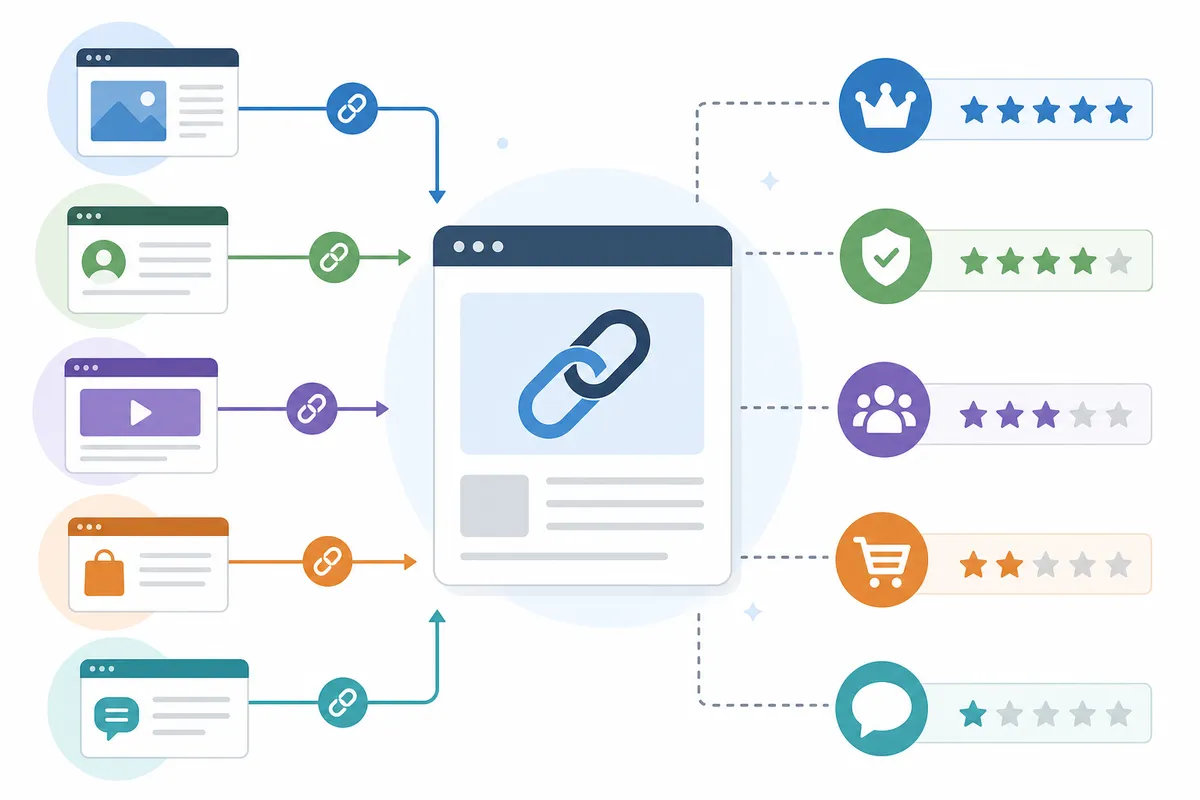
Not every backlink is worth the same. Here are the main types, how you usually get each one, and what it tends to do for you.
| Backlink type | How you usually get it | SEO value | Risk if overdone |
|---|---|---|---|
| Editorial link | Another site cites your content on its own because it helps their readers | Highest, the clearest vote of trust | Very low |
| Guest post link | You write an article for another site and link back within it | Good when the host site is in your niche | Medium, since mass guest posting on weak sites looks manipulative |
| Business profile or directory link | You list your business on a directory, association or partner page | Modest, but useful for local SEO and legitimacy | Low on reputable directories, high on spammy ones |
| Resource page link | A site adds you to a curated list of useful tools or guides | Good when the page is on-topic and kept up to date | Low |
| User-generated content link | A link posted in a forum thread or blog comment | Low for rankings, though it can send traffic | High if you spam comments |
| Sponsored or paid link | You pay for a placement that is marked as sponsored | Little ranking value by design | High if paid links are left unmarked |
| Social media link | You share content on social platforms | Little direct value, but it drives reach | Low |
Follow, nofollow, sponsored and UGC links
Every link has HTML behind it. A normal link is an <a> tag with an href that points to the page. Site owners can add a rel attribute to tell search engines how to treat the link:
rel="nofollow": the site does not want to endorse the page it links to.rel="sponsored": the link was paid for or is part of an advertising deal.rel="ugc": the link sits in user-generated content, such as a forum post.
A link with none of these is often called a "follow" or "dofollow" link. Google is more likely to count it as an endorsement. The line is softer than it used to be, though. Google treats nofollow as a hint rather than a strict rule, so some nofollow links still count. That, plus the traffic they send, is why nofollow links belong in a natural profile.
What makes one backlink worth more than another
Two links can look the same in a report and be worth very different amounts. Five factors decide most of the difference.
Relevance to your topic
A link from a site in your field carries more weight than one from an unrelated site. Mailchimp uses a music shop to show this. A guitar-pick page linked from a popular guitar site gets a relevant link. The same page linked from a car site's article about refueling gets almost no relevance, even though the car site is big. A small guitar blog linking with the words "best guitar picks" can be worth more than the large, unrelated site.
Relevant links bring the right visitors, too. Moz gives the example of a vet clinic linked from a well-known pet care blog. Those readers own pets. A link from a car dealership would not bring them.
Authority of the linking site
Links from trusted, established sites pass more value. Moz compares a link from the World Health Organization with one from a newly launched personal blog. The first carries far more authority.
Google does not publish an authority score, so SEO tools estimate one. Neil Patel describes Domain Authority as a scale from 0 to 100, where higher is better. He suggests aiming for links from sites that score higher than yours. Semrush's Authority Score does a similar job, based on link power, organic traffic and how natural a site's backlink profile looks. These are third-party estimates, not numbers Google uses. Use them to compare sites, not as targets.
Where the link sits on the page
A link inside the main body of an article is worth more than one buried in a footer, sidebar or comment section. Google holds a patent on a "reasonable surfer" model, which weighs links by how likely a reader is to click them. Links high in the main content, on good pages with few other links, score best. Semrush notes that nobody outside Google knows for sure whether the model is in use. It does match the usual advice to earn links in the body of an article.
Anchor text
Anchor text is the clickable text of a link. It tells readers and search engines what the linked page is about. "Kitchen remodeling ideas" says far more than "click here."
There is a trap. If most of your links use the same keyword-rich phrase, the pattern looks built rather than earned, and Google treats that as link spam. A natural profile mixes your brand name, plain phrases, bare URLs and a few descriptive keywords.
How many different sites link to you
SEO tools report two numbers: total backlinks and referring domains. A referring domain is a separate website that links to you. Fifty links from one site add up to one referring domain. For most sites, adding referring domains does more than stacking up links from the same few sources. That is also why backlink variety outranks sheer volume in a link profile.
Before you chase a link, run it through these questions.
| Question to ask | Good sign | Warning sign |
|---|---|---|
| Is the site about my topic or industry? | Same niche or a closely related one | No topical connection at all |
| Would a real reader click this link? | The link sits in the body, next to related text | Footer, sidebar or a long list of unrelated links |
| Does the site have real readers? | It gets search traffic and publishes useful content | Thin posts, no traffic, pages of "write for us" ads |
| Was the link earned or bought? | Given because the content helps the reader | Offered for a fee with no sponsored tag |
| Does the anchor text read naturally? | Your brand name or a plain phrase | The same exact keyword as dozens of other links |
How many backlinks do you need?
There is no universal number. It depends on how hard your keyword is and how strong the pages already ranking are. A plumber targeting one suburb faces a very different field from a software company chasing a national term.
The practical way to find your number is to study the competition. Run the top five results for your target search through a backlink checker. Note how many referring domains each page has and where those links come from. That gap is your real target, not a round figure.
You probably need fewer than you think. SEO creator Edward Sturm titled a recent video "You Don't Need 1,000 Backlinks to Rank on Google." In a low-competition niche, a handful of relevant, trusted links can move a page. Strong content and a technically sound site do much of the work, and these eight steps to improve your website's SEO cover that side. Links then close the gap.
Backlinks that hurt: link schemes, penalties and mistakes
What Google counts as a link scheme
Google's spam policies, part of Google Search Essentials, ban links built to manipulate rankings. The Bing Webmaster Guidelines take a similar line. The usual offenders:
- Buying or selling links that pass ranking credit without a sponsored or nofollow tag
- Link exchanges, the "link to me and I'll link to you" deal, done at scale
- Automated programs or services that create links for you
- Low-quality directory and bookmark sites that exist only to host links
- Large guest posting campaigns stuffed with keyword-rich anchor text
- Optimized links dropped into forum comments and signatures
If you run several sites, you need to be more careful. Linking your own sites to each other can look like a network built to game rankings. This guide to multi-site link building without penalties explains where the line sits.
What happens if you break the rules
Most of the time, Google simply ignores links it sees as manipulative. You pay for them and get nothing back. At scale, a pattern of spammy links can lead to a manual action, which can drop your pages from the results until you clean up and ask for a review. Google Search Console tells you if your site has a manual action.
A penalty costs more than a few positions. It damages the trust search engines place in your whole domain, and that trust is slow to rebuild. Here is how search engine trust is built and kept.
Removing and disavowing bad links
- Find the links. Use a backlink audit tool to flag spammy domains, odd anchor text and sudden spikes in new links.
- Ask for removal. Email the site owner and ask them to take the link down.
- Disavow as a last resort. Google's disavow tool asks it to ignore specific links. Use it only if you have many harmful links you cannot remove and you have, or expect, a manual action. Disavowing good links by mistake can hurt your rankings.
How to check the backlinks your site already has
Before you build anything, see what you already have. Three places to start:
- Google Search Console. The Links report shows which sites link to you most, which of your pages get the most links, and the anchor text people use.
- Bing Webmaster Tools. Its backlinks report covers the same ground from Bing's side.
- A third-party checker. Semrush's Backlink Checker, Moz Link Explorer and Ahrefs show links for any domain, including your competitors'. Free versions are limited, but enough for a first look.
What to look for once you have the data:
- Referring domains: how many separate sites link to you.
- Your most linked pages: often the homepage, sometimes an old blog post worth updating.
- Anchor text mix: brand names and plain phrases should lead.
- Lost links: links that vanished because a page was deleted or edited. A short, polite email can win some of them back.
- Broken targets: backlinks that point to pages on your site that now return a 404 error. Redirect those to the closest live page so their value isn't wasted.
How to earn backlinks that last
Fix the page before you ask for links
Links point to pages. If the page is slow, thin or hard to read, a new link will not save it, and the people you contact will not want to link to it. Run it through an SEO checklist of 46 checks in the right order before you start outreach.
Publish something people need to cite
The best links come from content other writers want to reference. Semrush points to Healthline's in-depth article on how much water to drink, which outlets like HuffPost cite as a source. Assets that tend to earn links:
- Original data, such as a survey of your customers
- Free tools or calculators
- Guides that answer a question more clearly than anything else that ranks
- Diagrams and visuals others can use with credit
Go where your competitors already get links
Sites that link to your competitors are likely to care about your topic. Put a competitor's page into a backlink tool, list the sites linking to it, and look for pages where your content would genuinely help the reader. Moz gives an example: to rank for "how to code," you would study who links to Codecademy, a list that includes CNBC and GitHub.
Offer expert input
Neil Patel's long-standing tactic is the roundup post. Interview people in your field, publish their answers, and tell them when it goes live. Many will share it, and some will link to it. The reverse works too. Answer journalist requests and offer quotes to writers covering your industry.
Claim the easy, legitimate links
Some links are simply yours to claim. List your business on reputable directories and with your industry association. Ask partners, suppliers and clients to link to you where it makes sense. Search for mentions of your brand that carry no link, and ask the writer to add one. For a fuller playbook, see these nine tactics that earn real links.
Can you build backlinks yourself, or should you hire help?
Most small businesses can start on their own. Listings, partner links and a few useful pieces of content take time more than skill. It gets harder in competitive markets, with outreach at volume, and when you have a bad profile to clean up.
| Situation | Doing it yourself works when | Getting help makes sense when |
|---|---|---|
| Local business | You need directory, association and partner links | You compete in a crowded city market or across many locations |
| New website | You can publish useful content and contact a few sites each week | You need results fast and have no time for outreach |
| Competitive national keyword | Rarely, because top pages often have hundreds of backlinks | You need steady outreach, content and digital PR |
| Link cleanup or manual action | The problem is a handful of obvious spam links | You have a manual action or thousands of suspect links |
| Several sites or clients | You manage one or two sites | You run many sites and need a process that avoids link patterns |
Be wary of anyone who sells links by the hundred at a flat price. Those links usually come from the kind of sites Google ignores or penalizes. A good SEO partner can tell you where each link came from and why it fits your site. If they can't, walk away. Most DIY link problems trace back to a short list of common SEO mistakes, so read it before you start.
FAQs
Are backlinks still important for SEO?
Yes. Links are still one of the strongest signals Google uses to judge authority. A Semrush study of 1,000 domains also linked high-quality backlinks to better visibility in AI search. What has changed is that quality and relevance now count for far more than volume.
What is the difference between a backlink and a referring domain?
A backlink is a single link. A referring domain is a website that links to you, counted once however many links it gives you. Twenty links from one blog are twenty backlinks but one referring domain.
Do nofollow backlinks help SEO?
They can. Google treats nofollow as a hint rather than a strict rule, so some nofollow links may still count. They send referral traffic too, and Semrush found they have nearly the same effect on AI visibility as followed links.
How long do backlinks take to affect rankings?
It varies. Google first has to recrawl the page that links to you, then re-evaluate your page. Expect weeks rather than days, and longer for competitive keywords. Links from sites Google crawls often tend to register sooner.
Should I buy backlinks?
Not links that pass ranking credit. Buying them breaks Google's spam policies and can lead to a manual action. A paid placement is fine for traffic and exposure, as long as the link carries a rel="sponsored" tag.
Check who links to you this week
Open Google Search Console, export your top linking sites, and sort them into three groups: relevant, neutral and suspect. That list shows what are backlinks to a website and why they matter for your own pages, and where the gaps are. Next, look through a sample SEO report to see how your backlinks would stack up alongside your technical and on-page findings.
Resources / References
Related reading: Backlinks for SEO: What They Are and How to Earn the Right Ones.
Related reading: Types of Backlinks Every SEO Specialist Should Know (and Which Ones Actually Rank).
Sources
About the author
SearchBlueprint researched, wrote and scored this article with the content pipeline our customers run on their own sites. The score in the byline is what our content engine gave this page before it published. Nothing here is reviewed by hand, which is the point: it is the product's output, published where anyone can check it.